Dual Guarantee of Energy Efficiency and Security for Industrial Gateways: How to Choose Equipment Compliant with IEC 62443 Standard?
In the wave of Industry 4.0, as the "nerve center" connecting on-site equipment with cloud systems, the security and energy efficiency performance of industrial gateway directly impact the stability of production lines and operational costs. However, faced with a wide array of products in the market, enterprises often find themselves in a dilemma: choosing high-energy-efficiency equipment may compromise security, while pursuing security certifications may entail the risk of excessive energy consumption. This article will deeply analyze the core value of the IEC 62443 standard, integrate energy efficiency certification systems, provide enterprises with a scientific selection framework, and recommend a benchmark product that combines both security and energy efficiency—the USR-M300 industrial gateway.
The deep integration of industrial networks (OT) and information networks (IT) has exposed traditionally closed industrial systems to external threats. The 2021 ransomware attack that paralyzed the East Coast oil pipeline in the United States and the 2025 production data leak at an automobile manufacturing plant due to vulnerabilities in industrial cameras are examples that reveal a harsh reality: as the "throat passage" for data flow, once industrial gateway are compromised, they can trigger a chain reaction, leading to production line shutdowns, equipment damage, and even threats to personal safety.
In industrial scenarios, gateways need to simultaneously power high-power-consuming devices such as cameras and sensors. In traditional solutions, the parallel laying of power lines and network cables not only leads to a surge in wiring costs (test data from an electronics factory shows that dual-line wiring costs are 65% higher than single-line PoE solutions) but also causes signal attenuation due to cable bundle temperature rise (when the number of cables in a bundle exceeds 24, the temperature rise can reach 15°C, and the signal attenuation rate increases by 30%). Additionally, energy waste caused by redundant power supply further drives up operational costs for enterprises.
With the implementation of regulations such as the EU's Cybersecurity Act and China's Guidelines for Cybersecurity Protection of Industrial Control Systems, the IEC 62443 standard has become a "passport" for industrial equipment to enter global markets. Products that fail to pass this certification may face the risk of being shut out or even legal disputes.
Developed by the International Electrotechnical Commission (IEC), IEC 62443 is the world's first cybersecurity standard for industrial automation and control systems (IACS). Its core idea is to build a full lifecycle security system covering equipment, systems, and processes through a "defense-in-depth" strategy, which includes:
Zoning and isolation: Dividing industrial networks into different security zones (Zones) and controlling data flow through conduits to prevent lateral threat propagation.
Identity authentication: Role-based access control (RBAC) ensures that only authorized personnel and devices can access the network.
Data encryption: Support for VPN encrypted transmission and storage to prevent data theft or tampering during transmission.
Security updates: A remote patch management mechanism to promptly fix known vulnerabilities and reduce the attack surface.
The energy efficiency performance of industrial gateway directly affects enterprises' carbon emissions and operational costs. Currently, mainstream global energy efficiency certification systems include:
IEC 62443-4-2: Although it does not directly specify energy efficiency parameters, it requires devices to balance energy efficiency optimization while implementing security functions (e.g., secure boot needs to be completed in low-power mode).
China's GB/T 30094-2013: Clearly defines energy consumption testing methods for industrial Ethernet switches and requires devices to meet energy efficiency grade requirements under different loads.
EU CE Certification: Covers electromagnetic compatibility (EMC) and the Low Voltage Directive (LVD), indirectly ensuring device energy efficiency and security.
When selecting equipment, priority should be given to "dual-certified" products that have passed both IEC 62443-4-2 security certification and GB/T 30094 energy efficiency certification to ensure dual guarantees of security and energy efficiency.
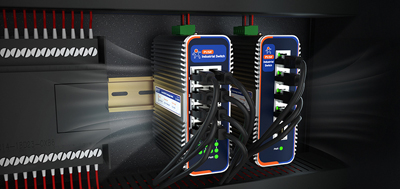
Among numerous industrial gateway, the USR-M300 stands out as an ideal choice for high-power-consuming device scenarios, thanks to its "IEC 62443-4-2 security certification + GB/T 30094 energy efficiency certification" dual qualifications.
Hardware-level security: Built-in secure boot functionality ensures that the device's bootloader and operating system have not been tampered with; supports firmware signature verification to prevent unauthorized firmware flashing.
Communication security: Supports VPN encrypted transmission, ensuring data is encrypted throughout the transmission process to prevent man-in-the-middle attacks; ensures only authorized devices can access the network through IEEE 802.1X authentication.
Access control: Role-based access control (RBAC) allows for fine-grained division of permissions among administrators, operators, and other roles to prevent unauthorized operations.
Remote management: Through the RCMS cloud platform, deployed devices can be remotely updated with security patches and firmware upgrades without on-site operations, reducing maintenance costs.
90W high-power output: Supports the IEEE 802.3bt standard, with a maximum output power of 90W per port, capable of simultaneously powering 4 industrial cameras (each consuming 22.5W) or 2 smart lighting devices (each consuming 40W), eliminating the need for power lines.
Intelligent power consumption management: Built-in power consumption monitoring functionality allows for real-time monitoring of device energy consumption and optimization of power supply strategies through edge computing capabilities. For example, automatically reducing camera power consumption during non-working hours to save energy.
Energy efficiency certification guarantee: Passed GB/T 30094-2013 energy efficiency certification, ensuring the device meets energy efficiency grade requirements under different loads and reducing enterprise carbon emissions.
A chemical industrial park originally had 50 monitoring points, requiring the laying of 100 cables with the traditional solution, resulting in high wiring costs and security risks. After deploying USR-M300 gateways:
Security enhancement: The gateways, certified by IEC 62443-4-2, effectively intercepted 3 external attack attempts, avoiding data leakage risks.
Energy efficiency optimization: After adopting PoE power supply, wiring costs were reduced by 85%, and the deployment period was shortened from 2 months to 2 weeks; through intelligent power consumption management, annual electricity consumption was reduced by 150,000 kWh, saving over 120,000 yuan in electricity costs.
Simplified maintenance: Through the RCMS cloud platform, technicians can remotely monitor device status, reducing fault response time from 4 hours to 30 minutes and improving maintenance efficiency by 8 times.
Security level: Evaluate the types of threats the device needs to withstand (e.g., accidental violations, simple attacks, complex attacks) according to the IEC 62443-3-3 standard and select the corresponding security level (SL1-SL4).
Energy efficiency indicators: Refer to the GB/T 30094-2013 standard and focus on the device's energy consumption performance under full load, half load, and no load, prioritizing products with high energy efficiency grades.
Require manufacturers to present IEC 62443-4-2 security certification certificates and GB/T 30094 energy efficiency certification certificates issued by authoritative organizations such as TüV, SGS, and exida to ensure the equipment complies with international and domestic standards.
Security functions: Check whether the device supports core functions such as secure boot, VPN encryption, and RBAC access control.
Energy efficiency functions: Focus on whether the device has energy efficiency optimization functions such as intelligent power consumption management, PoE power supply, and sleep mode.
Prioritize products with successful application cases in similar industries (e.g., chemicals, power, automobile manufacturing) to reduce selection risks.
To help enterprises accurately implement industrial gateway solutions that excel in both security and energy efficiency, we offer free location map design services:
Requirement diagnosis: Analyze your device power, communication protocols, and deployment environment.
Solution customization: Design a PoE power supply topology diagram, clarifying the connection relationships between gateways, switches, and devices.
Cost calculation: Compare the total cost of ownership (TCO) between traditional solutions and PoE solutions.
Risk assessment: Predict potential issues during deployment (e.g., power attenuation, protocol compatibility).
Contact us for location map consultations, and you will receive:
The "White Paper on Industrial PoE Power Supply Deployment" (including 20+ industry cases).
A 30-day free trial of the USR-M300 gateway.
One-on-one support from a dedicated technical team to ensure worry-free solution implementation.
The future of industrial intelligence begins with today's power supply and security revolution. The USR-M300 industrial gateway reconstructs the power supply and data flow in industrial scenarios with a single network cable, making the deployment of high-power-consuming devices more efficient, secure, and intelligent.