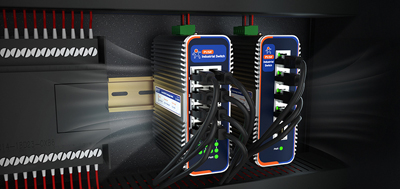
A Comprehensive Analysis of Pre-shipment Functional Testing for PUSR Cellular WiFi Routers: Reliability Verification from Lab to Industrial Field
In industrial IoT scenarios, cellular WiFi routers serve as the core hub connecting devices to the cloud, with their stability directly determining the operational efficiency of the entire system. If routers fail to undergo rigorous functional testing before leaving the factory, production halts, equipment damage, or even safety incidents may occur due to network interruptions, data loss, or security vulnerabilities. This article provides an in-depth analysis of the 12 core functional tests that PUSR cellular WiFi router must pass before shipment, covering dimensions such as network performance, environmental adaptability, and security protection. It also explores how testing optimization addresses customer pain points and provides authoritative references for customer product selection.
Cellular WiFi routers must maintain stable connections in complex network environments, making network performance testing a core aspect of pre-shipment procedures. PUSR validates router network performance across multiple dimensions by simulating real industrial scenarios.
Industrial sites often face sudden issues such as wired network failures or weak 4G signals, requiring routers to possess intelligent multi-network switching capabilities. The PUSR testing team validates functionality by simulating the following scenarios:
Primary-Backup Network Switching: Forcibly disconnect the primary network (e.g., Ethernet) and monitor whether the router automatically switches to the backup network (e.g., 4G) within 3 seconds, recording data packet loss rates during the transition.
Multi-network Load Balancing: When connected to Ethernet, 4G, and Wi-Fi simultaneously, test whether the router dynamically allocates traffic based on bandwidth demands to prevent single-network overload.
Signal Attenuation Simulation: Reduce 4G signal strength to -110 dBm (near the signal loss threshold) using a shielded box and verify whether the router maintains basic connectivity and triggers alarms.
Customer Value: In smart factories, if AGV trolleys halt due to network interruptions, losses may amount to tens of thousands of yuan per hour. PUSR routers ensure network interruption times ≤5 seconds through multi-network switching tests, significantly reducing production halt risks.
Industrial protocols (e.g., Modbus TCP, OPC UA) impose stringent real-time requirements on data transmission. PUSR employs professional network testers (e.g., Spirent TestCenter) to conduct the following tests:
Maximum Throughput: Test router forwarding rates under 100% load, with the USR-G809s achieving a measured value of 150 Mbps (4G network), meeting demands for high-definition video surveillance and large-scale equipment data collection.
End-to-End Latency: Simulate industrial control scenarios and test latency from sensor data transmission to cloud response, with the USR-G809s averaging ≤50 ms to ensure timely execution of remote control commands.
Packet Loss Rate Testing: Operate for 24 hours under sustained high load (90% throughput), with the USR-G809s achieving a packet loss rate ≤0.01% to guarantee data integrity.
Customer Value: In power inspection robot scenarios, low-latency testing ensures robots receive dispatch commands in real time, preventing collision accidents caused by data delays.
Cellular WiFi routers must operate stably in extreme environments such as high temperatures, high humidity, and strong electromagnetic interference. PUSR subjects routers to "extreme challenges" in environmental simulation labs.
Industrial site temperatures may range from -40°C (outdoor in frigid zones) to +85°C (near boiler rooms). The PUSR testing process is as follows:
Low-Temperature Startup Testing: Place the router at -40°C for 2 hours, then power it on and monitor whether it completes system startup and establishes a network connection within 5 minutes.
High-Temperature Aging Testing: Operate continuously at +85°C for 72 hours, checking for housing deformation, cooling fan blockages, or internal component contact issues due to thermal expansion.
Temperature Shock Testing: Rapidly switch between -40°C and +85°C (every 30 minutes) for 100 cycles, verifying structural sealing and component temperature resistance.
Customer Value: In wild monitoring projects in northwest oilfields, the USR-G809s passes high-low temperature tests, ensuring continuous operation in environments with summer surface temperatures of +70°C and winter nighttime temperatures of -30°C, reducing equipment replacement frequency.
Industrial sites contain strong electromagnetic interference sources such as frequency converters and motors, requiring routers to pass the following EMC tests:
Radiated Emission Testing: Monitor whether electromagnetic radiation generated during router operation exceeds EN 55032 standard limits to avoid interfering with other devices.
Electrostatic Discharge Testing: Apply ±15 kV electrostatic shocks to the router housing using an air discharge gun and verify whether the system automatically recovers operation.
Surge Immunity Testing: Simulate voltage surges (e.g., ±4 kV line-to-line, ±8 kV line-to-ground) caused by lightning strikes or power equipment start-stop operations and check whether the router protects internal circuits from damage.
Customer Value: In automotive manufacturing plants, the USR-G809s passes EMC tests, ensuring stable data transmission despite strong electromagnetic interference from welding robots and preventing production line shutdowns.
As the "gateway" for data transmission, the security protection capabilities of cellular WiFi routers directly relate to the safety of enterprise core assets. PUSR establishes a security testing system across hardware, software, and protocol layers.
PUSR routers incorporate stateful inspection firewalls, with the testing team validating functionality through the following scenarios:
Port Scan Defense: Use Nmap tools to simulate hacker scans of router open ports and verify whether the firewall automatically blocks suspicious IPs.
MAC Address Binding: Test whether the router only allows devices with preset MAC addresses to access the network, preventing unauthorized terminal connections.
URL Filtering: Verify whether the router blocks malicious or non-business-related websites based on preset rules, reducing internal network risks.
Customer Value: In smart water projects, the USR-G809s passes firewall tests, successfully blocking port scan attacks targeting SCADA systems and protecting critical control commands from tampering.
Industrial data (e.g., equipment status, process parameters) requires VPN encryption for transmission. PUSR testing focuses on:
Encryption Algorithm Strength: Verify whether the router supports high-strength encryption algorithms such as AES-256 and RSA-2048 to prevent data theft during public network transmission.
VPN Tunnel Stability: Test whether VPN connections automatically rebuild under 4G network fluctuations (signal strength -90 dBm to -110 dBm), with the USR-G809s achieving a measured tunnel interruption time ≤10 seconds.
Key Management Security: Check whether the router periodically and automatically updates VPN keys to prevent data leaks caused by key exposure.
Customer Value: In financial data center monitoring scenarios, the USR-G809s passes VPN tests, ensuring end-to-end encryption of sensitive data during cross-public network transmission and meeting Class III requirements of the Cybersecurity Classification Protection 2.0 standard.
As a representative product of PUSR cellular WiFi routers, the USR-G809s must pass all the aforementioned tests before shipment and undergoes additional specialized validations:
DIN Rail Mounting Testing: Simulate industrial control cabinet DIN rail mounting scenarios and verify whether the router remains secure under vibration (5-55 Hz, 0.35 mm displacement).
Wide Voltage Input Testing: Monitor whether the router operates stably and protects internal circuits from voltage surge damage during fluctuations within a DC 9-36V voltage range.
Watchdog Function Testing: Intentionally trigger system crashes and verify whether the hardware watchdog automatically restarts the router within 30 seconds to restore network connectivity.
Typical Application Scenarios:
Smart Grids: In substation equipment monitoring, the USR-G809s passes high-low temperature and EMC tests, ensuring stable data transmission under strong electromagnetic interference and temperatures ranging from -20°C to +70°C.
Smart Agriculture: In field weather station deployments, the USR-G809s withstands rain and dust erosion through IP30 protection and waterproof testing, reducing maintenance costs.
Industrial Automation: In PLC control systems, the USR-G809s ensures real-time delivery of control commands through low-latency and multi-network switching tests, preventing production accidents.
The rigorous testing system for PUSR cellular WiFi routers provides customers with the following core benefits:
By simulating real industrial scenarios during testing, potential issues are identified and resolved in advance, eliminating the need for repeated on-site debugging and shortening deployment cycles by over 30%.
High-reliability testing ensures a mean time between failures (MTBF) ≥50,000 hours for routers, reducing equipment replacement and on-site maintenance costs by over 50% annually for customers.
Through authoritative testing certifications (e.g., CE, FCC, RoHS), customers can highlight selling points such as "high reliability" and "security compliance" in projects, winning more orders.
If you have further inquiries about the testing process, test data, or industry adaptability of PUSR cellular WiFi routers, welcome to submit an inquiry. We will provide: