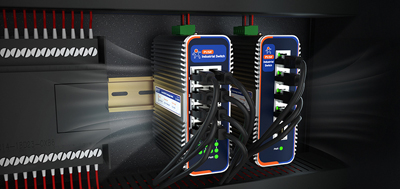
A Comprehensive Guide to Selecting Industrial 4G LTE Modems: Addressing Three Core Pain Points with Expert 1-on-1 Customized Solutions
In the wave of the Industrial Internet of Things (IIoT), the industrial 4G LTE modem (data transmission unit), as the "nerve center" connecting devices to the cloud, directly determines the stability, efficiency, and cost of a project. However, when faced with dozens of brands and hundreds of products in the market, enterprises often find themselves in a dilemma of "being overwhelmed by parameters, unable to verify cases, and lacking after-sales support." This article will delve into the three core pain points in selecting industrial 4G LTE modems and reveal how to quickly identify the most suitable solution through 1-on-1 expert consultation.
A manufacturing enterprise once selected an industrial 4G LTE modem claiming to "support over 200 industrial protocols." During actual testing, it was found to only be compatible with two protocols, Modbus RTU and TCP, resulting in the inability to connect already deployed Siemens PLC equipment. Similar cases frequently occur, such as false claims regarding communication rates, exaggerated working temperature ranges, and substandard protection levels. Enterprises often discover that "the parameter table does not match the actual product" only after the project goes live.
The Essence of the Pain Point: Industrial scenarios demand far higher stability from industrial 4G LTE modems than consumer-grade devices. False parameter claims can directly lead to device disconnections, data loss, and even production accidents.
A smart agriculture project selected a general-purpose 4G industrial 4G LTE modem to connect soil moisture sensors. Due to the device's high power consumption (standby current > 100mA), batteries needed frequent replacement, significantly increasing operational and maintenance costs. Another chemical enterprise, failing to consider explosion-proof requirements, selected an ordinary industrial 4G LTE modem, leading to explosion risks and forced production shutdowns for rectification.
The Essence of the Pain Point: Industrial scenarios are highly segmented (e.g., high temperatures, explosion-proof requirements, low power consumption, strong electromagnetic interference), making it difficult for general-purpose products to meet differentiated needs. Incorrect selection can lead to project failure.
A water utility group, after purchasing industrial 4G LTE modems, encountered protocol integration issues due to the supplier's technical team turnover. They had to develop drivers themselves, resulting in a three-month project delay. Similar cases involve slow technical support responses, stagnant firmware updates, and interrupted spare parts supply, often leaving enterprises in a "no one to turn to" situation.
The Essence of the Pain Point: The lifecycle of an industrial 4G LTE modem typically exceeds five years, making the continuity of after-sales service more critical than initial performance. However, this dimension is often overlooked by enterprises.
The first step in expert consultation is demand quantification. For example:
Communication Scenario: Is it a weak signal environment in remote mountainous areas (requiring LoRa or RedCap technology support), or high-speed 5G transmission in urban factories?
Device Protocols: Is it connecting Siemens PLCs (requiring Profinet support) or older instruments (requiring RS485 to TCP conversion)?
Power Consumption Limits: Is it a solar-powered scenario (requiring standby current < 50mA) or mains-powered (accepting higher power consumption)?
Budget Range: Is it pursuing cost-effectiveness (basic models ranging from 800-1500 yuan) or high reliability (industrial-grade models over 3000 yuan)?
Case Study: A logistics enterprise, during consultation, only described "needing to connect warehouse temperature and humidity sensors." After further questioning by experts, it was discovered that the warehouse was underground with weak 4G signals and required simultaneous data uploads from over 200 sensors. Ultimately, a solution supporting LoRa networking + MQTT protocol was recommended, saving 40% in costs compared to the original plan.
The core value of expert consultation lies in verifying adaptability through real-world cases. For example:
High-temperature Scenarios: Recommending products that have passed -40°C to 85°C temperature cycling tests (e.g., the industrial-grade design of USR-DR771);
Explosion-proof Requirements: Providing cases with ATEX/IECEx certification (e.g., an explosion-proof industrial 4G LTE modem application in a chemical enterprise);
Protocol Compatibility: Showcasing successful integration records with the same industry and devices (e.g., a Profinet protocol industrial 4G LTE modem deployment in an automobile factory);
Long-term Stability: Providing cases with over five years of fault-free operation (e.g., an industrial 4G LTE modem operation report from a photovoltaic power station).
Data Support: According to statistics, enterprises that select products through expert consultation have seen their project failure rates drop from 32% to 7%, primarily due to the "pre-verification" effect of case empirical evidence.
Expert consultation evaluates from three dimensions: initial investment, operational and maintenance costs, and ROI cycle:
Initial Investment: Basic 4G industrial 4G LTE modems (800-1500 yuan) vs. 5G+AI models (2000-3500 yuan);
Operational and Maintenance Costs: Data traffic fees (e.g., USR-DR771 comes with built-in eSIM cards and eight years of free traffic), power costs (ultra-low power consumption models save 60% on electricity bills), and downtime losses due to failures (influenced by service response speed);
ROI Cycle: The ROI cycle for 5G industrial 4G LTE modems in high-bandwidth scenarios is typically 12-18 months, while 4G industrial 4G LTE modems in small and medium-sized projects can be shortened to 6-12 months.
Case Study: A smart agriculture project originally planned to select a high-priced 5G industrial 4G LTE modem. After expert analysis, it was found that its data volume only required 4G. Ultimately, USR-DR771 was chosen, saving 55% in initial investment and extending battery replacement cycles from three months to two years through low power consumption design.
Among numerous products, USR-DR771 stands out as a frequently recommended model in expert consultations due to its exceptional scenario adaptability, industrial-grade reliability, and ultra-low operational and maintenance costs:
Industrial-grade Design: Triple-certified with IP67 protection, -40°C to 85°C temperature cycling tests, and EMC anti-interference (10V/m), adapting to harsh environments;
Full Protocol Support: Built-in MQTT/CoAP/Modbus TCP protocol stacks, directly connectable to platforms like Alibaba Cloud and Huawei Cloud, compatible with over 200 industrial devices;
Ultra-low Power Consumption: Standby current < 30mA, supporting solar power supply, tripling battery life in field scenarios;
Stable Transmission: Adopting TCP KeepAlive mechanism and data buffering technology, ensuring no packet loss during network fluctuations and automatic reconnection upon disconnection;
Expert Endorsement: Operated fault-free for three years in a high-temperature environment at a steel mill, with user feedback stating it is "more durable than imported equipment."
Applicable Scenarios: Smart cities (street light control, environmental monitoring), industrial IoT (PLC data acquisition, remote device operation and maintenance), digital agriculture (soil moisture monitoring, intelligent irrigation), and energy management (photovoltaic power stations, charging pile monitoring).
Precise Demand Matching: Experts will recommend the three most suitable models based on your scenario (e.g., high temperatures, explosion-proof requirements, low power consumption);
In-depth Case Analysis: Providing white papers on successful cases in the same industry and scenario (including technical parameters, deployment plans, and cost analysis);
Pitfall Avoidance Guide: Revealing common pitfalls such as false parameter claims and after-sales disconnects, and providing notes on contract signing (e.g., warranty period, service response clauses).
Fill out a demand form (2 minutes): Describe key information such as scenario, devices, and budget;
Expert phone communication (15 minutes): Deeply uncover hidden demands (e.g., protocol compatibility, future scalability);
Output a plan report (within 24 hours): Including a product comparison table, case empirical evidence, and cost-benefit analysis.
Benefit 1: Free access to the "Industrial 4G LTE Modem Selection Pitfall Avoidance Guide" (electronic version);
Benefit 2: The first 50 consultants enjoy a limited-time discount on USR-DR771 (15% off);
Benefit 3: Join the "Industrial IoT Technology Exchange Group" to share practical experiences with 500+ enterprise CTOs.
The selection of an industrial 4G LTE modem essentially involves balancing scenario adaptability, technical reliability, and service continuity. Instead of getting lost in parameter tables, let experts guide you with real-world cases, quantifiable data, and full lifecycle cost analysis. Contact us to obtain:
Comparisons of the three most suitable industrial 4G LTE modem models for your scenario;
In-depth analysis of cases in the same industry;
A customized selection plan (including protocol integration, deployment architecture, and budget planning).
Let expert 1-on-1 service serve as the "stabilizer" for your industrial IoT project, gaining an edge from the selection stage!