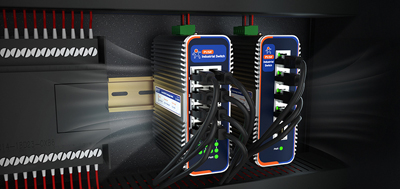
Application of Industrial LTE Modem in Agricultural IoT: Unlocking a New Paradigm for Remote Transmission of Soil Temperature and Humidity Data
In the process of agricultural modernization, soil temperature and humidity, as core environmental parameters affecting crop growth, directly determine agricultural production efficiency and resource utilization through precise monitoring and dynamic regulation. Traditional agricultural management models, reliant on manual inspections and empirical judgments, struggle to cope with challenges such as climate change and water scarcity. The breakthrough of agricultural IoT technology, especially the in-depth application of industrial LTE modems (data transmission units), is driving the transformation of soil temperature and humidity monitoring from "extensive" to "intelligent". This article will delve into the technical principles and application value of industrial LTE modems in agricultural scenarios, and explore how to achieve remote transmission of soil data and intelligent decision-making through low-latency, highly reliable communication solutions.
Soil temperature and humidity are key factors influencing the absorption of nutrients and water by crop roots. Studies have shown that a 10% decrease in soil moisture can lead to a 15%-20% drop in corn yield; while abnormal temperatures (such as low-temperature freeze damage or high-temperature heat damage) directly result in crop yield reductions or even complete crop failure. Traditional monitoring methods rely on manual sampling or wired sensor networks, which suffer from high wiring costs, limited coverage, and significant data delays. By deploying wireless sensor networks and leveraging the remote transmission capabilities of industrial LTE modems, agricultural IoT enables real-time, multi-point, and continuous monitoring of soil temperature and humidity, providing data support for precision irrigation, fertilization, and pest and disease control.
Water-saving irrigation: Automatically start and stop irrigation equipment based on soil moisture thresholds to avoid over-irrigation or drought. For example, a high-standard farmland project deployed 30 sets of 5G soil temperature and humidity sensors, combined with industrial lte modem data transmission, achieving a 27% water savings and an 8% increase in yield per acre.
Disaster warning: Identify risks of low-temperature freeze damage or high-temperature heat damage in advance by monitoring soil temperature changes. For instance, the Gobi Agricultural Demonstration Zone in Gansu utilized an underground multi-layer soil moisture monitoring network, combined with real-time industrial lte modem transmission, to precisely regulate irrigation timing and reduce disaster losses.
Scientific research experiments: Provide high-precision data support for soil water movement models and crop growth models, driving the transition of agricultural research from "experience-based summarization" to "data-driven."
An industrial LTE modem is a device that converts serial port data into IP data (or vice versa) and transmits it via wireless communication networks, essentially acting as a "translator in the IoT era." In agricultural scenarios, the core functions of a industrial lte modem include:
Protocol conversion: Compatible with industrial protocols such as Modbus RTU, MQTT, and HTTP, enabling seamless integration between sensors and cloud platforms.
Data transparent transmission: Supports communication protocols such as TCP/UDP/HTTP to ensure low-latency data transmission from sensors to the cloud.
Edge computing: Some industrial lte modems (such as the USR-DR154) incorporate edge computing modules for local data preprocessing (such as filtering and calibration), reducing the burden on cloud transmission.
Remote management: Enables device parameter configuration, firmware upgrades, and fault diagnosis through WeChat mini-programs or web platforms, lowering operational and maintenance costs.
Strong anti-interference capability: Agricultural sites are complex environments (such as high temperatures, high humidity, and electromagnetic interference). Industrial-grade industrial lte modems adopt wide-temperature designs (-40℃~85℃) and IP30 protection ratings to ensure stable operation.
Low-power design: Supports solar + battery power supply solutions to meet long-term monitoring needs in the field. For example, a soil moisture monitoring system powered by solar energy has operated continuously for 5 years without battery replacement.
Flexible deployment: Supports multiple communication methods such as 4G/5G/NB-IoT/LoRa, allowing the selection of the optimal solution based on the distribution density of monitoring points and data volume. For instance, dense monitoring areas use 5G Cat.1 modules for low-latency transmission, while remote areas adopt NB-IoT to reduce data traffic costs.
A complete agricultural IoT monitoring system consists of four layers:
Perception layer: Deploys high-precision soil temperature and humidity sensors (such as multi-layer probes with a measurement range of -40℃~80℃ and an accuracy of ±0.5℃) to collect raw data.
Transmission layer: Connects industrial lte modems (such as the USR-DR154) via RS-485/Modbus RTU interfaces to convert sensor data into IP data packets, which are then uploaded to the cloud via 4G/5G networks.
Platform layer: The agricultural IoT management platform receives data for storage, analysis, and visualization, and generates decision-making instructions (such as irrigation control signals).
Application layer: Pushes real-time data and warning information to users via mobile apps or web interfaces, and supports remote control of devices (such as water pumps and valves).
Low-latency communication: Adopts 5G Cat.1 modules (such as those supported by the USR-DR154) with a theoretical downlink speed of up to 10Mbps and latency below 50 milliseconds, meeting the real-time requirements of scenarios such as vehicle-road coordination and emergency irrigation.
Data security: Supports SSL/TLS 1.3 encryption and two-way certificate verification to prevent data theft or tampering, ensuring the privacy of agricultural production data.
Multi-protocol compatibility: The industrial lte modem simultaneously supports MQTT (lightweight and low bandwidth consumption) and HTTP (easy integration), enabling flexible integration with cloud platforms from different vendors (such as Alibaba Cloud and Huawei Cloud).
Edge computing optimization: Deploys data filtering algorithms locally on the industrial lte modem to eliminate outliers (such as sudden data changes caused by sensor failures), improving the efficiency of cloud-based analysis.
Case: Intelligent Irrigation System in a Large Orchard
Requirements: The orchard covers an area of 2,000 acres and requires monitoring of soil temperature and humidity at 100 monitoring points to achieve on-demand irrigation.
Solution:
Deploy 100 sets of soil temperature and humidity sensors (with multi-layer probes) buried in the root activity layer of fruit trees (10cm~30cm).
Equip each monitoring point with a USR-DR154 industrial lte modem connected to the sensor via an RS-485 interface, using a 4G Cat.1 module to upload data.
Set irrigation thresholds (such as starting irrigation when humidity is below 15%) on the cloud platform and send control instructions to solenoid valves via the industrial lte modem.
Results:
Irrigation water consumption was reduced by 30%, and fertilizer utilization efficiency increased by 15%.
Operational and maintenance personnel can view data from all monitoring points via a WeChat mini-program, reducing fault response time from 2 hours to 15 minutes.
Among numerous industrial LTE modem products, the USR-DR154 launched by USR IoT has become a preferred solution for agricultural scenarios due to its low latency, high reliability, and easy deployment. Here are its core advantages:
Supports 5G Cat.1 modules with a theoretical downlink speed of up to 10Mbps and latency below 50 milliseconds, meeting the high real-time requirements of agricultural applications (such as emergency irrigation and disaster warning).
Dual MQTT protocol support enables simultaneous connection to two cloud platforms (such as an agricultural management platform + a government regulatory platform), ensuring data redundancy and backup.
WeChat mini-program configuration: Completes parameter settings (such as server addresses and subscription topics) by scanning the device QR code using a mobile phone's WeChat app, eliminating cumbersome PC-based operations.
Remote firmware upgrades (FOTA): Updates device firmware without on-site operations, reducing operational and maintenance costs.
Industrial-grade protection: Supports wide-temperature operation (-40℃~85℃) and an IP30 protection rating, adapting to harsh outdoor environments.
Data encryption: Supports SSL/TLS 1.3 encryption and two-way certificate verification to prevent data theft or tampering.
Hardware watchdog: Incorporates an independent hardware watchdog that stores data locally even when the network is disconnected and automatically resumes data transmission upon network recovery.
Power redundancy: Supports dual power inputs, automatically switching to a backup power source in the event of a primary power failure to ensure continuous device operation.
To achieve deep integration of industrial LTE modems with agricultural monitoring systems, customized optimization solutions are required. Here are the key steps:
Define objectives: Determine optimization priorities (such as water-saving irrigation, disaster warning, or scientific research experiments).
Identify pain points: Analyze issues with existing systems (such as high data latency, poor device compatibility, or high operational and maintenance costs).
Scenario planning: Design differentiated solutions based on different scenarios such as orchards, farmlands, and greenhouses. For example, orchards require a focus on monitoring humidity in the root layer, while greenhouses need to monitor both air temperature and humidity and soil moisture.
Industrial lte modem selection: Choose appropriate models based on communication distance, data volume, and power consumption requirements (such as the USR-DR154 for high-speed, low-latency scenarios; NB-IoT industrial lte modems for remote, low-power scenarios).
Protocol configuration: Unify communication protocols between terminal devices, industrial lte modems, and cloud platforms (such as prioritizing the MQTT protocol for its lightweight and low bandwidth consumption).
Edge computing deployment: Deploy edge computing nodes at monitoring points for local data preprocessing, reducing the burden on cloud transmission.
Integration development: Develop data acquisition modules, protocol conversion middleware, and control instruction delivery interfaces to ensure smooth data flow between systems.
Testing and validation: Conduct functional tests (such as data acquisition accuracy and control instruction response speed), performance tests (such as system stability under high-concurrency scenarios), and security tests (such as data encryption strength and access control effectiveness).
Simulation exercises: Simulate scenarios such as droughts and floods in a test environment to verify system response capabilities.
Phased deployment: Start with a small-scale pilot (such as 10 monitoring points) to verify solution feasibility before full-scale promotion.
Operational and maintenance monitoring: Establish an operational and maintenance monitoring platform to view the real-time status of industrial lte modems and sensors in real time, setting abnormal alarm thresholds (such as low soil moisture or device offline status).
Iterative optimization: Dynamically adjust monitoring parameters based on crop growth cycles (such as sowing, growing, and harvesting periods) to improve system adaptability.
The deep integration of industrial LTE modems with agricultural IoT is a core step in building a smart agricultural system. Whether you aim to achieve water-saving irrigation, disaster warning, or drive scientific research experiments, we can provide customized soil temperature and humidity monitoring solutions and remote transmission recommendations.
Contact Us:
Visit our official website and fill out the requirement form. Our technical experts will contact you within 24 working hours.
Sample testing service: Submit your application requirements to obtain the opportunity to test samples and verify device performance in real environments.
Case references: Download our white paper on agricultural industry solutions to learn about successful practices in similar projects.
The future of smart agriculture is here. Let us work together to reshape agricultural production methods using industrial LTE modem technology and contribute to food security and sustainable development!