That Argument Saved Our Company
— An Auto Parts Manufacturer's Edge Computing Self-Rescue Story
March 17, 2023. 2:30 PM.
I remember it clearly, because it was the most humiliating day of my career.
The CEO slammed the quarterly financial report on the conference table and pointed at the number on page 14: "Lao Zhang, explain to me — why is our cloud service bill up 340% year over year?"
Twelve people sat in that room, so quiet you could hear the air conditioning.
I opened my mouth. Nothing came out.
Because I knew the answer. The answer was: we have too many devices, too much data, and we're sendingallof it to the cloud — including data that never needed to go there in the first place.
That's when I realized: we weren't doing digital transformation. We were working for the cloud provider.
After the meeting, I sat alone in my office for two hours. Three things on my desk: a cup of cold coffee, a cloud architecture diagram, and an A4 sheet covered in numbers.
On the sheet, just one line, written by me:
"Must change direction. Or we won't even be able to close the books next half."
Let me set the scene.
We're an auto parts manufacturer. Yangtze River Delta. 3 factories, 12 production lines, 800+ devices — CNC machines, injection molders, welding robots, AGVs, environmental sensors… all networked.
In 2021, the company launched the slogan "Full Digitalization." Everyone believed: cloud is the future. All data to the cloud, all analysis in the cloud, all reports pulled from the cloud. Sounds beautiful, right?
So we did something that now looks incredibly stupid:
Every device, every second, every single data point — useful or not — pushed straight to the cloud.
One CNC machine generates 200 data points per second — temperature, vibration, RPM, torque, current… That's 17 million records a day. 800 devices. Do the math yourself.
We thought: more data = more assets = more capability.
Wrong. Dead wrong.
More data isn't an asset. It's a liability. A bandwidth liability. A storage liability. A compute liability. A real-money liability.
By early 2023, our monthly cloud bill had gone from 80,000 to 350,000 yuan. Bandwidth: 60%. Storage: 25%. Compute: 15%.
And at least 80% of that money was wasted.
Why? Of those 17 million records, less than 5% had any analytical value. The other 95%? "Noise" from normally running equipment — repetitive, redundant, zero-information data.
We were using cloud compute to process garbage.
The money wasn't even what worried me most.
What worried me most was latency.
We have a critical line — engine block machining. The CNC's vibration data needs real-time analysis. If something's off, the machine must shut down within 500 milliseconds.
But the full path — device → gateway → cloud → analysis → command back — averaged 1.2 seconds of delay.
1.2 seconds. You think that's short?
In front of a high-speed rotating cutter, 1.2 seconds means the tool has already cut 3mm too deep. A 3mm error and the block is scrap. One block costs 2,800 yuan. 3 scraps a day. That's 3 million a year.
The cloud is powerful. But it's too far away.
I started to realize something most people don't want to admit:
Not all data needs to go to the cloud. Some data should be processed locally. Right next to the device. At the exact moment it's generated.
This is what everyone later started calling "edge computing."
But honestly, in early 2023, "edge computing" was just a concept on a PPT slide for me. I didn't know how to implement it. Didn't know what hardware to use. Didn't know the cost.
I only knew one thing: if we don't change, this line will blow up eventually.
The change came in April 2023.
A friend who works in industrial IoT visited our factory. He looked at our architecture diagram and laughed.
He said: "Lao Zhang, this isn't digitalization. This is 'cloud moving day.' You're taking offline garbage and storing it online."
My face burned. But he was right.
Then he drew me a diagram. Simple. Three layers:
Device Layer → Edge Layer (gateway local processing) → Cloud (results only)
He said: "You don't need to send all data to the cloud. At the gateway layer, filter it, clean it, aggregate it. Normal data — store locally, don't upload. Abnormal data — process immediately, upload simultaneously. Statistical data — one daily summary upload is enough."
"How much bandwidth does that save?" I asked.
He held up one finger: "At least 80%."
My reaction: You're lying to me.
But he made me run the numbers:
| Data Type | Old (All to Cloud) | New (Edge Processing) | Savings |
|---|---|---|---|
| CNC real-time (200 pts/sec) | All uploaded | Filtered locally, only anomalies uploaded | Bandwidth ↓ 92% |
| Environmental sensors (1 pt/10 sec) | All uploaded | Local aggregation, hourly summary upload | Bandwidth ↓ 99% |
| AGV position (1 pt/sec) | All uploaded | Local path calculation, event-only upload | Bandwidth ↓ 85% |
| Energy data (1 pt/min) | All uploaded | Local statistics, daily summary upload | Bandwidth ↓ 97% |
After the math, I was quiet for a long time.
We were spending 350,000/month. We only needed 70,000. The 280,000 we saved could pay 4 engineers.
Plan set. Now pick the hardware.
Honestly, my biggest fear was "another massive overhaul." Our lines can't stop — one hour of downtime costs 200,000 yuan. Any solution requiring mass rewiring or mass reprogramming was off the table.
Fortunately, edge computing turned out to be far simpler than I imagined.
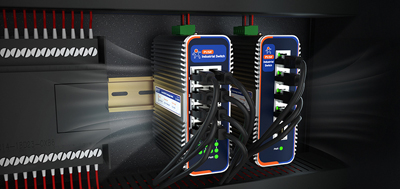
The core device: just one —industrial IoT gateways.
What it does is simple — sits between devices and cloud, filters what needs filtering, processes what needs processing, uploads what needs uploading.
No device reprogramming. No sensor replacement. No rewiring. Hang the gateway next to the line, plug in the Ethernet cable, change the config. Done.
We went with USR IOT's USR-M300. The reasons were practical:
Honestly, the biggest surprise wasn't how much money we saved. It was howsimpleit was.
I expected 3 months of chaos. It took 2 weeks. I expected 500,000 yuan. It cost under 150,000. I expected the whole company involved. It was me and two engineers.
December 2023. Year-end review.
I pulled the data and showed the CEO.
| Metric | Before (Mar 2023) | After (Dec 2023) | Change |
|---|---|---|---|
| Monthly cloud bill | 350,000 yuan | 68,000 yuan | ↓ 80.6% |
| Bandwidth usage | 2.4 TB/month | 0.38 TB/month | ↓ 84% |
| Processing latency | 1.2 sec | 80 ms | ↓ 93% |
| Unplanned line stops | 6/month | 0.5/month | ↓ 92% |
| Annual cost savings | — | ~3.4 million yuan | — |
The CEO stared at it for five seconds, then said:
"Lao Zhang. Next year's budget — you decide."
That moment, I felt like that argument was worth it.
I know where you are right now.
Your cloud bill grows every month, but you can't explain where the money goes. Your data volume explodes, but you use less than 10% of it. Your systems get more complex, but response times get slower. Your boss asks "what value has digitalization actually brought?" and you have no answer.
You're not lazy. You're going the wrong direction.
The cloud is great. But it's not everything. It's good for global analysis, long-term trends, cross-system coordination. It's not good for real-time control, high-frequency filtering, local decisions.
What belongs in the cloud — leave it there. What belongs at the edge — keep it there.
This isn't "de-clouding." This is "letting the cloud do what the cloud should do."
If you're going through this, my advice is just one thing:
Stop adding more cloud services first. Look at your data. How muchactuallyneeds to go to the cloud?
The answer might shock you — most of it doesn't.
A solid industrial IoT gateway, like USR IOT's USR-M300, can solve this for you. Not expensive. Not complicated. No massive overhaul. Live in two weeks.
But the money it saves you might be 20 times its price.
Twenty years in IT. My biggest lesson:
Real digitalization isn't moving everything online. It's letting the right data, in the right place, be seen by the right person, at the right time.
The cloud isn't the finish line. The edge isn't the finish line. They're a one-two punch.
Most people only throw the cloud punch.
Stop working for the cloud.
Keep the data that should stay close — close. Put the money you save — in your own pocket.
That's what digitalization should actually look like.
(If you're also losing sleep over your cloud bill, run the numbers. The answer might be more optimistic than you think.)