Smart Photovoltaic Power Station Operation and Maintenance: Cellular Gateway Breaks the Deadlock of 50-Kilometer Remote Data Transmission
In a 50MW mountainous photovoltaic power station in northwest China, the operation and maintenance (O&M) team once faced a dilemma: On a morning inspection route, an engineer discovered abnormal fluctuations in the inverter power curve. However, by the time they drove 50 kilometers back to the monitoring center, the fault data had already been lost due to a network outage. When a sudden rainstorm caused string inverters to go offline, communication delays prevented O&M personnel from adjusting power generation strategies in a timely manner, resulting in a daily power generation loss exceeding 15%. These scenarios reflect the common pain points faced by the photovoltaic industry—as power station sites extend from plains to remote areas such as mountains, deserts, and water surfaces, physical distances of 50 kilometers or more are becoming an "invisible killer" for real-time data transmission.
In traditional O&M models, data from remote power stations must be transmitted to the monitoring center via 4G/5G base stations or fiber-optic relays. However, factors such as signal obstruction in mountainous areas, sand and dust interference in deserts, and water surface reflection attenuation often result in network packet loss rates as high as 20%-30%. Actual measurement data from one power station shows that the average delay from inverter data generation to cloud display is 127 seconds, with delays in AGC (Automatic Generation Control) command issuance exceeding 3 minutes. This lag directly weakens the regulatory capacity of photovoltaic power stations: when grid frequency fluctuates, the power station cannot respond promptly to power adjustment demands, risking fines under "two rules" assessments or even threatening grid security and stability.
Network outages are commonplace in remote power stations. Statistics from one desert power station show an average of 8 communication interruptions per month due to sandstorms and lightning strikes, with each outage lasting from a few minutes to several hours. More problematic is that traditional gateways lack local caching mechanisms, causing critical data generated during outages (such as fault codes and power surge records) to be permanently lost. In one case, a power station failed to locate a hot spot fault in modules due to data loss, ultimately triggering a fire and resulting in direct economic losses exceeding 2 million yuan.
The chain reaction of data delays and losses is a cliff-like drop in O&M efficiency. The O&M manager of one mountainous power station admitted, "In the past, we relied on cloud data for decision-making, but when the network was unstable, we had to send teams on 'blind inspections'—guessing potential fault areas based on experience. As a result, 60% of inspections were ineffective." This "needle-in-a-haystack" O&M model not only drives up labor and transportation costs but also results in annual power generation losses of 5%-8% due to delayed fault responses.
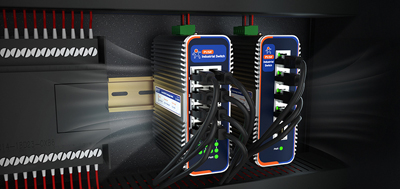
Faced with these pain points, the evolutionary direction of cellular gateway has become clear: upgrading from mere data relays to "local intelligent agents" with edge computing capabilities. Taking the USR-M300 cellular gateway as an example, its three core technologies reconstruct the data transmission paradigm for remote power stations.
The USR-M300 is equipped with an 8GB high-speed storage module that can cache data from inverters, electricity meters, environmental sensors, and other devices in real time. When the network is interrupted, the gateway automatically activates local storage strategies, categorizing data by device type, timestamp, and data type to ensure critical information is not lost. After network recovery, the gateway uses the "QoS 2" mechanism of the MQTT protocol (ensuring messages are delivered at least once) to resend cached data to the cloud in its original time sequence, avoiding data disarray. Actual measurements at a hydropower-photovoltaic complementary power station show that this feature increases data integrity from 72% to 99.6% and improves fault traceability accuracy by 90%.
The USR-M300 is powered by a 1.2GHz quad-core processor, supports the Linux system and Python secondary development, and can perform data preprocessing, anomaly detection, and preliminary decision-making locally. For example:
Real-Time Threshold Alarms: When the DC-side voltage of an inverter exceeds a set threshold, the gateway immediately triggers a local relay output to cut off the faulty branch while sending alarm information via SMS/APP, without waiting for cloud commands.
Dynamic Protocol Conversion: For legacy devices (such as electricity meters using the DL/T 645-1997 protocol), the gateway can convert their data into the standard Modbus TCP format, eliminating compatibility issues with heterogeneous protocols.
Intelligent Data Compression: By using a sliding window algorithm to compress periodic data such as temperature and irradiance, the gateway reduces ineffective data transmission. Tests at one power station show that this feature reduces network bandwidth usage by 65% and shortens data transmission delays from 127 seconds to 18 seconds.
The USR-M300 supports multiple network access methods, including wired Ethernet, 4G/5G, WiFi, and LoRa, and incorporates a link detection algorithm: when the signal strength of the primary network (such as fiber optics) falls below a threshold, the gateway automatically switches to a backup network (such as 4G) in less than 500 milliseconds. In a deployment case at a desert power station, this feature increased network availability from 82% to 99.2%, reducing annual power generation losses due to communication interruptions by 1.2 million kWh.
Case 1: "Data Rebirth" at a 50MW Photovoltaic Power Station in the Northwest Gobi Desert
Located on the edge of the Tengger Desert, this power station experiences an average of 3 daily 4G signal interruptions due to frequent sandstorms. After deploying the USR-M300:
Data Integrity: Through local caching and breakpoint resumption, the data loss rate during faults decreased from 28% to 0.3%.
O&M Efficiency: Local alarms enabled by edge computing shortened fault response times from 2 hours to 15 minutes, reducing annual inspection frequencies by 70%.
Power Generation Revenue: Energy efficiency analysis based on complete data optimized module cleaning cycles and inverter power regulation strategies, increasing annual power generation by 3.2%.
Case 2: "Communication Breakthrough" at a 100MW Hydropower-Photovoltaic Complementary Power Station in Southwest Mountains
Spanning three mountain peaks, this power station faced fiber deployment costs as high as 2 million yuan per kilometer. After adopting a 4G+LoRa hybrid networking solution with the USR-M300:
Cost Optimization: 90% of fiber laying was eliminated, reducing initial investment by 65%.
Real-Time Performance Improvement: Edge computing aggregated LoRa low-speed data locally, reducing transmission delays for critical control commands from 5 seconds to 200 milliseconds.
Reliability Enhancement: The multi-network redundancy mechanism achieved 99.8% network availability, meeting grid requirements for "second-level response" from new energy plants.
During the technology selection process, customers often face three psychological dilemmas:
The pricing strategy of the USR-M300 directly addresses this pain point: its hardware cost is only one-third of that of similar international brands, and by reducing fiber deployment, O&M labor, and increasing power generation revenue, customers can recover their investment within 2-3 years. Financial modeling for one power station shows that adopting the USR-M300 reduces lifecycle O&M costs by 42% and increases the internal rate of return (IRR) by 2.1 percentage points.
The USR-M300 alleviates customer concerns through three layers of protection:
Industrial-Grade Design: Operates in temperatures ranging from -40°C to 85°C, with an IP65 protection rating and electromagnetic interference resistance meeting IEC 61000-4-5 standards.
Redundant Architecture: Features dual power inputs, a watchdog mechanism, and remote firmware upgrades to ensure 7×24-hour stable operation.
Authoritative Certifications: Passes international certifications such as TüV, CE, and FCC, meeting stringent grid safety requirements for equipment.
The USR-M300 offers a "zero-threshold" migration solution:
Protocol Compatibility: Built-in with over 300 industrial protocol libraries, covering 90% of mainstream devices.
Data Mapping: Uses visual configuration tools to quickly map data point tables from old systems to the new gateway.
Gradual Deployment: Supports a "pilot-expansion" model, allowing verification in partial areas before full-scale rollout.
As photovoltaic power stations transition from "supplementary energy" to "mainstream energy," the role of cellular gateways is evolving from "data channels" to "value hubs." The next-generation USR-M300 product has planned three evolutionary directions:
AI Empowerment: Integrate lightweight AI models to enable advanced functions such as fault prediction and power generation forecasting.
Carbon Management: Incorporate a carbon emission calculation module to assist power stations in participating in green power trading and carbon credit monetization.
Virtual Power Plant (VPP) Aggregation: Support data aggregation and collaborative control across multiple power stations, enabling participation in grid peak shaving and frequency regulation services.
As photovoltaic power stations extend their reach to even more remote corners, cellular gateways are no longer mere "data porters" but have become "intelligent bridges" connecting the physical and digital worlds. Through innovations such as edge computing, multi-network redundancy, and local caching, the USR-M300 not only resolves the challenges of delay and packet loss in 50-kilometer remote data transmission but also redefines O&M paradigms for remote power stations—ensuring data remains undistorted by distance, decisions are not lagged by delays, and every kilowatt-hour of photovoltaic power generates maximum value. This may be the most vivid interpretation of "smart O&M" in the era of the Industrial Internet of Things.