Digital Twin and industrial
4g router: Unlocking the "Spatiotemporal Key" for Virtual Production Line Data Synchronization
In the wave of Industry 4.0, Digital Twin has emerged as a core technology for enterprises to achieve intelligent upgrades of their production lines. By constructing a virtual mirror of the physical production line, Digital Twin can simulate equipment operating status in real time, predict production bottlenecks, optimize process parameters, and even simulate fault scenarios for emergency drills. However, the implementation of Digital Twin faces a key challenge: how to achieve "data synchronization" between the virtual and physical production lines—that is, how to efficiently and reliably transmit real-time data from physical equipment to the virtual model to ensure a "two-way mapping" between the virtual and real worlds?
As a "data bridge" connecting the physical production line with the virtual world, the industrial
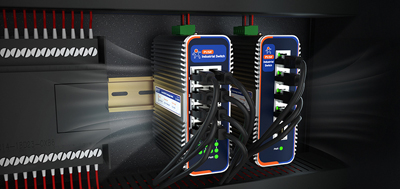
4g router, with its capabilities of multi-protocol compatibility, edge computing, and highly reliable transmission, has become a "key infrastructure" for Digital Twin data synchronization. It can not only collect data from heterogeneous devices (such as PLCs, sensors, and robots) but also perform preliminary processing locally (such as data cleaning and feature extraction). Then, it transmits the data to the cloud or local servers via high-speed networks to drive real-time updates of the Digital Twin model.
This article will provide an in-depth analysis of the collaborative logic, technical pathways, and implementation cases of Digital Twin and industrial
4g router, and offer a "lightweight" virtual production line data