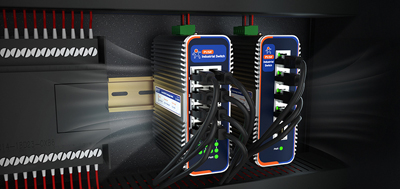
Lifecycle Management of Cellular Gateway: A Full-Process Tracking Solution from Procurement to Disposal
In the wave of Industry 4.0 and intelligent manufacturing, as the core hub connecting the device layer and the cloud, the lifecycle management of cellular gateways directly determines the continuity, efficiency, and cost of production lines. However, enterprises generally face three major pain points in cellular gateway management: a lack of scientific selection criteria during the procurement stage, resulting in poor device compatibility; reliance on manual inspections during the operation and maintenance (O&M) stage, leading to delayed fault responses; and a lack of standardized processes during the disposal stage, posing risks of data leakage and compliance issues. Based on the theory of full lifecycle management and combined with the practical case of the cellular gateway USR-M300, this paper proposes a full-process tracking solution covering procurement, O&M, and disposal to help enterprises achieve cost reduction, efficiency improvement, and controllable risks.
The selection of cellular gateways should be guided by actual business requirements to avoid "functional redundancy" or "insufficient performance." For example, an automobile manufacturing enterprise failed to fully consider the vibration monitoring requirements of its production line and purchased a gateway that only supported basic data collection, resulting in an additional investment of 300,000 yuan for hardware upgrades later. Scientific selection requires clarifying three core scenarios:
Device Interconnection Scenario: It is necessary to support mainstream industrial protocols such as Modbus, OPC UA, and CANopen, and be compatible with heterogeneous devices such as PLCs, sensors, and robots. The USR-M300 comes pre-installed with a library of over 1,000 industrial protocols, enabling plug-and-play access to devices such as Siemens PLCs and Cummins engines, reducing manual configuration time by 90%.
Edge Computing Scenario: It requires real-time data processing capabilities and support for algorithms such as vibration spectrum analysis and oil temperature trend prediction. The USR-M300 is equipped with a 1.2GHz processor and a Linux kernel, enabling local LSTM model training with a prediction error of ≤3 days for hydraulic oil degradation cycles.
Network Communication Scenario: It needs to support multi-mode communication such as 5G/4G/Wi-Fi/Ethernet to adapt to complex industrial environments. The USR-M300 adopts a WAN/LAN + 4G cellular dual-link design, supporting link detection and automatic switching to ensure network interruption times of <10 seconds.
The choice of supplier directly affects the long-term stability and after-sales service quality of the gateway. Evaluation should focus on three dimensions:
Technical Strength: Examine whether the supplier has independent research and development capabilities and patented technologies. For example, the modular design of the USR-M300 has obtained a national invention patent, supporting the connection of six expansion units and allowing flexible matching of the number of DI/DO/AI ports, reducing SKU management costs by 40%.
Industry Cases: Prioritize suppliers with successful implementation experiences in the same industry. A mining machinery manufacturer achieved the connection of 200 devices (including six protocols) within 72 hours by deploying the USR-M300, reducing annual maintenance costs from 15 million yuan to 6.2 million yuan.
Service Capability: Evaluate the supplier's response speed and problem-solving ability. The USR-M300 provides 7×24-hour remote technical support with an average mean time to repair (MTTR) of <2 hours, an 80% improvement over traditional solutions.
Traditional O&M relies on manual inspections, making it difficult to detect hidden faults. By deploying the USR-M300, real-time monitoring of device status and quantitative health assessment can be achieved:
Data Acquisition Layer: The USR-M300 supports 2 DI ports, 2 DO ports, 2 AI ports, and 2 RS485 interfaces, enabling simultaneous collection of over 2,000 parameters such as vibration, temperature, and current, with a sampling frequency of up to 10kHz.
Edge Analysis Layer: It features a built-in three-level alarm mechanism (warning/alarm/emergency). For example, when the vibration amplitude exceeds the baseline by 20%, maintenance recommendations are automatically pushed to the O&M APP; when the oil temperature exceeds the threshold for five consecutive minutes, the device is triggered to operate at reduced load.
Platform Display Layer: A visual dashboard displays the device health index (0-100 points), integrating dimensions such as operating duration, operating conditions intensity, and environmental data, with a life prediction error of ≤5%. A steel enterprise used the health model to predict the risk of bearing fracture in a blast furnace fan 14 days in advance, avoiding a shutdown loss of 800,000 yuan.
Predictive maintenance can reduce unplanned downtime by more than 70% while lowering maintenance costs by 30%. The USR-M300 achieves this goal through two major technologies:
Vibration Analysis Algorithm: Based on FFT transformation, it extracts frequency-domain features and uses an SVM classification model to identify early faults in components such as bearings and gears. A wind power enterprise applied this technology and achieved a gearbox fault prediction accuracy of 92%, reducing annual spare parts inventory costs by 2 million yuan.
Energy Consumption Optimization Model: It collects data on motor current and fuel consumption to identify high-energy-consuming operating conditions. For example, a chemical enterprise analyzed the heating curve of a reaction kettle using the USR-M300 and achieved a 15% annual electricity savings per unit after optimization, equivalent to a reduction of 12 tons of carbon emissions.
Firmware vulnerabilities in cellular gateways can lead to production interruptions or data leakage. The USR-M300 provides a secure OTA upgrade mechanism:
Differential Upgrade: Only the changed code blocks are transmitted, reducing the upgrade package size by 80% and network bandwidth usage by 90%.
Rollback Mechanism: In case of upgrade failure, it automatically reverts to the previous version to ensure business continuity.
Security Certification: It adopts TLS 1.3 encrypted communication and supports two-way certificate authentication to prevent unauthorized device access. An automobile parts manufacturer successfully intercepted 12 man-in-the-middle attacks using the firmware security mechanism of the USR-M300, avoiding production data leakage.
A strict approval process must be established for gateway disposal to avoid asset loss. An electronics manufacturing enterprise achieved standardized management through the following steps:
Status Assessment: The technical department inspects the gateway's performance and submits a disposal application after confirming that it cannot be restored through repairs.
Financial Write-off: The finance department checks the purchase contract and depreciation records, confirms the asset's net value, and approves the disposal.
Physical Disposal: The logistics department transfers the gateway to a designated recycler and updates the ERP system status to "disposed."
The production data stored in gateways involves trade secrets and must be thoroughly erased to avoid leakage. The USR-M300 provides a three-level data erasure solution:
Logical Deletion: Data is marked as "deleted" through the management interface, suitable for temporary data cleanup.
Physical Overwriting: The storage chip is overwritten multiple times with random data to ensure that the data cannot be recovered, complying with ISO 27001 standards.
Audit Trail: It records the data erasure time, operator, and other information, generating a compliance report for audit verification. A military enterprise successfully passed the Class 3 certification of China's Cybersecurity Classification Protection 2.0 using the data erasure function of the USR-M300, avoiding legal risks associated with data leakage.
As a high-performance modular edge gateway, the USR-M300 has become a benchmark product for full lifecycle management of cellular gateways due to its flexibility, reliability, and intelligent capabilities:
Modular Design: It supports the free combination of functional modules, reducing enterprise investment costs and SKU management difficulty.
Edge Computing Capability: It is equipped with built-in algorithms such as LSTM and SVM to achieve fault prediction and energy consumption optimization, improving device overall equipment effectiveness (OEE) by 15%-20%.
Security Protection System: It provides end-to-end security protection from device access and data transmission to firmware upgrades, meeting the requirements of China's Cybersecurity Classification Protection 2.0.
Ecosystem Compatibility: It supports mainstream platforms such as UCloud, Alibaba Cloud, and AWS, enabling seamless integration with enterprises' existing IT/OT systems.
Full lifecycle management of cellular gateways is not only an upgrade of device management but also a key driver for enterprise digital transformation. Through scientific selection, predictive maintenance, and compliant disposal, enterprises can achieve three major values:
Efficiency Improvement: Unplanned downtime is reduced by 70%, and device OEE is improved by 15%-20%.
Cost Optimization: Maintenance costs are reduced by 30%, and spare parts inventory capital occupation is decreased by 40%.
Controllable Risks: Data leakage and compliance risks are eliminated, significantly enhancing the enterprise's core competitiveness.
Immediate Consultation: To obtain the white paper on the full lifecycle management solution for cellular gateways or a customized solution for the USR-M300, please click the button to contact PUSR experts. Our experts will provide you with one-on-one in-depth services.