IATF 16949 Audit Demands Traceability and Connectivity—One Industrial Cellular Router Solves More Compliance Issues Than You Think
Last September, Lao Zhang went through the longest three days of his auto parts career.
IATF 16949 recertification audit. Third-party audit team on-site. The first two days went smoothly—Lao Zhang walked the auditors through the line, flipped through documents, checked records. Everything seemed under control.
Until the afternoon of day three. Before the closing meeting, auditor Lao Fang pulled out a form.
"Mr. Zhang, let me ask you something."
Lao Fang pushed his glasses up. His tone was calm, but Lao Zhang's stomach dropped—the calmer the auditor, the bigger the problem.
"Your injection molding workshop, machine number three. On the 17th of last month, there was a temperature alarm. The record shows the shift team did a manual reset. I'd like to see—from alarm trigger to reset confirmation, how did the data link flow? Was the PLC's raw data transmitted in real time? Do the timestamps in the MES system match the PLC's local logs?"
Lao Zhang froze for three seconds.
Not because he didn't know the answer. He knew the answer—but he couldn't produce it.
Machine three's PLC data sat locally. The MES system relied on someone manually exporting an Excel file every two hours and uploading it. On the 17th, it happened to be a night-to-day shift handover—the export was forty minutes late. Timestamps didn't match. The alarm log was in the PLC. The operation record was in a paper handover notebook. Two sets of data, two timelines, separated by a wall.
Lao Fang wrote one line on the report: "Production process data traceability link is incomplete. Data gaps exist. Recommend corrective action before closure."
Lao Zhang read that line three times.
He knew this wasn't a technical problem. It was a compliance problem. And in the auto industry, compliance problems are never small.
Who in auto parts hasn't heard of IATF 16949?
But let me ask you—what do you think is the hardest clause?
Most people say 8.3.2.3 (manufacturing process design output), or 8.5.1.1 (control plan), or 8.7 (nonconforming product control).
All correct. But after that day, Lao Zhang realized something—
The hardest part of IATF 16949 isn't any single clause. It's the word "traceability."
Go read the standard. Clause 8.5.2 (Identification and Traceability) states clearly: the organization shall identify the output status throughout production and service provision, in accordance with monitoring and measurement requirements. When traceability is required, the organization shall control the unique identification of the output and retain the documented information necessary for traceability.
In plain language: you must be able to trace from finished product all the way back to raw materials. Every step in between must be connected, matched, and producible.
Here's the question—is your data connected?
Lao Zhang's factory wasn't bad. They had MES, ERP, PLCs, a quality system too. But between these systems, data didn't "flow"—it was "carried."
Injection molding temperature data: the PLC sampled once per second, stored on a local SD card. The quality engineer pulled the SD card out every Monday morning, plugged it into a PC, exported to CSV, then uploaded to MES. Seven days in between.
Stamping workshop pressure data: ran over Modbus RTU serial, connected to a serial server, which connected to the workshop switch via WiFi. You know WiFi—the moment the press starts, electromagnetic interference, signal shakes. Packet loss was routine. Three or four drops a week. Nobody cared.
Welding workshop current data did make it to MES—but via a 4G card. Bandwidth wasn't enough, so it only transmitted every five minutes. The auditor wanted second-level data. Couldn't produce it.
See—systems exist, data exists, but the "traceability link" is broken.
That's Lao Zhang's problem. And it's the problem of countless auto parts factories.
I've talked to many quality directors at auto parts factories about this. One interesting pattern emerged—
Everyone hears "traceability" and the first reaction is "upgrade the system." MES isn't enough? Get a pricier one. Still not working? Deploy digital twins. Still not working? Add AI inspection.
But few people ask a more fundamental question:
The bottleneck of traceability is never on the system side. It's on the transmission side.
No matter how expensive your MES is—if PLC data can't get through, it's empty. No matter how advanced your quality system—if workshop data can't get up, it's decoration. No matter how powerful your ERP—if the line and management are separated by a broken road, the data arrives damaged.
What is that road?
The network.
More specifically, that device in the workshop you've never looked at twice—the industrial cellular router.
Look at IATF 16949 audit trends over the past two years. One change is crystal clear: auditors no longer just check if you have systems. They check if your data links are real-time, continuous, and tamper-proof.
Clause 8.4.2.3 (manufacturing process design input) requires process validation—which requires complete data. Clause 9.1.1.1 (monitoring and measurement of manufacturing processes) requires you to prove the process runs under controlled conditions—and the evidence of "controlled" is continuous data.
In other words—without real-time, continuous data links, you can't even prove your process is controlled.
This isn't an IT department issue. It's a quality department issue. A production department issue. A boss's issue.
Lao Zhang later talked to a friend in industrial communications. The friend drew him a diagram.
The diagram marked every data gap in his factory—eleven in total.
Then the friend said: "You don't need to replace MES. You don't need to replace PLCs. You don't need to replace any system. You just need to connect these eleven gaps—with one industrial cellular router."
Lao Zhang was skeptical. But the audit correction deadline was three months. He had no choice.
How did it work?
Gap one: injection molding PLC data upload.
Machine three's PLC ran Modbus TCP, connected to a basic switch. WiFi was unstable—data came in fits and starts. The friend replaced it with an industrial cellular router, wired directly to the PLC's port, running to the workshop core switch. Data went from once per second with 12% packet loss to once per second with zero packet loss. The temperature curve in MES finally stopped looking like a sawtooth.
Gap two: stamping workshop serial data transmission.
The press's pressure sensors ran RS485 serial. The old serial server was cheap—poor interference rejection. The moment the press fired, data dropped. New setup: the industrial cellular router's serial module connected directly to RS485. The router's metal chassis shielded electromagnetic interference. Tested right next to the press—signal was rock solid.
Gap three: welding workshop upload frequency.
The old 4G card couldn't handle the bandwidth—transmitted every five minutes. The friend added a 5G industrial SIM to the industrial cellular router. Uplink bandwidth jumped from 20Mbps to 200Mbps. Upload interval shrank from five minutes to one second. The second-level data the auditor wanted—now available in real time.
Gaps four through ten: AGV dispatch data, barcode scanner data, vision inspection data, environmental sensor data, energy consumption data, security data, OEE data.
All aggregated through the same industrial cellular router, uploaded to MES and the OEM cloud platform via MQTT. Unified data format. Unified timestamps. Traceable links.
One hidden gap: remote audit.
IATF 16949 requires organizations to support remote audits. Lao Zhang's factory couldn't—auditors had to be on-site. Now the industrial cellular router carried an OOB remote management module. Auditors in Germany could log into the router's backend, view real-time link status, device connection logs, and data transmission records.
If Lao Fang came back, he wouldn't need to fly over.
Eleven gaps. One device. All connected.
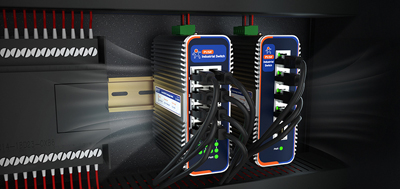
The router Lao Zhang chose was the USR-G809S—metal case, fanless, -40 to 75°C wide temp, 5G plus wired dual-link, local caching with breakpoint resume. Not because it was the most expensive—because it just happened to do four things right: connect, transmit steadily, never break, and be auditable.
Total cost: under 12,000 RMB.
One industrial cellular router, one 5G industrial SIM, a few cables, one day of commissioning.
This time it wasn't recertification. It was a customer audit.
The OEM's SQE brought two people to verify data traceability.
The SQE randomly picked injection molding machine three, pulled up last month's temperature alarm record. From PLC raw data to MES system record—timestamps precise to the millisecond. Two datasets matched perfectly.
Then checked stamping workshop pressure data—72 continuous hours of records. Not a single gap.
Finally reviewed the remote audit interface. The SQE sat in his own office, remotely connected to Lao Zhang's industrial cellular router backend, and viewed real-time production line data link status.
The SQE closed the page and said: "Mr. Zhang, your traceability link is cleaner than our own factory."
Audit result: zero nonconformities.
Lao Zhang told me later he sat in his office that night for a long time. He thought about the line Lao Fang wrote three months ago. About those days of overtime—patching data, matching timestamps, rewriting records.
He said something I still remember:
"I used to think compliance was about spending money. Now I know—compliance is about building roads. Once the road is open, compliance comes on its own."
I'm not writing this to sell industrial cellular routers.
I'm writing this because I know exactly what auto parts factories are going through.
Margins thin as paper. Customer demands high as mountains. You don't not want compliance—you don't know where to start. You spent hundreds of thousands on MES, then found the data was still broken. You bought the most expensive PLCs, then found the data still couldn't get out. You hired the best quality engineer, then found he spent half his time manually matching timestamps.
The problem isn't your systems. It's your links.
Go look in your workshop. What switch is your PLC connected to? What brand is your serial server? Does your WiFi still have signal next to the press? How many packets did your 4G card drop last month?
You don't need 800,000 RMB for a digital transformation. You need 10,000 RMB to reconnect that broken road.
The essence of IATF 16949 isn't making you buy systems. It's making you prove your process is controlled. And the evidence of "controlled" is one complete, real-time, unbreakable data link.
The starting point of that link isn't MES. Isn't ERP. Isn't the cloud.
It's that dusty industrial cellular router sitting in your workshop.
Replace it.
The road opens. Compliance arrives.
Your zero nonconformities might be just one industrial cellular router away.