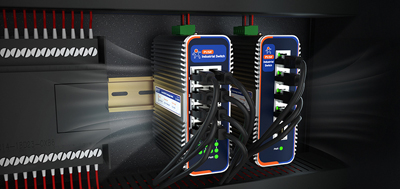
The Difference between 4g modem router and Regular Routers: An In-depth Analysis of the Core of Industrial Internet of Things
With the rapid development of the Industrial Internet of Things (IIoT), 4g modem router, as the bridge connecting the physical world and the digital world, have become increasingly crucial. However, for practitioners in traditional industries, the difference between 4g modem router and regular routers remains unclear. This article aims to provide an in-depth analysis of these differences, helping readers better understand the professional characteristics and value of 4g modem router.
First and foremost, from a definitional perspective, routers are network devices used to connect different networks and exchange data. However, 4g modem router and regular routers differ significantly in their functionality and positioning.
Regular routers are typically used in households or small office environments, primarily serving as home gateways for users to access the Wide Area Network (WAN). Their core functions include providing basic network access services, such as WiFi connections and IP address allocation.
In contrast, 4g modem router are specifically designed for industrial environments, offering higher performance, stability, and security. They not only achieve high-performance Layer 3 network packet forwarding and dynamic routing protocol learning, but also support more advanced features such as VPN, traffic control, and load balancing. These capabilities enable 4g modem router to meet the demands of complex industrial networks, ensuring the real-time, reliable, and secure transmission of data.
In terms of performance and stability, 4g modem router outperform regular routers.
Regular routers tend to have lower hardware specifications such as processors, cache, and memory, with limited NAT forwarding numbers and support for fewer simultaneous user connections. However, 4g modem router employ high-performance hardware platforms with stronger data processing capabilities and higher device capacity. This allows them to better support the simultaneous access and high-speed data transmission of numerous devices in complex industrial network environments.
Furthermore, 4g modem router exhibit higher stability and reliability. They utilize stricter manufacturing processes and more durable materials, enabling them to operate continuously in harsh industrial environments. Additionally, 4g modem router possess various fault detection and recovery mechanisms that can swiftly restore network services in the event of equipment failures, thus ensuring the continuity of industrial production.
In the context of Industrial Internet of Things, security is paramount. 4g modem router offer significant advantages in terms of security and management.
Regular routers typically support fewer protocols and lack capabilities such as internal/external attack defense and protection against viruses, Trojans, and hackers. Conversely, 4g modem router support a wider range of routing protocols and security standards, including SNMP, policies, and unified management protocols. These protocols enable 4g modem router to provide a higher level of network security, safeguarding user data from theft.
Moreover, 4g modem router possess more robust management functions. They often support remote and centralized management, allowing network administrators to conveniently monitor and manage the entire industrial network. Through the management interface of 4g modem router, administrators can view network status, configure network parameters, conduct fault diagnosis and troubleshooting, and more, thus ensuring the stable operation of the industrial network.
4g modem router are widely utilized in various industrial scenarios, such as smart grids, intelligent transportation, and smart manufacturing. In these scenarios, 4g modem router not only provide basic network access services but also ensure the real-time, reliable, and secure transmission of data through their high performance, stability, and security characteristics.
For instance, in the field of smart manufacturing, 4g modem router can connect various production equipment, sensors, controllers, and more, enabling interconnection and data sharing among devices. With the high-performance forwarding and stability guarantees of 4g modem router, real-time collection and transmission of production data can be achieved, providing strong support for production scheduling, quality control, decision-making, and other processes.
4g modem router and regular routers differ significantly in terms of functionality, performance, security, and management. As a core device in Industrial Internet of Things, the importance of 4g modem router cannot be overstated. With the continuous development and expansion of Industrial Internet of Things, 4g modem router will play an increasingly crucial role, providing strong support for the digital transformation and intelligent upgrading of traditional industries.
Looking ahead, as technology continues to advance and applications expand, 4g modem router will undergo continuous upgrades and improvements in their functionality and performance. We have reason to believe that in the future of Industrial Internet of Things, 4g modem router will assume even more significant roles, driving innovation and development in traditional industries.
4G modem
Core Functions: Focuses on transparent data transmission, converting serial port data (e.g., RS232/RS485) into 4G network transmission. Supports Modbus RTU-to-TCP/MQTT protocol conversion, suitable for remote monitoring, data acquisition, and device control.
Typical Applications:
4G Industrial Router
Core Functions: Integrates routing, switching, and firewall capabilities, supporting multi-device access (e.g., WAN/LAN ports, Wi-Fi). Provides LAN distribution, data isolation, remote access, and VPN-encrypted transmission.
Typical Applications:
| Criteria | 4G modem | 4G Industrial Router |
| Interface Expansion | Serial ports (RS232/RS485), SIM slots | Multi-LAN/WAN ports, Wi-Fi, serial ports, eSIM support |
| Protocol Support | Modbus RTU/TCP, MQTT, HTTP | TCP/IP, OPC UA, MQTT, VPN (IPSec, etc.) |
| Network Stability | Relies on single-link, suitable for low-bandwidth needs | Supports dual-link backup (e.g., 4G + wired), ensuring business continuity |
| Security Protection | Basic encryption (e.g., AES-128) | Firewall, IP/MAC filtering, SSL/TLS encryption, VPN |
| Environmental Adaptability | Wide operating temperature range (-40℃~85℃) | Industrial-grade protection (IP30+), dust/waterproof design |
| Management Convenience | Cloud platform integration (e.g., PUSR Cloud) | Supports Web interface, SNMP protocol, remote firmware upgrades |
Scenarios for Choosing 4G modem
Requirements: Low cost, simple data transmission, point-to-point communication.
Examples:
Scenarios for Choosing 4G Industrial Router
Requirements: Multi-device access, high reliability, complex network management.
Examples: