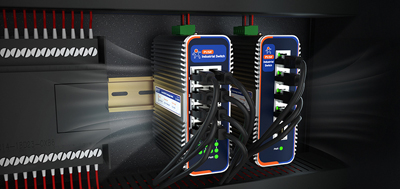
The Perfect Dance Between Heavy Load and Precision: The Docking Revolution in Automobile Manufacturing
On the grand stage of automobile manufacturing, the birth of every vehicle is a symphony of precision and power. From the casting of engine blocks to the welding of car body frames, and from the assembly of powertrains to the installation of interior components, every step tests the accuracy and strength of manufacturing processes. However, when the power of heavy-duty equipment meets the fragility of precision components, achieving perfect docking while ensuring production efficiency has become the "Goldbach's Conjecture" that automobile manufacturers collectively face.
- Customer Voices: The Difficult Choice Between Efficiency and Precision
1.1 Anxiety Over Efficiency First
"Our production line needs to roll off one car per minute, and any halt in any step means significant economic losses." This statement from the factory manager of a joint-venture brand reveals the core pain point of the automobile manufacturing industry—efficiency. In heavy-load scenarios, such as the handling of engine blocks and the assembly of transmission units, traditional equipment often falls short in load capacity or positioning accuracy, resulting in production rhythms that fail to meet design requirements. A domestic brand once had to split the originally designed single-station welding into dual stations due to insufficient load capacity of welding robots, not only increasing equipment investment but also causing an overall efficiency drop of 15% due to process衔接 (Note: "衔接" is translated as "process" here to convey the meaning of process connection; a more precise term could be "process sequencing issues") issues.
1.2 Fear Over Precision First
"A deviation of 0.1 millimeters can lead to the scrapping of the entire powertrain." The concern of the quality director at a new energy vehicle company reveals the harsh reality of precision docking. In high-precision processes such as laser welding and micro-hole machining, even minor vibrations or displacements can trigger defects like porosity and cracks, causing product rejection rates to soar. A luxury brand once had to rework an entire batch of battery pack housings worth tens of millions of yuan due to insufficient positioning accuracy of laser welding equipment, resulting in direct economic losses exceeding 20 million yuan.
1.3 Dual Pressure of Cost and Risk
"We need to control equipment investment while ensuring production safety; it's like walking a tightrope." The sentiment expressed by the technical director of a parts supplier reflects the common dilemma faced by automobile manufacturing companies. Heavy-duty equipment is often expensive, while precision processes demand extremely high equipment stability. Equipment failures or process runaways not only cause direct economic losses but may also trigger quality accidents, damaging brand reputation. An international parts giant once suffered damage to molds worth millions of yuan and a week-long production line shutdown due to a positioning system failure of heavy-duty AGVs, resulting in direct losses exceeding 50 million yuan. - Technological Breakthroughs: From "Single-Point Breakthroughs" to "System Reconstruction"
2.1 The "Flexibilization" Revolution of Heavy-Duty Equipment
Traditional heavy-duty equipment, such as gantry cranes and heavy-duty robotic arms, often emphasize load capacity at the expense of flexibility, with "rigidity" being their aesthetic. However, modern automobile manufacturing imposes new requirements on heavy-duty equipment—achieving micron-level positioning accuracy while ensuring load capacity. The resolution of this contradiction relies on two major technological breakthroughs:
Force Control Technology: By installing six-dimensional force sensors at the end of robotic arms, contact forces are monitored in real-time, and motion trajectories are dynamically adjusted to achieve "rigid yet flexible" docking. A German brand's force-controlled welding robot can complete laser welding of aluminum alloy car bodies under a contact force of 0.5N, improving welding strength by 20% while reducing porosity from 3% to 0.1%.
Compound Motion Control: By decoupling linear and rotational motions and independently controlling the motion parameters of each axis, high-precision docking under complex trajectories is achieved. A Japanese brand's developed heavy-duty assembly robot adopts "X-Y-Z+θ" four-axis联动 (Note: "联动" is translated as "coordinated" here for clarity; "linked" or "synchronous" could also work) control, achieving ±0.02mm positioning accuracy under a 500kg load and improving assembly efficiency by 30%.
2.2 "Heavy-Duty" Adaptation of Precision Processes
Precision processes such as laser welding and micro-hole machining have traditionally been applied in light-load scenarios. How can they be extended to heavy-duty fields? The answer lies in the collaborative innovation of "process-equipment-materials":
Deep Penetration Welding Technology for Laser Welding: By optimizing laser power density and welding speed, a "keyhole effect" is achieved on thick plate materials, forming deep and narrow welds. A 10kW fiber laser welding system adopted by an American brand can achieve single-pass welding on 20mm thick steel plates, with weld strength reaching 95% of the base material and welding deformation controlled within 0.1mm.
Vibration-Assisted Technology for Micro-Hole Machining: By applying high-frequency vibrations during drilling, cutting forces are reduced, and chip evacuation is improved, achieving high-precision machining of micro-hole diameters. A vibration-assisted micro-hole drilling machine developed by a domestic brand can achieve ±0.005mm dimensional accuracy on Φ0.5mm holes, with a hole wall roughness Ra ≤ 0.8μm, meeting the processing requirements of high-pressure oil rails.
2.3 The "Rehearsal" Capability of Digital Twins
In scenarios involving heavy-load and precision docking, the cost and risk of physical trials are often unbearable. Digital twin technology, by constructing virtual production lines, enables the optimization and verification of process parameters before actual production:
Virtual Commissioning: By simulating the motion trajectories of heavy-duty equipment and the processing processes of precision processes in digital models, issues such as interference and vibration can be identified in advance. A virtual commissioning platform adopted by a German brand shortened the commissioning cycle of new production lines from three months to one month and reduced commissioning costs by 40%.
Predictive Maintenance: By collecting equipment operation data and constructing health models, the risk of heavy-duty equipment failures can be predicted, avoiding interruptions in precision processes due to sudden equipment failures. A predictive maintenance system implemented by a Japanese brand reduced the failure rate of heavy-duty robotic arms from 0.5 times per month to 0.1 times per month, improving overall equipment effectiveness (OEE) by 15%. - USR-EG628: The "Intelligent Hub" for Heavy-Load and Precision Docking
In the complex ecosystem of automobile manufacturing, achieving perfect docking between heavy load and precision requires not only breakthroughs in single-point technologies but also an "intelligent hub" capable of integrating equipment, processes, and data. The USR-EG628 industrial PC is precisely the solution born for this need.
3.1 The "Equipment Linguist" of Multi-Protocol Fusion
Automobile production lines often gather equipment from different manufacturers and of different ages, with severe protocol fragmentation issues. The USR-EG628 is equipped with over 10 industrial protocol parsing engines, including Modbus, Profinet, and EtherNet/IP, enabling simultaneous access to heterogeneous equipment such as laser welding machines, heavy-duty robotic arms, and AGVs, and facilitating unobstructed data flow. On the battery pack production line of a new energy vehicle company, the USR-EG628 unified the management of equipment that originally required three sets of gateways for interconnection through a single controller, shortening the equipment integration cycle from two months to three weeks.
3.2 The "Real-Time Decision-Maker" of Edge Computing
Heavy-load and precision docking impose extremely high real-time requirements, and any delay can lead to process runaways. The USR-EG628 is equipped with a 1.0 TOPS NPU and a 4-core ARM processor, enabling complex calculations such as force control algorithms, vibration compensation, and visual inspection to be completed locally with a response delay of <10ms. On the engine assembly line of a luxury brand, the USR-EG628 achieved real-time closed-loop control of bolt tightening forces through edge computing, reducing tightening torque fluctuations from ±5% to ±1% and significantly improving assembly quality consistency.
3.3 The "Production Line Rehearsal Master" of Digital Twins
The USR-EG628 supports seamless integration with mainstream digital twin platforms, enabling real-time mapping of equipment operation data, process parameters, and quality inspection results to virtual production lines, providing data support for process optimization. On the white body welding production line of a domestic brand, the USR-EG628 simulated deformation amounts under different welding sequences through digital twins, optimizing the best welding path and improving the body dimensional accuracy CPK value from 1.33 to 1.67, reaching international leading levels. - Future Outlook: From "Docking" to "Symbiosis"
The docking between heavy load and precision is not only a technological breakthrough but also an innovation in automobile manufacturing concepts. With the deep integration of technologies such as AI, 5G, and digital twins, future automobile production lines will exhibit three major trends:
Self-Sensing Production Lines: By deploying sensor networks on heavy-duty equipment, equipment status, process parameters, and environmental changes can be sensed in real-time, enabling adaptive adjustments. For example, laser welding machines can automatically adjust power density based on material thickness, and heavy-duty robotic arms can dynamically adjust motion trajectories based on load changes.
Self-Decision-Making Production Lines: Based on edge AI and digital twins, production lines can autonomously optimize process parameters, schedule equipment, and predict quality risks. For example, when a delay in a workstation's rhythm is detected, the system can automatically adjust the production plan of subsequent workstations to ensure overall efficiency is unaffected.
Self-Evolving Production Lines: By continuously accumulating process knowledge through machine learning, a reusable knowledge base is formed, driving continuous optimization of production lines. For example, a German brand has established a database containing 100,000 sets of process parameters, shortening the commissioning time of new production lines by 60% and improving quality stability by 30%. - Writing the Poem of Manufacturing Between Power and Precision
The charm of automobile manufacturing lies in its integration of the ruggedness of steel with the finesse of craftsmanship, perfectly combining the power of heavy load with the wisdom of precision. When industrial PCs like the USR-EG628 become the "intelligent hubs" of production lines, and technologies such as digital twins and edge computing inject "digital genes" into manufacturing, we are witnessing a quiet revolution—a revolution in which heavy load is no longer the enemy of precision but its carrier; efficiency is no longer the sacrifice of precision but its amplifier.
For every practitioner in automobile manufacturing, this is not only technological progress but also an elevation of concepts. It makes us believe that between power and precision, between efficiency and precision, there are never irreconcilable contradictions, only solutions yet to be unlocked. And the starting point for all this may be an industrial PC—USR-EG628—that can understand heavy load, read precision, and connect the future.