Afraid to Put Core Process Data from Chip Manufacturing on the Cloud? The IoT Gateway Is the Real Answer
A Question Every Fab Is Avoiding
It's 2024. "Smart manufacturing" has been a buzzword for five years. "Industrial internet" has been pushed for three. Every solution provider says the same thing:
"Put your data on the cloud. Use AI to optimize yield."
Sounds great.
But go ask any Fab CTO: would they send core process data to the cloud?
Nine and a half out of ten will shake their heads.
It's not that they don't understand the technology. It's not that they don't want to optimize yield. It's that they understand it too well — well enough to be afraid.
Because they know better than anyone: core process data in chip manufacturing isn't just data. It's a lifeline. If something goes wrong, it's not about losing money. It's about losing everything.
This article isn't about trends. It's not about painting big pictures. It's about one question:
You're afraid to put data on the cloud, but you can't afford to skip smart analysis. How do you solve this?
The answer might surprise you.
Let's start with the most surface-level concern: data security.
Your lithography exposure parameters, your etcher's gas flow ratios, your ion implantation energy and dosage — in the eyes of a competitor, how much are these worth?
No exaggeration: a complete set of advanced process parameters on the black market costs more than an entire production line's equipment.
So you're not afraid of the cloud because you're paranoid. You're afraid because you know: once that data leaves your factory walls, you lose control of it.
Cloud providers say "we have encryption, we have access control, we have SLAs" — do you believe them?
You do. But you don't dare fully believe them.
Because you've seen too many cases. A major fab's process data intercepted in transit. A foundry's client data "accidentally" leaked by a third-party provider. These things didn't just happen — they happened and you never knew.
Data security is 100 points if nothing goes wrong, 0 points if it does. There's no middle ground.
So your first instinct: don't go to the cloud. Keep the data local. Nobody touches it.
This decision is completely rational.
But then — if you don't go to the cloud, what next?
If data security is a tech problem, compliance is a legal one. And it's a legal problem you can't dodge.
You know better than me what's changed in the chip industry's regulatory environment over the past two years.
Export controls are tightening. Cross-border data transfer approvals are getting harder. Certain countries and regions' clients explicitly require: process data must not leave local premises.
Your Fab might serve both domestic and overseas clients. Domestic clients' data can't leave the country. Overseas clients' data can't enter. You're stuck in the middle. How do you build a cloud architecture?
Build two separate systems? Double the cost. Build one? Half your clients won't accept it.
Worse: regulations keep changing. What's compliant today might not be tomorrow. Putting data on the cloud means handing your fate to an external environment you can't control.
So your second concern: it's not that I don't want the cloud — it's that policy won't let me.
This concern is harder than data security. Because data security you can patch with technology. Compliance? Technology can't solve that.
Okay. Let's say data security and compliance aren't problems. Let's say you have a perfect private cloud. All data stays inside your walls.
Would you go for it now?
Still no.
Because you ran the numbers, and they don't look good.
A single 12-inch Fab line generates TB-level data daily. All of it on the cloud — bandwidth, storage, compute — adds up to a number that makes your CFO wince.
But that's not the worst part. The worst part is: you spent all that money on the cloud, and how much did yield actually improve?
Honestly? Not much.
Because cloud analytics faces a brutal reality — over 90% of chip manufacturing data is "noise." The useful signals are buried in massive raw datasets, requiring extremely fine-grained cleaning and correlative analysis. Doing this in the cloud is extremely expensive and extremely slow.
Your engineers spent three months building a cloud analytics platform. The conclusion? "Recommend optimizing etch parameters."
A recommendation. Again, just a recommendation.
You spent millions and bought a report anyone could have written.
This is what many Fabs feel after going to the cloud: money spent, infrastructure built, but yield is still the same yield.
It's not that the cloud is bad. It's that you're using the cloud the wrong way.
Stack all three fears on top of each other, and you see the truth:
You don't not want smart analysis. You don't want to do smart analysis by "sending data out and getting results back."
What you want is: data never leaves the factory, analysis happens locally, results can go to the cloud, and all risks are controllable.
Put plainly: you don't want the cloud. You don't want local-only. You want — something inside your walls that can "read" your data for you.
IoT Gateway: Not a Compromise — The Optimal Solution
I know what you're thinking.
"Isn't edge computing just a small server? What can it really do?"
More than you think.
Let me break down three core capabilities:
The IoT gateway's logic: where data is generated, that's where it's analyzed.
Lithography exposure data? Processed right next to the lithography tool. Etcher process parameters? Analyzed right next to the etcher. No upload needed. No transmission. No waiting.
Your core process data — from generation to analysis — never crosses the factory wall.
What the cloud receives isn't raw data. It's analyzed results and metrics. Even if the cloud is breached, what leaks is desensitized info like "yield dropped 0.3%" — not your process parameters.
This is real data security — not relying on encryption. Relying on data never leaving in the first place.
Remember Old Chen's story from the last article? An anomaly at 3 AM. By the time the cloud finished analyzing, four hours had passed. 800,000 yuan gone.
What if there had been an IoT gateway on site?
Exposure dose deviated 0.7% from target — this anomaly would be caught by the edge-side rule engine within 500 milliseconds of occurrence. Instant alert. Instant line stop.
The loss isn't 800,000 yuan. It's 11 minutes of production capacity.
11 minutes vs. four hours. That's not optimization. That's saving your life.
Many Fabs dare not touch their existing systems — one change ripples through everything. MES is from Vendor A. EES is from Vendor B. Equipment protocols are from Vendor C. Nobody dares touch anything. Nobody wants to.
The IoT gateway's value: it doesn't replace any of your systems. It just adds a "translator" layer between your equipment and your systems.
SECS/GEM, OPC UA, Modbus, EtherCAT, MQTT — no matter what "language" your equipment speaks, it understands all of them. Translates everything into a unified format. Sends it to your MES or analytics platform.
You don't change the MES. You don't swap the EES. You don't touch a single production line. Add one gateway, and the data pipeline is connected.
This is the kind of solution a Fab can accept: don't touch the existing. Only add the new.
There are plenty of IoT gateways on the market. But not many are truly built for Fab environments.
You know how harsh a Fab environment is better than I do. High temperature, dust, electromagnetic interference, 24/7 non-stop operation — a standard gateway won't last three months.
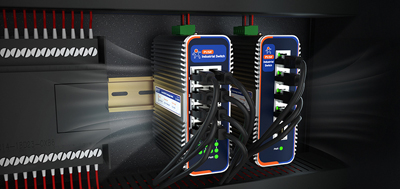
When we push Fab solutions internally, we use USR IoT's USR-M300. The reasons we chose it are practical: full protocol support — SECS/GEM, OPC UA, Modbus all connectable; wide-temperature design — handles the high heat and humidity inside a Fab; fanless fully sealed — no moving parts means no failure points; and most critically, it can run rule engines and lightweight AI models directly at the edge. Data gets "read" without ever leaving the factory.
One electronics manufacturer deployed this solution. Product pass rate improved by 15%. Customer complaint rate dropped by 25%.
But I'm not here to sell gateways. I'm here to give you a selection criterion:
When choosing an IoT gateway, don't look at how powerful the compute is. Look at three things: Are the protocols complete enough? Can it survive the environment? Does the data stay put?
If all three are yes — that's what you need.
The chip manufacturing industry has a deep obsession: the belief that every problem can be solved by more expensive equipment.
Lithography not advanced enough? Switch to EUV. Metrology precision not good enough? New equipment. Yield not going up? New process.
But have you ever thought: the equipment you spent hundreds of millions on is generating data that's being wasted in the most inefficient way possible?
Your lithography tool produces thousands of data points per second — 99% of them are never analyzed in real time. Your etcher fine-tunes parameters every minute — but those adjustments are never recorded or correlated by any system. Your metrology equipment produces GB-level data daily — it sits on a hard drive, never "read" by anyone.
You don't lack data. You lack the right time, the right place, and the right way to use it.
The IoT gateway doesn't solve a tech problem. It solves a cognitive problem. It makes you realize: the value of data isn't "how much you have." It's "how fast you use it."
And in chip manufacturing, one second faster means hundreds of thousands. One second slower means a batch of scrapped wafers.
Back to the original question: core process data — too afraid to put on the cloud. What do you do?
The answer was never "put it on" or "don't put it on."
The answer is: make it so the data doesn't need to go to the cloud to be used intelligently.
This isn't a compromise. This isn't a halfway measure. This is the data architecture a Fab should have in 2024.
The cloud handles what needs long-term analysis — trend forecasting, equipment health management, cross-fab benchmarking.
The edge handles what needs instant response — anomaly interception, real-time alerts, process closed-loop.
Each does its own job. Each stays in its place. Data never leaves the factory. Intelligence never goes missing.
This is the path chip manufacturing should take.
If you're stuck on the "cloud or no cloud" question, or you know you need data analytics but don't know where to start — let's talk. This problem isn't as hard as you think.