After 8 years in the semiconductor industry, I've been fully involved in building and iterating MES systems for three 12-inch wafer fabs and two assembly-and-test lines. I've seen too many teams treat gateways as "just some throwaway forwarding boxes"—only to have production lines go live and immediately encounter data disconnects, protocol incompatibility, and compute power bogging down the MES. The consequences range from 3-to-5-month project delays to, in worst cases, compromised yields on entire wafer batches. Today, I'll walk you through, layer by layer, all the pitfalls I've encountered over the years and the selection logic I've honed.
Many vendors advertise "support for 300+ industrial protocols," but the mask comes right off once you hit the chip fab floor. Our most painful lesson came during our first capacity expansion years ago: we selected a gateway that claimed SECS/GEM support, but when we got it next to the etcher, it could only read two status bits—"equipment on/off." It couldn't retrieve a single one of the 127 core process parameters, such as RF power, chamber pressure, or etch rate. A dozen of us camped out in the cleanroom for three full weeks, writing scripts on the fly to do intermediate conversions.
Even then, we missed an abnormal alarm on one wafer lot, and yield dropped by 2 percentage points—a loss of nearly one million RMB. We later learned that when selecting a gateway for a chip fab, don't just count the number of protocols. You must lock in two hard requirements: first, semiconductor-specific protocols like SECS/GEM and HSMS must fully comply with the complete SEMI E4, E5, E10, and E30 standards, enabling read/write access to all data points; second, you must demand that the vendor provide a tested adaptation report for the same model of semiconductor equipment—generic PLC adaptation demos don't count.
The operating environment on a chip fab line is far harsher than in most ordinary manufacturing settings. On one rushed pilot project, we chose a gateway with great cost-performance—it passed all lab tests at room temperature. But when it got to the cleanroom, a brief air-conditioning fluctuation to 45°C in the summer fried three units in one week. Worse, when one of them went down, it took five connected etchers completely offline with it. The MES didn't receive any alarms, and by the time operations discovered the issue, the equipment had been running under abnormal conditions for over 20 minutes. Post-mortem analysis revealed that the gateway's PCB had no conformal coating, and its power module lacked wide-temperature derating design—it simply couldn't handle the trace corrosive gases and complex electromagnetic interference in the cleanroom. When a chip fab line stops, the hourly loss often runs into the hundreds of thousands.
As the single entry point, a gateway without hardware-grade high reliability is unusable, no matter how cheap. A qualified semiconductor-scenario gateway must support -40°C to 85°C wide-temperature operation, ±4KV surge protection, a whole-unit MTBF no less than 1 million hours, and at least 16 GB of local cache to ensure no data loss during 72-hour network outages.
Our initial architecture was simple: gateways did pure data passthrough, with all data cleansing and anomaly detection offloaded to the cloud-based MES. But once the line ramped to full capacity, the data volume exceeded 180,000 messages per second. Gigabit bandwidth was 85% saturated, MES server load consistently hovered above 95%, and data latency spiked to 27 seconds. During one etcher temperature anomaly, by the time the data reached the MES and triggered an alarm, the optimal intervention window had long passed—just replacing the damaged chamber components cost over 1.2 million RMB. That incident taught us a hard lesson: real-time control logic in a chip fab must be pushed down to the edge. A gateway can't just be a "megaphone"; it needs sufficient local compute power to filter out invalid data, perform local threshold-based anomaly detection, and only upload processed, actionable data to the MES. This approach not only reduces cloud load but also prevents the entire data pipeline from collapsing during network fluctuations.
The semiconductor industry evolves fast—production lines add new equipment and upgrade processes almost every year, and MES systems roll out major updates in parallel. We had a batch of gateways that were only three years old when the vendor stopped providing firmware updates entirely. Newly introduced domestic PVD equipment with proprietary protocols was completely incompatible. When we tried to remotely configure over 200 gateways in bulk, we discovered the management platform supported at most 30 concurrent devices. Our ops team had to lug laptops through the fab, plugging into each gateway individually over Ethernet—a grueling 19-day ordeal. Even more frustratingly, these gateways ran a completely closed underlying system, so we couldn't even deploy a simple edge-based process-statistics function ourselves. We ended up scrapping the entire batch, wasting nearly one million RMB in upfront hardware investment. Since then, our selection criteria have always included: Is the gateway based on an open Linux architecture? Does it support Docker container deployment? Can we import our own edge applications written in Python or C++, without begging the vendor for custom development every time we need a small new feature?
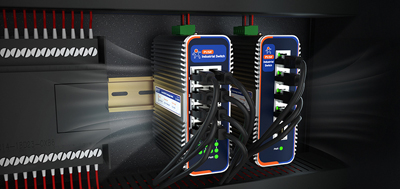
After turning all these painful lessons into hard selection criteria, we came across the USR-M300 IoT gateway from Usr-IoT during our latest production line deployments over the past two years. It essentially hit all our core requirements. It not only fully supports semiconductor-specific protocols like SECS/GEM and HSMS, but also offers deep adaptation for proprietary protocols of major domestic and international semiconductor equipment—saving us from those agonizing all-night scripting sessions for protocol conversion. On the hardware front, it features comprehensive reinforcement and has passed over a dozen domestic and international certifications, including 3C, CE, FCC, and SRRC type approval, making it fully capable of 7×24 continuous operation on the chip fab floor.
It also packs multi-core heterogeneous edge computing power, supporting local data cleansing and real-time anomaly detection, with open containerized deployment capabilities that allow future process iterations and expansions without frequent hardware replacements. After 8 years in chip fab MES, my deepest takeaway is this: the IoT gateway may look like the most inconspicuous component in the entire system, but it is the first gateway connecting physical production equipment to the digital world. Every shortcut you take during selection will eventually come back as a late-night firefighting emergency on the production line. By plugging these hard-earned pitfalls in advance, the gateway can truly become the solid foundation of the MES system—not the weak link in line stability.