Intelligent Logistics Sorting System: All-in-One Computer Touch Screen Empowers a New Chapter in Efficient Concurrent Processing
In today's rapidly developing logistics industry, sorting efficiency and accuracy have become key indicators for measuring the operational effectiveness of logistics centers. Faced with the growing volume of parcels and diverse sorting requirements, traditional logistics sorting systems struggle to meet the demands for high efficiency, flexibility, and intelligence in modern logistics. This article will delve into the core pain points of intelligent logistics sorting systems, gain insights into the psychological considerations of customers before choosing to upgrade their systems, empathize with the challenges they face, and elaborate in detail on how the all-in-one computer touch screen supports concurrent processing of over 200 sensors, bringing unprecedented improvements in sorting efficiency and accuracy to logistics centers. Among them, the all-in-one computer touch screen USR-SH800 (its characteristics will be briefly introduced in the article without hard selling) serves as a crucial component of the solution, demonstrating its unique value.
When considering upgrading their sorting systems, logistics centers primarily expect a qualitative leap in sorting efficiency. They hope that the new system can handle more parcels while maintaining or improving sorting accuracy. Additionally, flexibility is an important consideration; the system needs to adapt to parcels of different sizes, shapes, and weights, as well as diverse sorting rules. Intelligence is an inevitable trend for long-term development, optimizing sorting processes through data analysis and prediction to proactively address peak periods.
However, upgrading the system is not without concerns. Cost is the primary consideration, including equipment purchase, installation and commissioning, personnel training, and post-maintenance. Compatibility is equally important; the new system needs to seamlessly integrate with existing logistics equipment to avoid information silos. Stability is the top concern for customers, as any failure in the sorting system can lead to the paralysis of the entire logistics center, resulting in significant economic losses.
Traditional sorting systems often rely on manual labor or simple mechanical devices, with limited sorting speeds and susceptibility to human factors. During peak periods such as e-commerce promotions, the surge in parcel volume makes it difficult for traditional systems to cope, leading to sorting delays and affecting customer satisfaction.
Manual or simple mechanical sorting is prone to errors, especially when dealing with similar packaging or small parcels, resulting in a relatively high mis-sorting rate. This not only increases subsequent processing costs but may also damage customer trust and affect the company's reputation.
Traditional sorting systems are often designed for specific types of parcels, making it difficult to adapt to parcels of different sizes, shapes, and weights. When sorting rules change, system adjustments are difficult, requiring additional investment in manpower and time for modifications.
Traditional systems lack data analysis and prediction capabilities, unable to optimize sorting processes based on historical data to proactively address peak periods. At the same time, they lack real-time monitoring and early warning mechanisms for abnormal situations during the sorting process, such as parcel blockages and equipment failures.
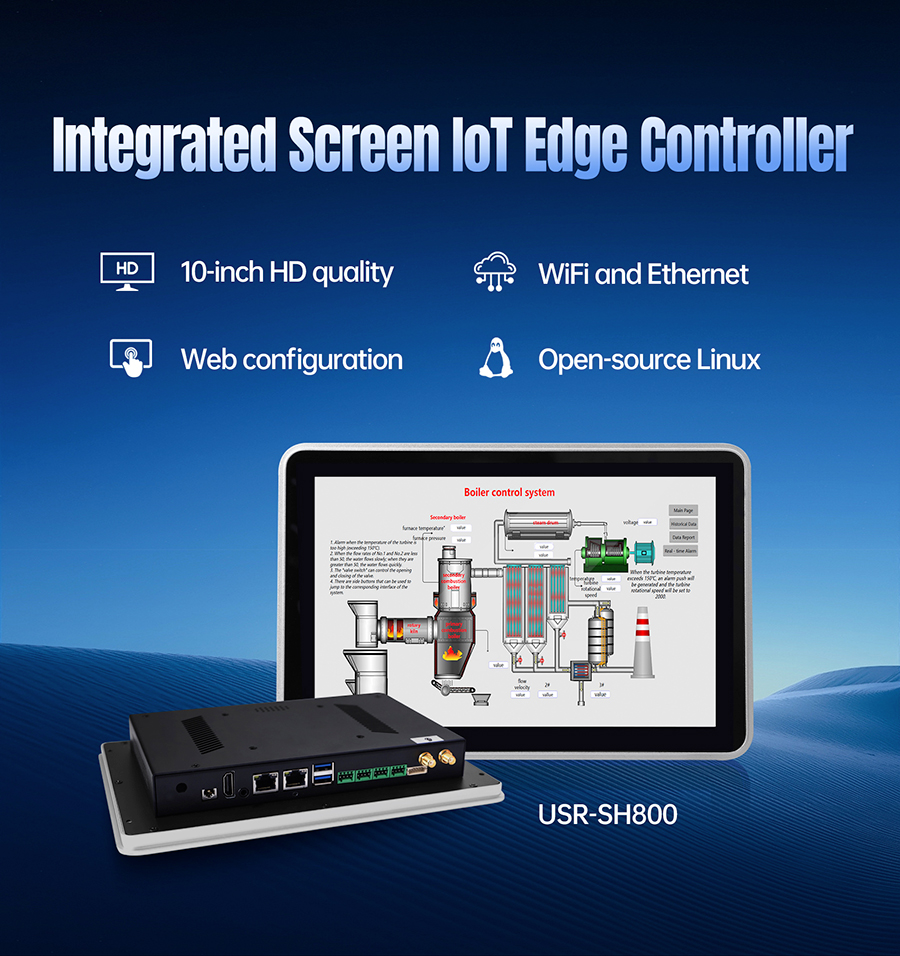
As the core processing unit of the intelligent logistics sorting system, the all-in-one computer touch screen integrates a high-performance processor, large-capacity memory, and high-speed storage, enabling it to support concurrent processing of over 200 sensors and achieve high-speed data collection, processing, and analysis. Taking the all-in-one computer touch screen USR-SH800 as an example (its characteristics will be briefly introduced here), it possesses powerful computing capabilities and a wealth of interfaces, allowing it to easily connect with various sensors and actuators, achieving comprehensive intelligence in the sorting system.
By deploying over 200 sensors, the all-in-one computer touch screen can achieve comprehensive perception of the sorting system. This includes real-time collection of information such as parcel size, shape, weight, position, and speed, as well as monitoring of equipment status and environmental parameters. These data provide a solid foundation for precise control and optimization of the sorting system.
Based on the powerful computing capabilities of the all-in-one computer touch screen, efficient sorting algorithms can be run to quickly calculate the optimal sorting path according to parcel information and sorting rules. At the same time, through real-time data analysis and prediction, sorting strategies can be adjusted in advance to cope with peak periods and abnormal situations, ensuring a dual improvement in sorting speed and accuracy.
The all-in-one computer touch screen supports flexible configuration and expansion, allowing adjustments to the number and type of sensors, as well as sorting rules and algorithms, according to the actual needs of the logistics center. At the same time, it features open interfaces and protocols, enabling seamless integration with existing logistics equipment, achieving information sharing and collaboration, and improving overall operational efficiency.
Through the intelligent management functions of the all-in-one computer touch screen, remote monitoring, fault diagnosis, and early warning of the sorting system can be achieved. When equipment fails or experiences abnormalities, the system can immediately issue an alarm and provide detailed fault information and solutions, helping maintenance personnel quickly locate problems and reduce downtime. At the same time, through data analysis and prediction, equipment maintenance and replacement can be arranged in advance, reducing operational and maintenance costs.
A large logistics center faced issues such as low sorting efficiency, insufficient accuracy, and poor flexibility, and decided to upgrade its sorting system by introducing a solution supported by the all-in-one computer touch screen for concurrent processing of over 200 sensors.
Deploy the all-in-one computer touch screen USR-SH800 (characteristics introduction) at the logistics center, connect it with various sensors and actuators, and achieve comprehensive intelligence in the sorting system. Improve sorting speed and accuracy through efficient sorting algorithms; adapt to diverse sorting needs through flexible configuration and expansion; reduce operational and maintenance costs through intelligent management and maintenance.
After the project implementation, the sorting efficiency of the logistics center significantly improved, with parcel processing volume during peak periods increasing by more than 30% and the mis-sorting rate dropping to below 0.1%. At the same time, the system's flexibility increased, enabling it to quickly adapt to changes in sorting rules and new types of parcels. Operational and maintenance costs were reduced by 20%, and the work efficiency of maintenance personnel significantly improved.
Intelligent logistics sorting systems represent an inevitable trend for the future development of the logistics industry. By introducing a solution supported by the all-in-one computer touch screen for concurrent processing of over 200 sensors, logistics centers can achieve a dual improvement in sorting efficiency and accuracy while reducing operational and maintenance costs and enhancing overall operational effectiveness. In the future, with continuous technological advancements and the continuous expansion of application scenarios, intelligent logistics sorting systems will become more intelligent, flexible, and efficient. We will continue to delve deeper into the field of intelligent logistics, providing customers with higher-quality and innovative solutions, and jointly promoting the transformation, upgrading, and high-quality development of the logistics industry.