In the automated quality inspection segment of modern packaging production lines, AI visual inspection has become a core technical means to ensure product appearance compliance, clear labeling, and complete sealing. However, many enterprises find themselves in the awkward dilemma of "perfect algorithm performance in theory, frequent false positives in practice" during actual implementation.
The first reaction of many is to assume the algorithm model is not accurate enough, repeatedly adjusting sample libraries and optimizing thresholds, yet they consistently fail to fundamentally reduce the false positive rate. A large amount of industrial field practice has proven that the core pain point behind frequent false positives in packaging line AI visual inspection is often not the algorithm itself being insufficient, but rather the inadequate supply of edge-side computing power, which cannot support the entire process of image preprocessing, real-time inference, and multi-dimensional rule linkage, ultimately causing the detection system to perform inaccurately under complex working conditions.
The working conditions on packaging production lines are far more complex than in the laboratory: high-speed lines generate image data streams of dozens of frames per second; reflections from packaging materials, fluctuations in workshop lighting, and texture differences between different batches of packaging all introduce significant interference to visual inspection. In traditional solutions, images captured by vision cameras are either directly uploaded to the cloud for inference or rely on local industrial computers with limited computing power for basic processing — both modes have obvious shortcomings.
In the cloud inference mode, transmitting large amounts of high-definition images occupies high bandwidth, and network latency fluctuations are significant. Once network jitter occurs, the feedback of detection results lags, unable to match the high-speed rhythm of the production line, and misjudgments due to missed detections caused by data packet loss can also easily occur. Ordinary local industrial computers or low-computing-power edge devices can only support basic image recognition. They cannot simultaneously complete the full-chain processing of "image denoising - reflection filtering - AI inference - rule verification" locally, forcing the simplification of the detection process by feeding raw images directly into the model. This ultimately misjudges interference factors such as reflections and texture differences as defects, generating a large number of invalid false positives.
These false positives directly cause frequent production line stoppages for re-checking. For a packaging production line with a daily output of tens of thousands of items, even a 5% false positive rate can generate thousands of invalid alarms per day. This not only significantly reduces production efficiency but also gradually desensitizes operators to real defects, ultimately leading to non-compliant packaging entering the market, causing both brand and economic losses for the enterprise.
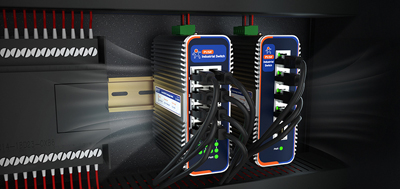
Addressing the computing power pain points of packaging line visual inspection, the USR-M300 modular industrial IoT gateway, with its powerful edge processing capabilities, has become a key enabler for solving the false positive problem. This gateway features a complete industrial-grade hardware configuration, equipped with a high-performance processor. Its edge computing power is sufficient to support parallel preprocessing and real-time AI inference for multiple streams of visual images. Simultaneously, it integrates rich industrial interfaces, allowing direct connection to industrial cameras, PLCs, sensors, and actuators on the production line, enabling a full-process local closed loop of data collection, analysis, and control.
In terms of protocol compatibility, the USR-M300 supports mainstream industrial acquisition protocols, enabling rapid connection to various equipment on packaging production lines. It can be quickly integrated into existing line architectures without complex protocol conversion development. It has also passed more than ten international and domestic authoritative certifications including 3C, CE, FCC, and ROHS. Its industrial-grade design with wide temperature and voltage tolerance can adapt to the complex electromagnetic environment and temperature fluctuations in packaging workshops, ensuring long-term, continuous, stable operation without downtime, fully meeting the requirements of 7×24-hour uninterrupted operation in industrial scenarios.
Computing Power Empowers Full-Process Optimization, Fundamentally Reducing Visual Inspection False Positive Rate
Leveraging the ample edge computing power of the USR-M300, visual inspection on packaging production lines can move beyond the misconception of "simply optimizing the algorithm." Through full-process localization, interference is filtered layer by layer from the image source to the final judgment, significantly reducing the probability of false positives.
First, before images enter the AI model, the industrial IoT gateway can complete real-time image preprocessing locally: performing denoising, polarized effect enhancement, and reflection area identification and filtering on the captured packaging images. It pre-optimizes features of highlight areas and non-defect textures that are easily misjudged as defects, improving the quality of images input to the AI model from "60 points" to "85 points," thereby reducing interference factors from the data source.
Second, sufficient edge computing power can support the parallel operation of "AI inference + multi-layer rule verification": After completing basic AI defect identification, the industrial IoT gateway can also overlay process rule filtering using local computing power. For example, based on the actual process of the packaging line, it can set multi-layer rules such as minimum defect area filtering, defect location correlation verification, and packaging texture feature exclusion. This performs a secondary screening of suspected defects identified by AI, directly filtering out alarms for non-real defects like mold textures or slight stains, completing the final judgment without needing to upload to the cloud.
Finally, all detection logic is completed on the edge side, eliminating dependence on cloud transmission. The feedback delay of detection results can be compressed to the millisecond level, fully matching the operating rhythm of high-speed packaging lines. Even if temporary network interruptions occur, the industrial IoT gateway can still independently run the detection logic, preventing issues like detection interruption or a surge in false positives.
In a deployment project at a domestic food enterprise's bagged packaging line, the visual inspection solution equipped with the USR-M300 industrial IoT gateway, without changing the original AI algorithm model, directly reduced the visual inspection false positive rate from the original 18% to below 2% through full-process computing power enhancement on the edge side. The manual re-checking workload on the production line was reduced by 80%, the time for line stoppages for re-checking was significantly shortened, overall production efficiency increased by over 20%, and the problem of non-compliant products flowing out due to operator fatigue and missed inspections was completely avoided.
Different from traditional visual inspection solutions, the USR-M300 industrial IoT gateway brings a "computing power + algorithm + process rules" integrated quality inspection upgrade to packaging production lines. It moves beyond the traditional misconception of "adjusting the algorithm when false positives occur," using ample edge computing power to fill the previously overlooked links of image preprocessing and local rule verification. This allows the true capabilities of the AI algorithm to be fully utilized, ultimately helping packaging manufacturing enterprises achieve more stable and efficient automated quality inspection, truly unleashing the technical value of industrial visual inspection.