Building a Welding Quality Traceability System: How Can Serial Port to Ethernet Adapters Ensure Data Integrity and Traceability?
In the welding workshop of an automotive parts manufacturing enterprise, under the early morning lights, the production line remains bustling. However, an urgent call from a customer breaks the night's tranquility—a batch of exported welded parts has been returned due to quality issues. The enterprise not only faces substantial compensation but may also lose long-term cooperative customers. Investigation reveals that the problem stems from a brief anomaly in a critical parameter during the welding process. However, due to the lack of complete data traceability, the enterprise cannot quickly locate the root cause of the failure and can only respond passively. Such scenarios are not uncommon in the manufacturing industry. The absence of a welding quality traceability system leaves enterprises trapped in a "data silo" dilemma, often resulting in "closing the stable door after the horse has bolted" when issues arise.
Minor fluctuations in parameters such as current, voltage, and temperature during the welding process can affect weld quality. However, in traditional welding workshops, this data is often scattered across equipment controllers, paper records, or manual inspections, lacking unified management and storage. When quality issues arise, enterprises need to spend a significant amount of time reviewing historical data and questioning operators, sometimes even failing to identify the root cause. For example, one enterprise had to rework hundreds of parts due to weld porosity issues and eventually discovered a faulty gas flow meter on a welding machine. However, due to data deficiency, the troubleshooting process took a week, resulting in direct losses exceeding one million yuan.
Customer Psychological Insight: Enterprises desire the ability to "trace sources with one click" but are trapped in the frustration of "finding a needle in a haystack" due to scattered data and inconsistent formats.
The enhancement of welding quality relies on in-depth analysis of historical data. However, many enterprises can only rely on engineers' experience for process adjustments due to incomplete data collection and outdated analytical tools. For example, one enterprise discovered insufficient weld strength in a batch of products but could only adjust parameters through trial and error due to a lack of correlation data between welding current, voltage, and strength. It took several months to find the optimal solution, while competitors had quickly iterated their processes through data analysis and seized market opportunities.
Customer Psychological Insight: Enterprises hope to "speak with data" but are forced to rely on "empiricism" due to poor data quality and weak analytical capabilities.
In high-end manufacturing fields such as aerospace and new energy vehicles, quality traceability is a mandatory compliance requirement. For example, standards like ISO 9001 and IATF 16949 explicitly require enterprises to establish complete quality records supporting product lifecycle traceability. However, many enterprises repeatedly encounter obstacles during customer audits or regulatory inspections due to data deficiency or non-standard formats, even facing risks such as order cancellations and legal lawsuits.
Customer Psychological Insight: Enterprises desire "compliance without worries" but are trapped in the anxiety of "passive defense" due to an imperfect traceability system.
In welding workshops, equipment protocols are highly fragmented: KUKA robots use the KRL protocol, FANUC adopts the Focas protocol, and domestic equipment may be based on Modbus or custom protocols. Traditionally, these devices cannot be directly networked due to protocol incompatibility, and data collection relies on manual transcription or local storage, which is inefficient and prone to errors.
Solution with Serial Port to Ethernet Adapter:
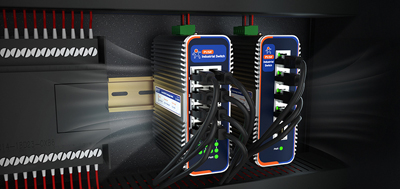
Taking USR-N510 as an example, it supports industrial protocols such as Modbus RTU/TCP, TCP/UDP, and HTTP, enabling seamless integration with heterogeneous devices like welding robots, PLCs, and sensors. Through its protocol conversion function, USR-N510 converts serial port data (e.g., RS-232/485) sent by devices into TCP/IP protocol, achieving interconnection between devices and networks. For example, one enterprise converted KUKA robot's KRL protocol data into Modbus TCP using USR-N510 and uniformly integrated it into the MES system, improving data collection efficiency by 90%.
Welding quality traceability places extremely high demands on data integrity. Any loss or tampering of parameters can lead to distorted traceability results. Traditionally, data may be lost during transmission due to protocol mismatches or network interruptions, while manual data entry can introduce errors.
Solution with Serial Port to Ethernet Adapter:
USR-N510 employs "transparent transmission" technology, making no modifications to data during protocol conversion to ensure the integrity of the original data. Simultaneously, it supports data caching and breakpoint resumption functions: when the network is interrupted, data is temporarily stored in the local buffer; upon network recovery, missing data is automatically retransmitted, avoiding "data gaps." For example, one enterprise achieved real-time collection of welding parameters using USR-N510, maintaining a data integrity rate of over 99.9% even during network fluctuations.
Welding workshops have a large number of devices distributed widely. Traditionally, each device needs to be individually wired to the control room, resulting in high costs and complex maintenance. Additionally, older devices may not have network interfaces, preventing direct integration into modern traceability systems.
Solution with Serial Port to Ethernet Adapter:
USR-N510 provides four independent serial ports, enabling simultaneous connection to welding robots, welding machines, wire feeders, temperature sensors, and other devices, reducing wiring costs. For older devices without network interfaces, USR-N510 grants them "networking capabilities" through serial-to-network conversion, allowing integration into the traceability system without device replacement. For example, one enterprise integrated 20 older welding machines into the MES system using USR-N510, improving equipment utilization by 30% and saving over 500,000 yuan annually in equipment modification costs.
Welding data contains sensitive information such as process parameters and equipment status, which, if leaked, could be exploited by competitors or pose compliance risks. Traditionally, data transmission relies on plaintext protocols, making it vulnerable to interception or tampering.
Solution with USR-N510:
USR-N510 supports AES-128/256 encryption algorithms, providing end-to-end encryption for transmitted data to ensure it remains "unreadable and unmodifiable" during transmission. Simultaneously, it offers access control functions, restricting illegal device access through mechanisms like IP whitelisting and MAC binding to prevent data leakage. For example, one enterprise achieved financial-grade data security when transmitting welding data over the public network using USR-N510's encryption function, significantly enhancing customer trust.
Welding quality traceability requires clarifying the chronological order of parameter changes. For example, to trace the cause of cracks in a weld, it is necessary to review current and voltage changes 10 seconds before the crack occurred. Traditionally, unsynchronized device clocks can lead to time recording deviations, affecting traceability accuracy.
Solution with USR-N510:
USR-N510 supports NTP (Network Time Protocol) synchronization, automatically synchronizing time with cloud or local NTP servers to ensure consistent timestamps across all devices. For example, one enterprise achieved time synchronization for welding equipment using USR-N510, reducing time deviations to less than 10 milliseconds during traceability analysis and improving the efficiency of fault root cause identification by 80%.
Welding workshops generate large volumes of data with high real-time requirements. For example, a welding robot can produce 100 parameter records per second, resulting in gigabytes of data per day for 10 devices. Uploading all data to the cloud for processing can lead to slow traceability responses due to network latency.
Solution with USR-N510:
USR-N510 incorporates an edge computing module that performs preliminary data processing locally (e.g., filtering, aggregation, anomaly detection), uploading only critical data to the cloud. For example, one enterprise reduced welding data uploads by 70% using USR-N510's edge computing function, lowering cloud storage costs by 50% while shortening traceability query response times from minutes to seconds.
This workshop has 20 welding robots, 50 welding machines, and 100 temperature sensors, producing 100,000 battery trays annually. Traditionally, welding data was scattered across equipment controllers, and quality traceability relied on manual inspections and paper records, resulting in:
An average fault traceability time of 4 hours, with rework costs accounting for 5% of production value;
Quality improvement relying on experience, with process iteration cycles lasting up to 3 months;
Deductions during customer audits due to incomplete traceability data, affecting order acquisition.
Device Networking: Using USR-N510's four serial ports, welding robots, welding machines, and sensors were simultaneously connected, achieving interconnection between devices and the MES system.
Data Collection: USR-N510 collected current, voltage, temperature, and other parameters in real-time, filtering invalid data through its edge computing module and uploading critical data to the cloud.
Quality Traceability: A welding quality archive was constructed based on dimensions such as timestamps and device IDs, supporting multi-dimensional traceability by batch, workstation, and time.
Anomaly Alerting: Parameter thresholds were set, and when data anomalies occurred, USR-N510 automatically sent alerts via SMS or email and triggered the work order system.
Improved Traceability Efficiency: Fault location time was reduced from 4 hours to 15 minutes, and rework costs were lowered by 70%;
Accelerated Quality Improvement: Through data analysis, process iteration cycles were shortened from 3 months to 1 week, and the first-pass yield rate of welds improved to 99.5%;
Reduced Compliance Risks: Complete quality archives passed customer audits, resulting in over 50 million yuan in new annual orders.
The establishment of a welding quality traceability system represents not only a technological upgrade but also a transformation in management thinking. It enables enterprises to shift from "post-event firefighting" to "proactive prevention" and from "experience-driven" to "data-driven" operations. The serial port to ethernet adapter USR-N510, serving as a "data bridge" connecting devices and networks, provides solid technical guarantees for quality traceability through its core capabilities such as protocol conversion, data transparent transmission, and multi-device access.
For manufacturing enterprises, USR-N510 is not just a product but a key to unlocking the "data value" door. It transforms every parameter and fluctuation during the welding process into traceable and analyzable "digital assets," providing a continuous source of motivation for enterprises to improve quality, reduce costs, and enhance competitiveness. As the sparks of welding intertwine with the glow of data, the manufacturing industry is moving towards a smarter, more efficient, and more reliable future.