Someone once shared a photograph: a cluster of devices hanging from a cord in mid-air, wiring exposed, captioned with a wry line about peak edge computing and about having meant to avoid vendor lock-in. The sharpest comparison came from five years earlier, when someone dug up an almost identical setup and added that nothing had broken, only the cord needed replacing. Another person noted that the hanging height made it easy to reach in and push the loose connector back in.
Assembling a system from scratch to stay clear of a vendor often ends with a system locked to whoever built it. Once that person moves on, what remains hangs together by individual wires.
Staying replaceable does not come from self-assembly. It comes from writing down, before the order is placed, which layer is likely to be swapped later and where that layer touches everything else. An industrial iot gateway sits at the junction of three things: the devices below it, the platform above it, and the host computer beside it. A change on any one side lands on the gateway.
The field side rarely changes along with it. Meters, drives and older PLCs usually outlast the gateway by years, so the check comes down to one question: when the gateway is replaced, can the existing parameter set be carried over as it stands?
Three items need copying. Interface type and count: RS232 is point-to-point and reaches a few dozen meters; RS485 is a differential bus that carries multiple devices over several hundred meters, and the two are not interchangeable through a passive adapter. The four serial settings: baud rate, data bits, parity and stop bits, where a single mismatch produces a link with no data on it. Modbus station IDs and register mapping: how many stations share the bus, which registers each station reads, and how raw values are scaled.
The test compresses into one sentence: put these into a table, and the replacement gateway can be configured by filling that table in.
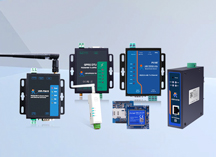
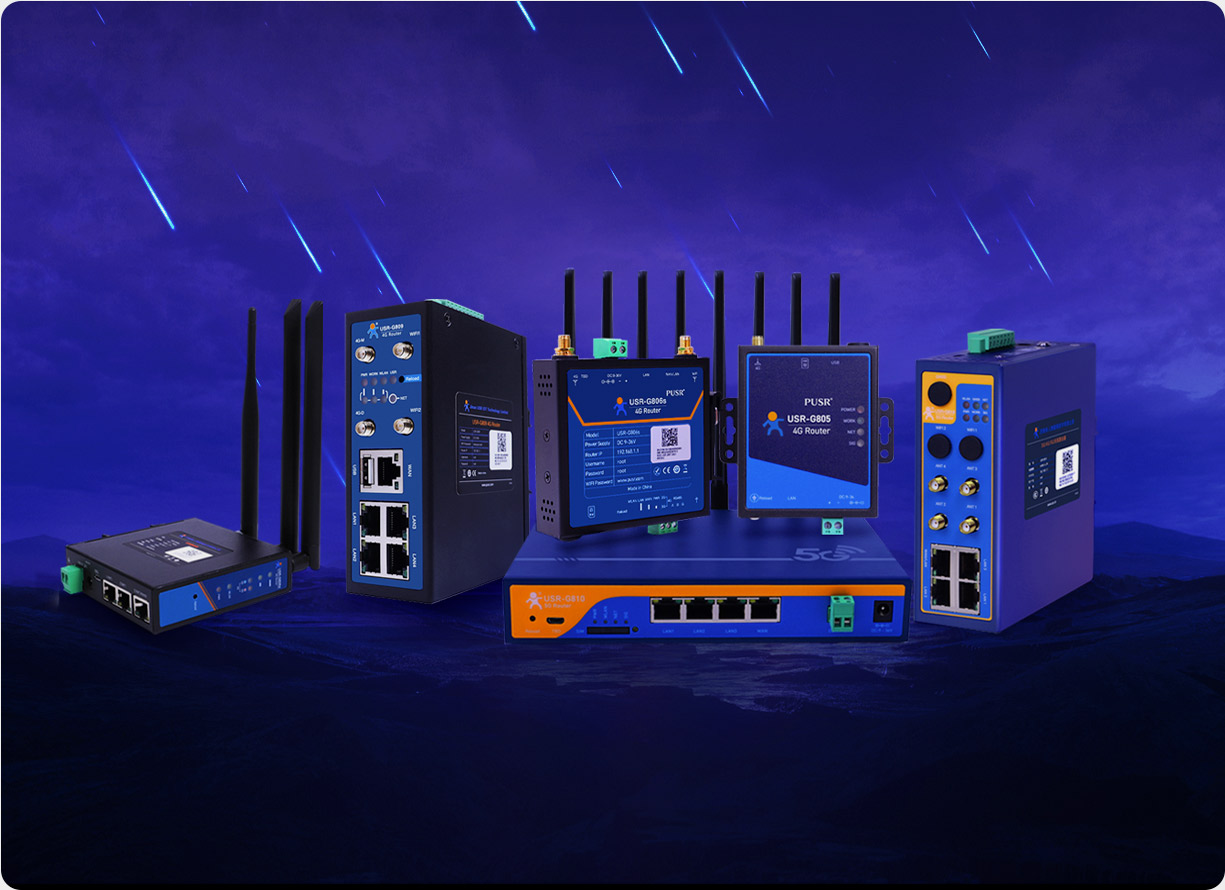
The interface layout of the USR-M300 follows that logic: one RS232/RS485 port plus one RS485 port, one WAN/LAN port plus one LAN port, along with 2 digital inputs, 2 digital outputs and 2 current-type analog inputs. Serial, Ethernet and IO channels collect in parallel, up to 2000 points. It converts between Modbus RTU and Modbus TCP and covers common PLC protocols; local logic is built with Node-RED graphical programming on a dual-core processor running up to 1.2 GHz. Three-level EMC protection, -25 to 75 degrees Celsius, wide-range power input, DIN rail or wall mounting.
Of the three layers, the cloud is the easiest to change and the easiest to get stuck with, because the outbound format is proprietary.
Three things to check. Whether the reporting protocol is standard MQTT and TCP rather than one platform's own ingestion method. Whether the message format is under local control: which JSON field names are used, whether values carry units and timestamps, decided by a template on this side. Whether two destinations can run at once, so during the migration week the old and new platforms run in parallel and the cutover happens only after the data matches.
One more item is easy to miss: who holds the data covering the period when the link was down. Backfill on the gateway means changing platform only changes where the data is received. Backfill on the platform side means the backfill logic has to move along with everything else.
The USR-N720 answers this part. Up to 5 concurrent connections: 2 MQTT, 2 TCP and 1 to the PUSR cloud, with SSL available on both MQTT and TCP. Data collected over Modbus and DL/T645-2007 is decoded and computed on the gateway, then reported as JSON with customizable fields, at a capacity above 1000 points. An SD card buffers data offline and fills the gap once the link returns. Metal housing, DC 9-36 V, -40 to 85 degrees Celsius, DIN rail or wall mounting, dual watchdog.
When a host computer, SCADA or MES is replaced, the risk is not communication, it is where the business logic lives. Logic written in the host has to be rewritten along with the software. Logic written on the gateway keeps collection and local interlocks running after the host changes.
There is a reverse trap here. Piling all the logic into the gateway only relocates the lock. Anything written in should also come back out, and the test is whether the flow can be exported, in a common format rather than one that opens only in a single vendor's tool. The point table needs the same independence: variable names and addresses belong in a separate document, not only inside one project's configuration file.
The test is direct: stop the host for a day and see whether collection continues and whether local threshold actions still fire. The USR-M300 supports custom reporting conditions and alarms, so an exception surfaces on the gateway instead of waiting for a platform poll.
Each of the three sections above checks its own scope; at handover they merge into a single table. Columns along these lines: which machine the gateway sits beside, whether the port is 232 or 485, the four serial settings, the Modbus station ID, register addresses and the physical quantity each represents, the reporting protocol, message field names, and who reads it.
The value of that table is that changing any one layer only touches a few columns. Replacing the gateway changes the interface and parameters. Replacing the platform changes the reporting protocol and destination address. Replacing the host software changes who reads it. Without the table, every replacement begins with a fresh survey of the site.
Two places in the table deserve headroom. Size the point count against the list three years out; 2000 points is capacity left for expansion, not a target to fill this time. Leave one interface spare: the modular IO of the USR-M300 extends to DI, DO, AI and AO, and where the serial inventory is not settled yet, a switchable port is the safer choice, as with the USR-N510, available in an RS232/422/485 three-in-one version and an RS485-only version, with the four serial settings changeable from the network side.
For shipments crossing borders, one further check applies: whether certifications cover the operating region. The USR-M300 holds 3C, CE, FCC, ROHS, WEEE, CTA, ANATEL, ECAS ROHS, MTC, NBTC, RCM, SRRC type approval and TDRA, along with EN 18031 cybersecurity certification.
What made the rig in that photograph hard to replace was not a vendor lock. Nobody had left a list to hand to the next device. Selecting an industrial iot gatewa