A developer once shared his experience trying to send a multi-gigabyte file to a colleague. He went through one cloud drive after another—each required an account, imposed size limits, and routed the file through a third-party server. After all that hassle, he built his own point-to-point transfer tool: two endpoints connect directly, no middleman, no size limit. The story resonates on the factory floor, too.
A production line needs a few RS485 instruments added. The HMI software has long been written, and it talks to a COM port. The traditional workflow looks like this: a field engineer shows up with a laptop, installs drivers, sets IP addresses, reconfigures the software's serial port, and—if the luck runs out—goes back and forth with the network administrator over subnets. The instruments themselves are easy to connect. What's hard is the "getting them onto the network" step. That's exactly the step a serial device server turns from an engineering task into plug-and-play.
Here's how it's done, in four concrete moves.
The change everyone dreads is a change to the software. Serial device servers like the USR-TCP232-302 ship with Virtual COM software that maps a network port to a local COM port on the PC. Existing programs that communicate over a serial port simply point to the new COM port—not a single line of code changes. The serial cable's distance limit disappears with it: the device sits at the far end of the plant, the operator sits in the control room, and it works exactly as if they were side by side. The USR-TCP232-410s adds a second port (RS232 + RS485) that works simultaneously, so one unit covers two kinds of devices.
The worst moment on-site is losing power or network mid-configuration. The USR-DR132/134 offers three ways to configure: AT commands, a built-in web page, and a configuration utility. No PC on hand? A few AT commands from any serial tool can finish the job. Forget the parameters? The 410s has a reload button—a long press restores factory settings, no need to ship the unit back. Wiring is equally painless: the DR13x series uses push-in, pluggable terminals that lock in place without a screwdriver.
Deployment doesn't end when the wiring is done; commissioning is often the most time-consuming phase. The USR-N720 edge gateway eliminates that step too: it supports 1,000+ data points, converts Modbus RTU and DL/T645 into MQTT+JSON for direct cloud upload, and buffers data to an SD card when the network drops, automatically re-sending everything once the connection is back. No one has to sit on-site waiting for data. The 410s handles the Modbus side with a built-in gateway—RTU/TCP conversion and multi-host polling—so the SCADA or PLC needs no changes at all. Auto-reconnect and heartbeat detection come standard on the DR13x and the N720; when a link drops, the device brings itself back.
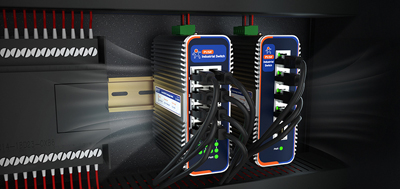
Think about the conditions first. Tight cabinet space? Choose the lipstick-sized DR13x—it slips into small enclosures without taking up room. Need DIN rail? The N720 supports both DIN rail and wall mounting. Power input from 9–36 V DC, operating temperature from –40 to +85 °C, metal housing, and a dual watchdog—these are the parameters that decide how long a device lasts on the shop floor, worth a close look at selection time. The N720 also supports remote management: firmware upgrades and parameter changes can all be done remotely, saving a trip to the site.
Back to that developer. His conclusion was simple: the fewer middlemen, the simpler the job. A serial to ethernet converter does the same thing—it turns "getting on the network" from a task