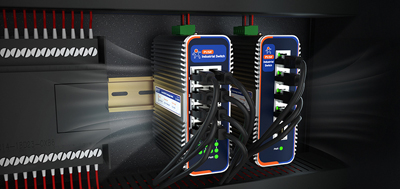
What Are the Benefits of Using Industrial Embedded PC? An In-Depth Analysis from Selection Concerns to Scenario Value
As industrial automation, the Internet of Things, and edge computing rapidly gain traction, manufacturers often find themselves caught in a dilemma when choosing industrial computing devices: traditional fan-cooled industrial PCs offer robust performance but suffer from high failure rates under complex operating conditions; commercial PCs are low-cost but completely incapable of adapting to the harsh environments of industrial sites.
Prior to selection, many manufacturing companies commonly harbor several core concerns: How can the risk of downtime caused by fan dust accumulation be mitigated when equipment runs long-term in workshops filled with dust, oil mist, and high temperatures? With cramped control cabinets and vehicle-mounted platforms having limited space, bulky standard industrial PCs simply cannot be installed. When commissioning multiple devices, stacking multiple independent industrial PCs, gateways, and routers not only increases procurement costs but also makes later maintenance significantly more difficult. When PLCs and sensors from different brands are protocol-incompatible, purchasing additional protocol converters substantially inflates project budgets. These long-standing pain points that have persistently troubled manufacturers are precisely the core values that industrial embedded PC can accurately address.
When many manufacturers first encounter industrial embedded PCs, their initial questions are: Without a fan, can the device maintain stable heat dissipation? Will performance fall short of industrial scenario requirements? The essence of such concerns lies in a fundamental distrust of whether passive cooling technology can truly replace traditional air-cooling solutions. However, after years of validation in industrial settings, industrial embedded PCs have thoroughly dispelled these concerns from a design perspective.
First, regarding heat dissipation reliability, industrial embedded PCs have abandoned traditional mechanical fan structures and instead adopt fully sealed aluminum alloy chassis as the heat dissipation medium. Heat from core components such as the CPU and memory is directly conducted to the housing via internal heat pipes and thermal pads, and then dissipated through natural convection. This design completely eliminates the fan—the most common point of failure. Even under full-load operation in a 60°C workshop, internal temperatures remain stably within safe ranges, thoroughly avoiding overheating and shutdowns caused by fan jamming or dust accumulation.
Second, regarding environmental adaptability, the fully enclosed chassis design completely isolates internal components from the outside world, preventing dust, oil mist, and moisture from entering the motherboard. Combined with industrial-grade wide-temperature and wide-voltage designs, most products operate stably within a temperature range of -40°C to 75°C, while also supporting 8-48V wide-range DC input—perfectly adapting to scenarios with significant power fluctuations such as vehicle batteries and industrial power supplies. Even in extreme conditions like mines, smelters, and cold chains, 24/7 uninterrupted operation is achievable.
Finally, regarding maintenance and cost concerns, the fanless design has no moving mechanical parts, significantly enhancing overall shock and vibration resistance. It completely eliminates the need for periodic disassembly and cleaning required by traditional fan-cooled industrial PCs, achieving essentially maintenance-free operation. Additionally, these devices generally adopt compact designs, with volumes only a fraction of traditional 4U industrial PCs, saving valuable space within control cabinets while reducing overall power consumption. Over long-term operation, electricity and maintenance costs can be reduced by over 60%.
The value of industrial embedded PCs goes far beyond simply "removing the fan." They systematically address many persistent issues that have long plagued traditional industrial control solutions.
Previously, to complete an intelligent transformation of a production line, manufacturers often had to simultaneously procure industrial PCs, protocol gateways, industrial routers, and I/O controllers. Not only were procurement costs high, but the difficulty of coordinating different devices was immense—any single device failure could bring down the entire system. Industrial embedded PCs, however, integrate data acquisition, edge computing, protocol conversion, and routing control functions into a single device. One device can replace multiple traditional devices, drastically reducing the number of hardware nodes and directly improving system stability several-fold.
Industrial sites often contain a large number of PLCs, sensors, and smart instruments from different brands, each using different communication protocols. Previously, numerous protocol converters had to be purchased to achieve data interoperability, increasing costs and delaying project deployment. Industrial embedded PCs generally come with over a hundred mainstream industrial protocols built in, supporting various industry-standard protocols such as IEC 104, SL651, Bacnet, and DL/T645. They can directly perform protocol conversion between different devices without additional hardware, significantly reducing integration complexity.
Traditional industrial PCs either lack sufficient computing power for local data preprocessing or can only upload all raw data to the cloud, leading to high network bandwidth consumption and significant cloud processing latency. Industrial embedded PCs, equipped with edge computing engines, can perform local data cleansing, analysis, and preprocessing, uploading only valuable key data to the cloud. This can reduce cloud transmission volume by 70%, lowering bandwidth costs while achieving millisecond-level local response, avoiding control failures caused by network interruptions.
In scenarios such as AGV carts, CNC machine control cabinets, and vehicle-mounted mobile terminals, traditional bulky industrial PCs simply do not have sufficient installation space. The compact chassis design of industrial embedded PCs supports multiple deployment methods including DIN-rail mounting, wall mounting, and flush mounting—enabling easy deployment even in confined spaces with capacities as small as a few liters.
Not all industrial scenarios necessarily require industrial embedded PC, but in the following categories, they are the irreplaceable optimal solution:
Such as machining workshops, hardware manufacturing plants, and food processing lines. In these scenarios, the air filters of traditional fan-cooled industrial PCs become clogged with dust within weeks, resulting in extremely high fan failure rates. The fanless, fully enclosed design is completely unaffected by dust, enabling long-term maintenance-free operation.
Such as AGV autonomous mobile robots, CNC machine control terminals, and intelligent security monitoring devices. These scenarios impose strict size requirements on equipment, and compact industrial embedded PCs can be directly embedded within devices without occupying additional space.
Such as intelligent transportation roadside cabinets, vehicle-mounted mobile data centers, and outdoor environmental monitoring stations. These scenarios experience significant temperature variations, unstable power supplies, and frequent vibration and shock. The wide-temperature, wide-voltage, and shock-resistant characteristics of industrial embedded PCs make them perfectly suited for such unattended outdoor operating conditions.
Such as medical operating room equipment, laboratory analytical instruments, and library intelligent management systems. These scenarios do not permit fan noise interference and have high cleanliness requirements. The fanless design achieves silent operation while avoiding hygiene risks associated with fan dust accumulation.
Such as new energy battery production lines and automotive parts processing lines. These scenarios require simultaneous interfacing with multiple PLCs from different brands for data acquisition and edge analysis. A single industrial embedded PC can replace traditional multi-device combination solutions, significantly reducing retrofitting costs.
To address different computing power requirements and scenario scales, Usr has launched two fanless embedded ARM industrial PCs that provide manufacturing enterprises with cost-effective and reliable options.
USR-EG228 is an ultra-cost-effective Linux industrial PC powered by the industrial-grade RK3506J triple-core Cortex-A7 + Cortex-M0 processor with a 1.2GHz clock speed. It incorporates the WukongEdge edge computing engine, enabling data acquisition, edge computing, and cloud reporting with simple configuration. The device comes pre-installed with the latest version of Node-RED, supporting drag-and-drop programming for rapid implementation of business logic without complex code development.
In terms of communication capabilities, it simultaneously supports 4G, Wi-Fi, and Ethernet networking combinations, and is equipped with 1×USB, 2×RS485, and 2×CAN FD interfaces, easily connecting to various industrial field devices. Additionally, it comes with a standard Ubuntu 22.04 environment with root access enabled, and a full suite of development tools and hardware driver documentation pre-configured—creating a development environment with a single step. It is ideally suited for cost-sensitive scenarios such as lightweight data acquisition, small-scale production line monitoring, and edge node deployment.
USR-EG628 is a comprehensive and scalable ARM industrial PC, deeply optimized on the Linux Ubuntu system. It incorporates the WukongEdge edge intelligence platform, integrating data acquisition, protocol conversion, PLC programming, local configuration, remote monitoring, and AI computing into a single true IoT control hub.
It is powered by the industrial-grade RK3562J chip, featuring a quad-core 64-bit Cortex-A53 architecture with built-in 1 TOPS AI computing power, supporting edge AI tasks such as image recognition and voice judgment. Standard configurations include 4GB memory and 32GB storage, running the Ubuntu system while supporting rich secondary development environments including Docker, Node-RED, and Python.
The device adopts a modular structural design, with a main controller and I/O expansion modules that can be flexibly combined, supporting various input/output combinations including digital, analog, serial, and Ethernet. It comes standard with rich interfaces such as RS485/232, CAN, LAN, USB, HDMI, and a SIM card slot, enabling rapid connection to various sensors, instruments, and actuators.
It also features a built-in local configuration system and OpenPLC platform, supporting five IEC 61131-3 PLC programming languages, with configuration completion in just three steps. HDMI external display output supports visual presentation. The device supports 4G/5G/Wi-Fi/Ethernet multi-network convergence with automatic active-backup network switching, integrates VPN, firewall, routing, and other network management capabilities, and is compatible with major cloud platforms including Usr Cloud, Alibaba Cloud, and Huawei Cloud, supporting over a hundred industrial protocols.
The entire unit features industrial-grade design with Level 3 surge protection, Level 3 electrostatic protection, and a system watchdog mechanism. With dimensions of only 118×87×60mm and support for standard DIN-rail mounting, it is widely applicable to medium-to-large industrial scenarios such as energy storage systems, smart agriculture, manufacturing production line inter-control, building energy efficiency, and AGV logistics. A single device can replace the traditional multi-device combination of industrial PC + gateway + router, helping manufacturing enterprises significantly reduce the cost of intelligent transformation.