Don't Let Old Equipment Become "Mute": A Practical Case Study of RS485 to Ethernet Converter Networking in Saudi Metal Mining Areas
In the mining industry, whether in the deserts of Saudi Arabia or the wilderness of Australia, the headache isn't machines breaking down, but machines appearing to run normally while data fails to return to the dispatch center.
The core production equipment in mining areas—inverters, PLC controllers, and temperature/pressure transmitters—all speak "RS485 serial," which is their "native language." However, the newly installed monitoring screens and SCADA systems in the project operate on "Ethernet," speaking "Mandarin."
The resulting pain points are obvious:
This is what we call "Data Silos." The equipment isn't old, but the interfaces are; the system isn't bad, but it can't connect. It's like holding a mountain of gold but begging for food, watching a screen full of data but unable to use it. Isn't it anxious?
Facing this thorny problem, to connect these old devices to the internet, we need an RS485 to Ethernet converter. But serial servers on the market vary widely, from tens of dollars to thousands. Our mining environment is harsh, so we can't buy blindly.
The environment in Saudi mining areas is a "nightmare" for industrial equipment.
The equipment in our mines is a "mix of brands."
The selected device must have extremely strong protocol compatibility and configurability to flexibly adapt to these "miscellaneous" devices, rather than making the devices accommodate the converter.
The mining area is vast, and equipment is scattered. If every converter failure requires someone to climb towers and drill holes to fix, the O&M cost will be astronomical. Therefore, remote configuration, remote upgrades, and remote reboots are must-haves. It would be even better if it could be managed via a mobile APP.
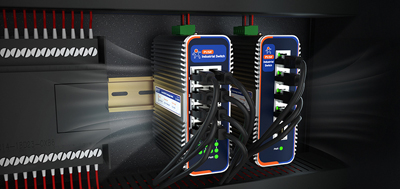
We are looking for a "tough guy" that can work steadily even when thrown into a pile of sand. After comparing and testing mainstream brands on the market (such as MOXA, Advantech, PUSR), we finally locked onto high-performance industrial serial servers like theUSR-N520.
Why choose the N520? Because it is truly sturdy, handling -40°C to 85°C with ease, and a metal casing that resists bumps. This is what we call "reliable."
When the plan was first proposed, the "big brothers" in the mine had concerns, which is normal since it involves key production links.
After this system was deployed, the effect was immediate, and the brothers in the mining area were overjoyed.
What used to take two hours now takes two minutes. On the dispatch large screen, voltage, current, and power factor jump in real-time, more exciting than watching stocks. Accurate data leads to faster decisions.
Previously, when equipment alarmed, engineers had to drive for a long time. Now, a "ding" on the mobile APP clearly shows which device has what fault. You can even reboot remotely, solving many small problems directly in the office. The man-hours saved are real money.
This solution has good scalability. If we want to do AI intelligent inspection or add new sensors in the future, we can just hang them up directly without tearing down the current network.
Looking back at the entire project, digitalization in our mining area doesn't mean throwing away all usable old equipment and buying new ones—that's not transformation, that's demolition and rebuilding, and no one can afford that cost.
The RS485 to Ethernet converteris the "translator" for old equipment.
It's not expensive, but it solves a big problem. It allows those old devices gathering dust in the corner to reconnect to the main network and become part of the intelligent mine.
For mining areas like ours that value efficiency and practicality,this is definitely the most reliable and down-to-earth solution currently available.We are very satisfied with this effect and feel at ease!