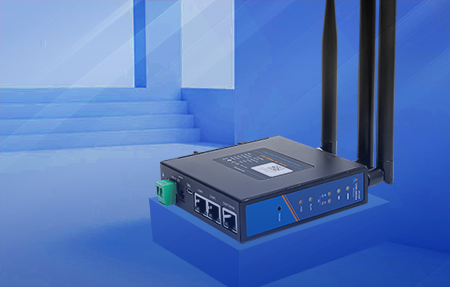
Ethernet is the traditional technology used to connect devices in a wired Local Area Network (LAN) or Wide Area Network (WAN), enabling them to communicate with each other through a protocol which is a set of rules or common network language. Ethernet describes how network devices format and transmit data, so that other devices on the same local area network or campus network can identify, receive, and process information. Ethernet cables are the physical, enclosed wiring on which data passes.
Accessing geolocation network connected devices via cable may use Ethernet, that is, via a wired connection rather than a wireless connection. A wide variety of users, from enterprises to gamers, end up choosing Ethernet, depending on its connection advantages which include reliability and security.
Compared with Wireless Local Area Network (WLAN) technology, Ethernet is generally less susceptible to disruption. Since serial devices must be connected using physical cables, it can also provide a higher level of network security and control than wireless technology, which makes it difficult for outsiders to access network data or hijack the bandwidth of unauthorized devices.
The serial device server is used to connect devices in the network, and it is still a popular form of network connection. For local networks used by specific organizations, such as corporate offices, school campuses, and hospitals, Ethernet is used for its high speed, security, and reliability.
Compared with competing technologies of the time, such as IBM's Token Ring, Ethernet was initially popular because of its low price. With the advancement of network technology, Ethernet continues to develop and provide higher levels of performance, while maintaining backward compatibility, thus ensuring the continued popularity of Ethernet. The initial throughput of Ethernet at 10 megabits per second increased tenfold in the mid-1990s to 100 Mbps, and the Institute of Electrical and Electronics Engineers (IEEE) continues to update its performance. The current version of Ethernet can support operations up to 400 gigabits per second (Gbps).
Wi-fi is the most popular type of network connection. Unlike wired connection types, such as Ethernet, Wi-fi does not require a physical cable to be connected. Data is transmitted by wireless signals.
The IEEE is specified in a series of standards known as IEEE 802.3. The Ethernet protocol simultaneously involves both layer 1 (physical layer) and layer 2 (data link layer) over the Open Systems Interconnection (OSI) network protocol model.
Ethernet defines two transmission units: the data packet and frame. The frame includes not only the payload of the data being transmitted, but also the following:
When selecting an Ethernet serial device server from PUSR (represented by Jinan USR IOT Technology Limited), it is essential to conduct a comprehensive evaluation based on five core dimensions: hardware performance, functional support, industrial environment adaptability, security and reliability, as well as scalability and maintenance costs. We recommend the USR-TCP232-410s as a typical representative, with its selection rationale and advantages outlined as follows:
A high-performance processor is crucial for real-time data processing. For instance, the USR-TCP232-410s utilizes an ARM Cortex-M7 core with a clock speed of up to 400MHz, significantly surpassing ordinary serial device servers. It can handle high-concurrency data transmission demands, preventing data delays or losses due to insufficient processing capabilities.
Industrial sites feature complex environments, requiring equipment to withstand extreme temperatures. The USR-TCP232-410s supports a wide operating temperature range from -40℃ to 85℃, ensuring stable operation even in high-temperature workshops or low-temperature outdoor settings, thereby reducing equipment failures caused by environmental factors.
Interference such as electrostatic discharge, surges, and pulse trains are "invisible killers" for industrial equipment. The USR-TCP232-410s enhances its anti-interference capabilities through multiple hardware protection designs (e.g., 8KV air/6KV contact electrostatic protection, 2KV surge protection on power circuits), ensuring stable operation in harsh electromagnetic environments.
Power fluctuations are frequent in industrial settings, necessitating equipment with wide voltage input capabilities. The USR-TCP232-410s supports a 5-36V wide voltage input range and features reverse-connection protection, preventing equipment damage due to power fluctuations or misoperations and reducing maintenance costs.
Support for protocols such as TCP, UDP, and HTTP is essential for seamless integration with existing network architectures. The USR-TCP232-410s supports multiple modes, including TCP Server/Client and UDP Server/Client, and incorporates a built-in web server for direct parameter configuration via web pages, simplifying operation procedures.
When interfacing with PLCs or sensors, Modbus protocol conversion capabilities are vital. The USR-TCP232-410s supports bidirectional conversion between Modbus RTU and Modbus TCP and enables multi-host polling, significantly simplifying industrial site deployment and reducing system integration complexity.
In scenarios with large data volumes or unstable networks, edge computing can reduce cloud load. The USR-TCP232-410s supports local data collection, computation, and reporting, such as filtering or threshold judgment of sensor data, uploading only valid results to save bandwidth and enhance response speed.
Compatible with mainstream IoT cloud platforms (e.g., Alibaba Cloud, AWS, USR Cloud), users can quickly connect to the cloud via the MQTT protocol. The device supports SSL/TLS encryption (e.g., HTTPS, MQTTS) to ensure data security and integrity during transmission, meeting stringent data security requirements in high-risk industries such as finance and energy.
Virtual Serial Port (VCOM)The virtual serial port function maps network ports to virtual serial ports, ensuring compatibility with traditional host computer software. This allows networking without modifying existing programs, protecting enterprises' initial software investments and reducing the difficulty and cost of system upgrades and transformations.
Select an appropriate size and shape based on installation space and wiring requirements. The USR-TCP232-410s features a compact design for easy installation in confined spaces and supports DIN rail mounting, adapting to industrial cabinet environments.
Verify whether the device's operating environment meets the required temperature and humidity ranges. The USR-TCP232-410s's wide temperature design and protection capabilities enable long-term stable operation in harsh environments such as high temperatures, high humidity, and dust.
Evaluate the device's encryption and security authentication functions, such as SSL/TLS and VPN passthrough. The USR-TCP232-410s offers optional TLS 1.0/1.2 versions and supports bidirectional certificate verification to prevent data theft or tampering during transmission.
To avoid unauthorized access, the device should incorporate robust access control mechanisms. The USR-TCP232-410s defaults to admin/admin account password authentication, which users can modify. It also enhances device security by configuring parameters via HTTPS-encrypted web pages.
Hardware watchdog and dynamic caching designs are crucial for maintaining basic device operation during failures. When TCP connections experience abnormalities, the USR-TCP232-410s automatically clears the cache and attempts to reconnect, preventing device crashes or data loss and ensuring business continuity.
Remote maintenance via web pages or cloud platforms can significantly reduce on-site maintenance costs. The USR-TCP232-410s supports OTA upgrades, allowing users to complete firmware upgrades and parameter modifications remotely without disassembling the device, promptly adding new features and enhancing device performance.
Choosing a well-known brand provides better technical support and product quality assurance. As a representative of PUSR, Jinan USR IOT Technology Limited's USR-TCP232-410s has become the preferred choice for many enterprises due to its high-performance hardware, extensive protocol support, flexible configuration, and industrial-grade reliability. It also offers reliable after-sales service, reducing long-term maintenance costs.
Or cloud platforms for remote maintenance can significantly reduce on-site maintenance costs. The USR-TCP232-410s supports OTA upgrades, enabling users to complete firmware upgrades and parameter modifications remotely without disassembling the device, promptly adding new features and enhancing device performance.
Choosing a well-known brand provides better technical support and product quality assurance. As a representative of PUSR, Jinan USR IOT Technology Limited's USR-TCP232-410s has become the preferred choice for many enterprises due to its high-performance hardware, extensive protocol support, flexible configuration, and industrial-grade reliability. It also offers reliable after-sales service, reducing long-term maintenance costs.