









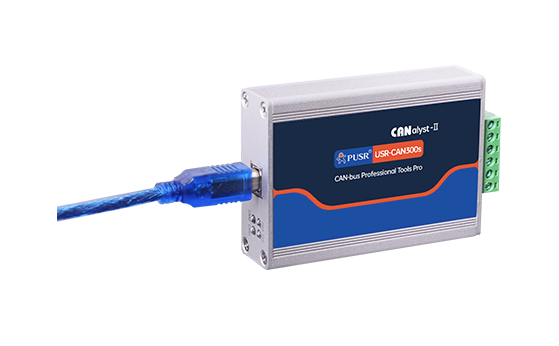
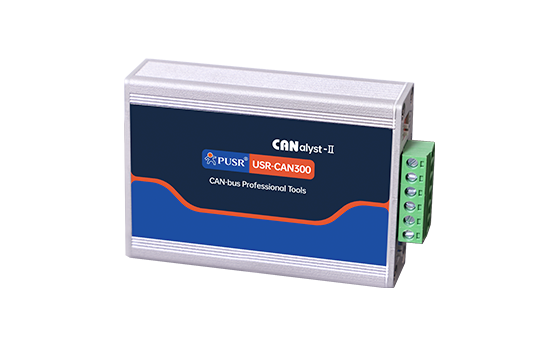
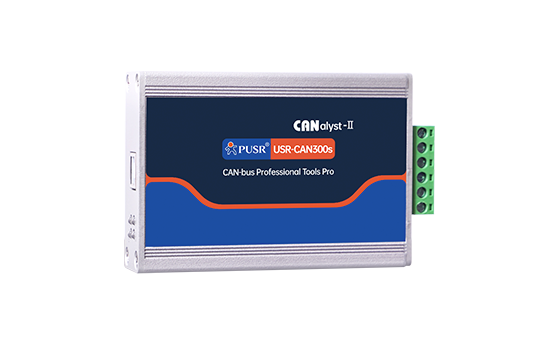
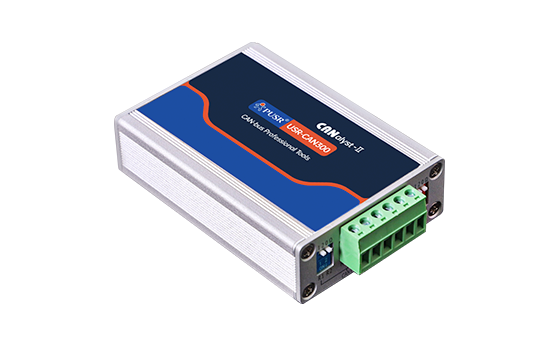

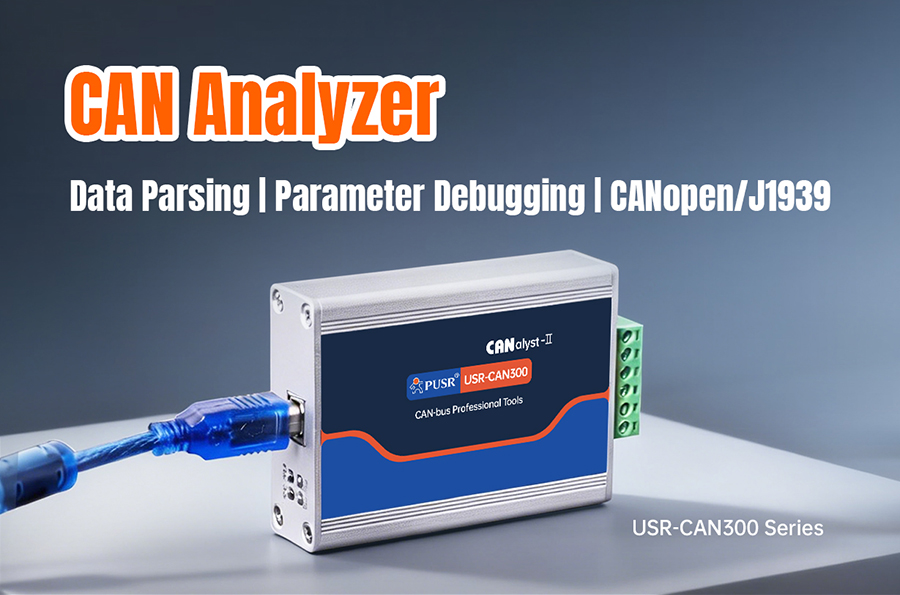
CAN Analyzer Professional CAN Bus Debugging & Parsing Tool for Engineers USR-CAN300/300s CAN Analyzer connects to CAN bus via USB, uploading data to dedicated software for real-time monitoring, analysis and fault diagnosis. It features 2500V industrial isolation, 9000fps dual-channel transmission without frame loss, and supports CANopen/J1939. With custom baud rate, repeater function and secondary development, it drives 128 devices. Two versions available, ideal for CAN bus debugging and monitoring.nd further expand the scope of CAN FD network.
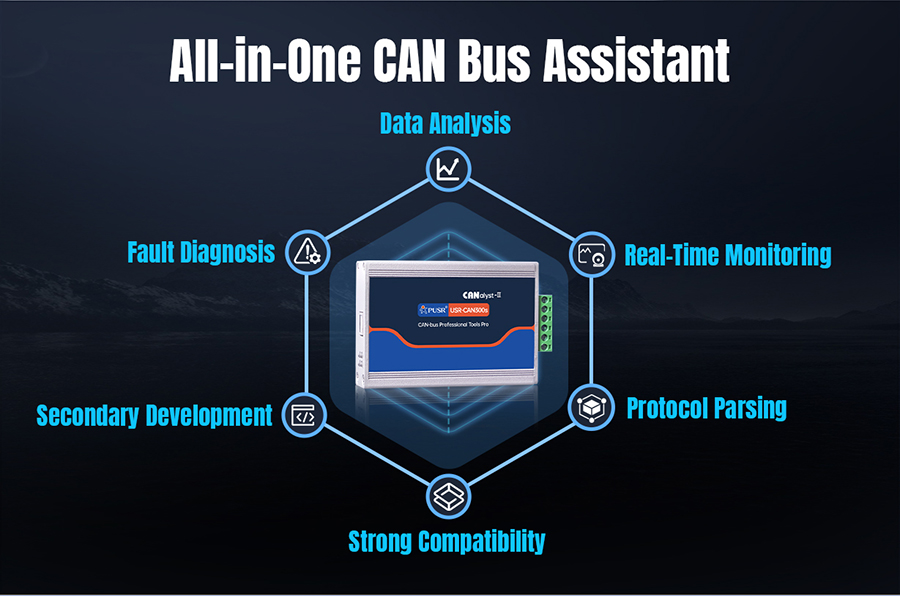
All-in-One CAN Bus Assistant
- Rich Interfaces: 2CAN, 1High-Speed USB, multi-channel independent operation
- Industrial Designed: 2500V isolation, high anti-interference, industrial-grade stable hardware
- Comprehensive Protocol Parsing: Supports CAN2.0A/B, compatible with CANopen/J1939 and other mainstream protocols
- Easy to Config: One-click custom baud rate, no reconfiguration required after power-on
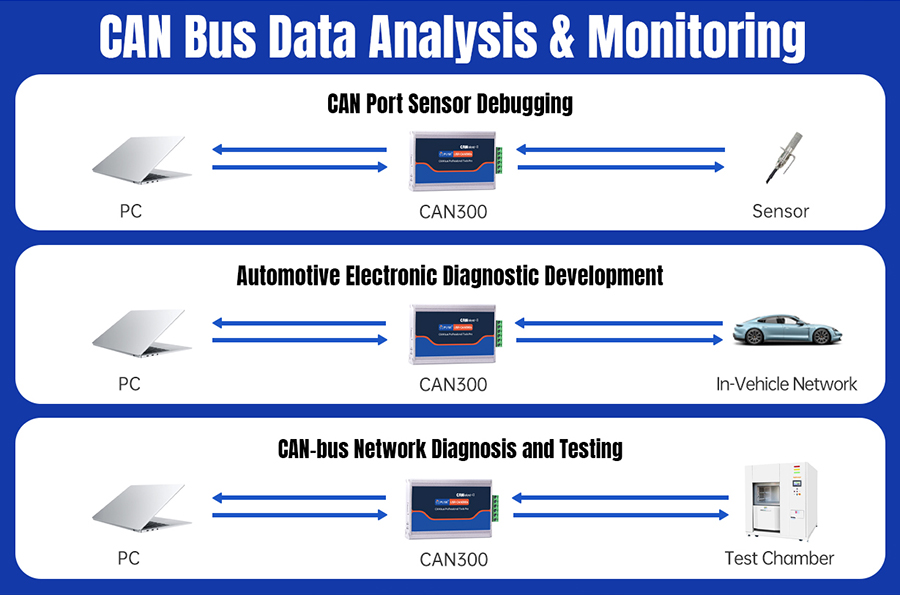
CAN Bus Data Analysis & Monitoring Collect CAN bus data via USB and upload it to the dedicated debugging software, realizing transmission control, data analysis, collection and monitoring of the CAN bus network.
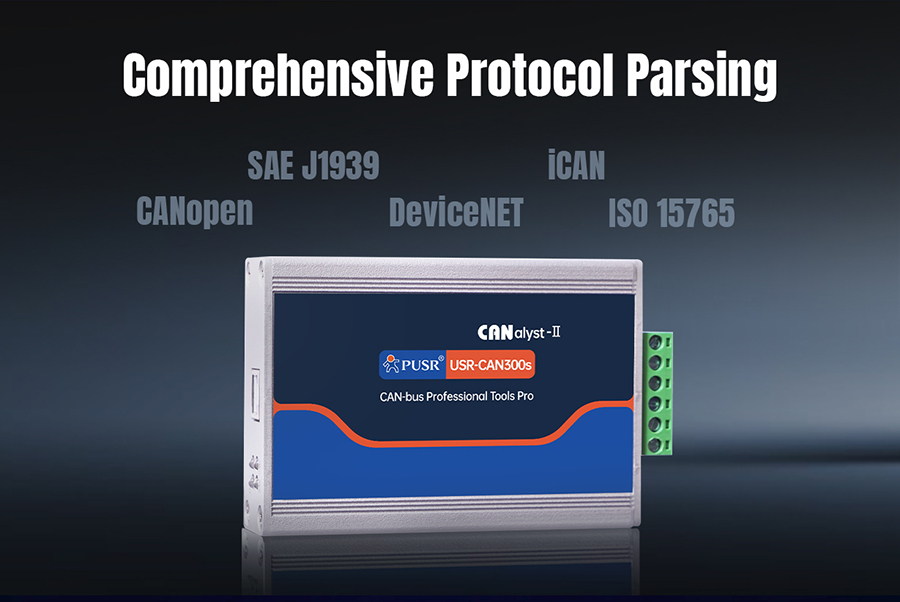
Comprehensive Protocol Parsing Supports data analysis and statistics of standard CAN2.0A/B, and decodes & analyzes high-layer CAN protocols including CANopen, SAE J1939, DeviceNET, iCAN, ISO15765, etc.
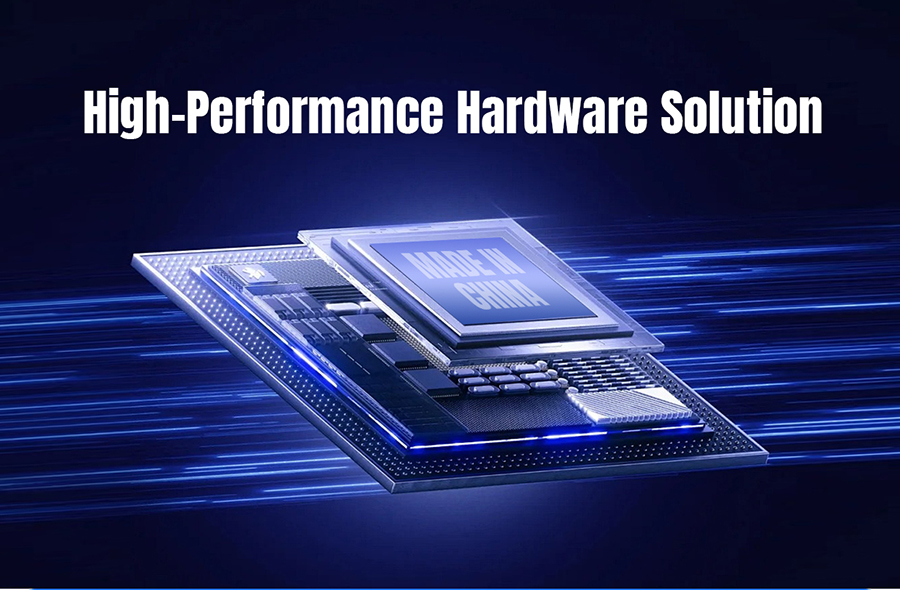
High-Performance Hardware Solution, Ultra Stability
- Equipped with a 32-bit high-performance processor, featuring 512K Flash + 128K SRAM storage space.
- It saves CAN configuration information and status in real time, no reconfiguration required after power-off.
- 1 high-speed USB channel and 2 high-speed CAN channels with zero transmission bottlenecks.
- Both channels reach 9000 frames per second simultaneously without mutual interference, ensuring stable transmission with no frame loss.
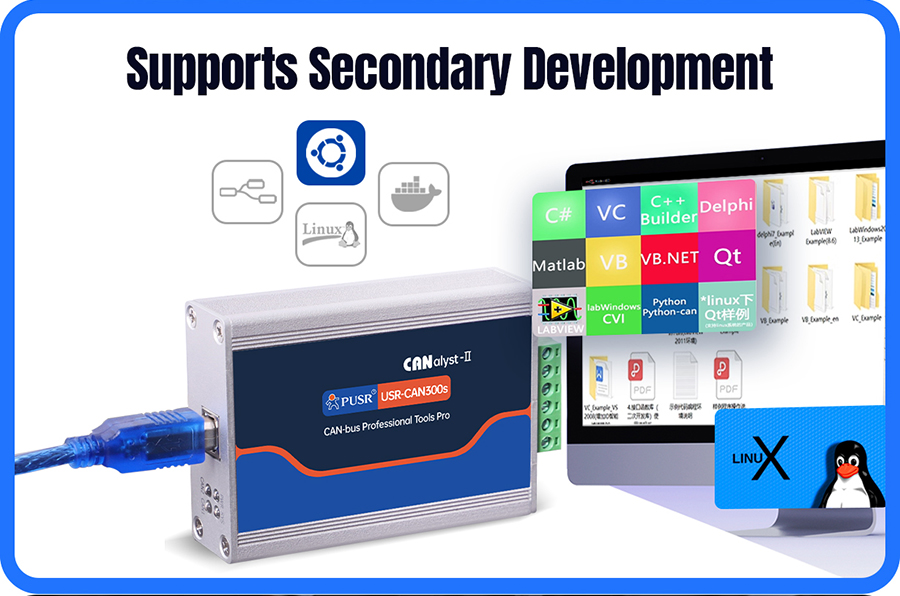
Supports Secondary Development Efficient and easy-to-use secondary development functions, compatible with most mainstream development environments. Provides secondary development samples for multi-platform and multi-type development environments.
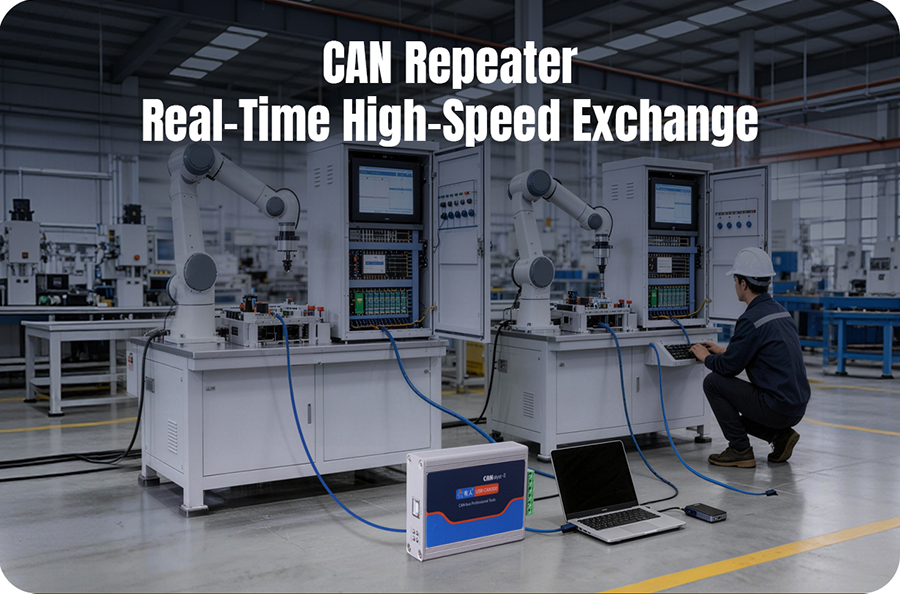
CAN Repeater, Real-Time High-Speed Exchange
- Supports CAN repeater function, enabling real-time high-speed data exchange between 2 CAN channels at the same or different baud rates.
- In repeater mode, data exchange between CAN1 and CAN2 can be monitored in real time via PC software. Meanwhile, data can be sent to the bus to achieve transparent data transmission. It can also be used as an offline repeater, greatly extending the effective distance of data transmission.
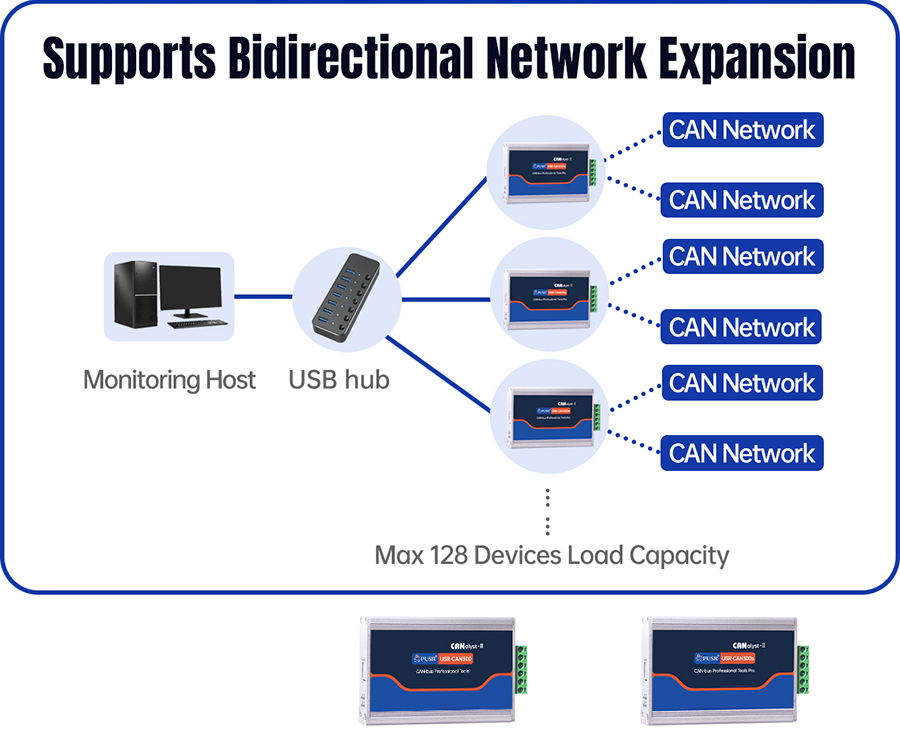
Supports Expansion, Max 128 Devices Load Capacity Multiple CAN analyzers can run simultaneously on a single computer, with independent operation and no mutual interference. Tested to support a maximum load of 128 devices, ideal for scenarios such as a single monitoring device monitoring multiple CAN networks simultaneously and high-reliability data comparison & verification.
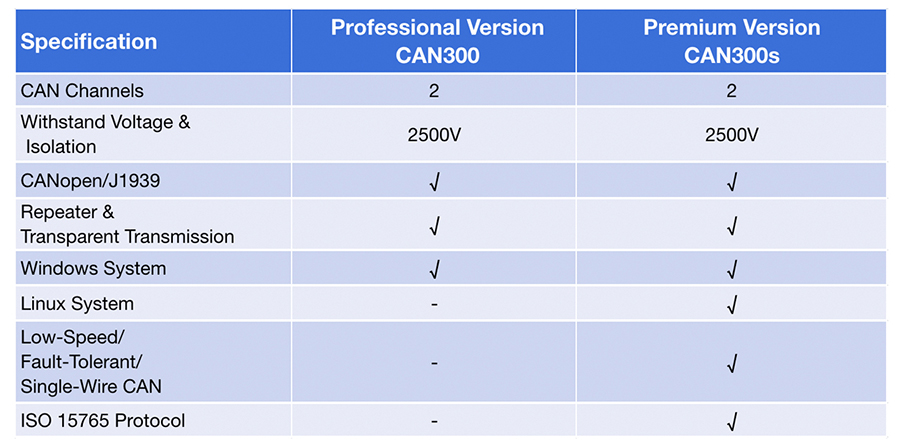
Two Versions, Optional as Required Recommended: CAN300 Professional Edition, balanced performance & cost-effective, ideal for daily debugging.
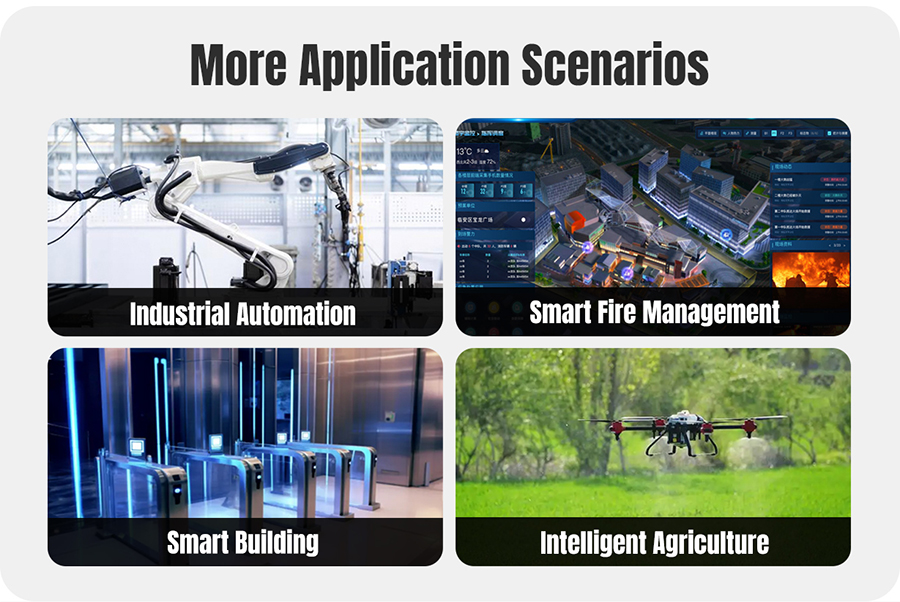
More Application Scenarios
- Industrial Automation
- Smart Firewall Protection
- Smart Building
- Intelligent Agriculture
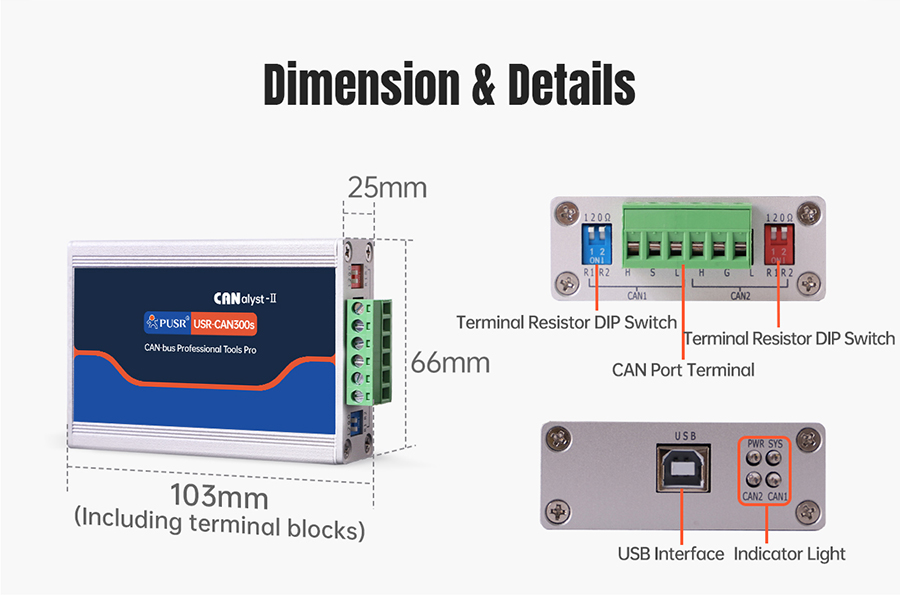
Dimension & DetailS
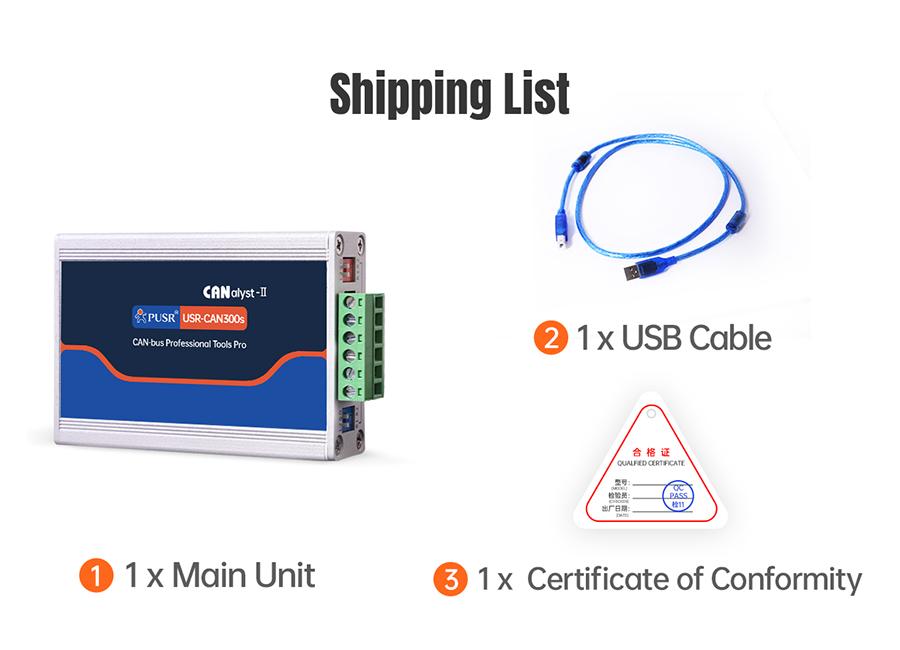
Shipping List






