April 20, 2026
How Inspection Robots in Petrochemicals Break Through Flammable and Explosive Scenarios
Explosion-proof Zone 2 Certified Industrial Mini PC: How Inspection Robots in Petrochemicals Break Through Flammable and Explosive Scenarios
In the petrochemical industry, inspection work is like dancing on a knife-edge. In tank areas, pipeline corridors, and around reactors, flammable and explosive gases lurk everywhere. A tiny electric spark or equipment overheating can trigger catastrophic consequences. Traditional manual inspections are not only inefficient but also expose inspectors to high-risk environments. And ordinary industrial equipment, lacking explosion-proof certification, is simply unusable in such scenarios. The emergence of explosion-proof Zone 2 certified industrial mini PC provides a "safe heart" for petrochemical inspection robots, enabling them to break through the limitations of flammable and explosive scenarios and become a key driver for the industry's intelligent transformation.
1. Customer Pain Points: Surviving Between Safety and Efficiency
1.1 The "Three Highs" Dilemma of Manual Inspections
The core pain points of petrochemical inspections can be summarized as the "three highs": high risk, high cost, and high error.
High Risk: Inspectors frequently enter flammable and explosive areas, are exposed to toxic and harmful gases, and work in high-temperature and high-pressure environments for long periods, facing extremely high occupational health risks. A chemical plant once suffered an explosion due to inspectors failing to detect a pipeline leak in time, resulting in significant casualties and property losses.
High Cost: Manual inspections require professional protective equipment and collaborative work by multiple people to ensure safety, leading to high labor costs. Moreover, inspection frequency is limited by human physical strength, making it difficult to achieve 24-hour full coverage.
High Error: Manual data recording relies on the experience and sense of responsibility of inspectors, making it prone to missed and false inspections. Statistics from a refinery show that the fault detection rate of manual inspections is less than 60%, and the missed detection rate of hidden faults is as high as 40%.
1.2 The "Explosion-proof Shortcomings" of Ordinary Equipment
To reduce risks, companies have attempted to introduce ordinary industrial equipment for inspection assistance, but with poor results.
Insufficient Explosion-proof Rating: Ordinary industrial mini PCs have not passed explosion-proof certification and may trigger explosions due to electric sparks or high temperatures in flammable and explosive environments. A chemical plant once experienced a fire caused by a short circuit in non-explosion-proof cameras monitoring tank areas, resulting in direct losses exceeding ten million yuan.
Poor Environmental Adaptability: Petrochemical scenarios often involve high temperatures, high humidity, and corrosive gases, causing ordinary equipment to fail due to material aging or seal failure. An oil field's inspection robot, without anti-corrosion coatings, developed circuit board rust after three months of operation and had to be shut down for repairs.
Single Function: Ordinary equipment lacks multi-sensor fusion capabilities and cannot simultaneously monitor gas leaks, equipment temperatures, pipeline pressures, and other multi-dimensional data, failing to meet complex inspection needs.
1.3 Customer Psychology: Struggling Between the "Safety Bottom Line" and the "Pursuit of Efficiency"
When choosing inspection solutions, customers often face a dilemma:
Safety First: Some companies, having experienced accidents, have extremely strict explosion-proof requirements and are willing to sacrifice efficiency for safety, leading to high inspection costs.
Efficiency-Oriented: Others focus more on inspection efficiency and cost, attempting to reduce costs by simplifying explosion-proof measures. However, such "compromise solutions" often pose safety risks and ultimately result in greater losses due to accidents. This conflicting psychology makes customers both eager and cautious about explosion-proof inspection robots. They need an "all-round" solution that can pass strict explosion-proof certification and efficiently complete inspection tasks.
2. Technological Breakthroughs: The "Safety Code" of Explosion-proof Zone 2 Certified Industrial Mini PCs
2.1 Explosion-proof Certification: From "Passive Compliance" to "Active Defense"
The core value of explosion-proof Zone 2 certified industrial mini PCs lies in their ability to ensure "zero risk" in flammable and explosive environments through strict standard testing.
Certification Standards: According to the GB 3836 series standards, Zone 2 areas allow the presence of explosive gas mixtures only under "abnormal conditions." Devices must have surface temperatures below the auto-ignition temperature of the medium (e.g., T4-rated devices have surface temperatures ≤ 135°C), and parameters such as electrical clearance and creepage distance must meet explosion-proof requirements.
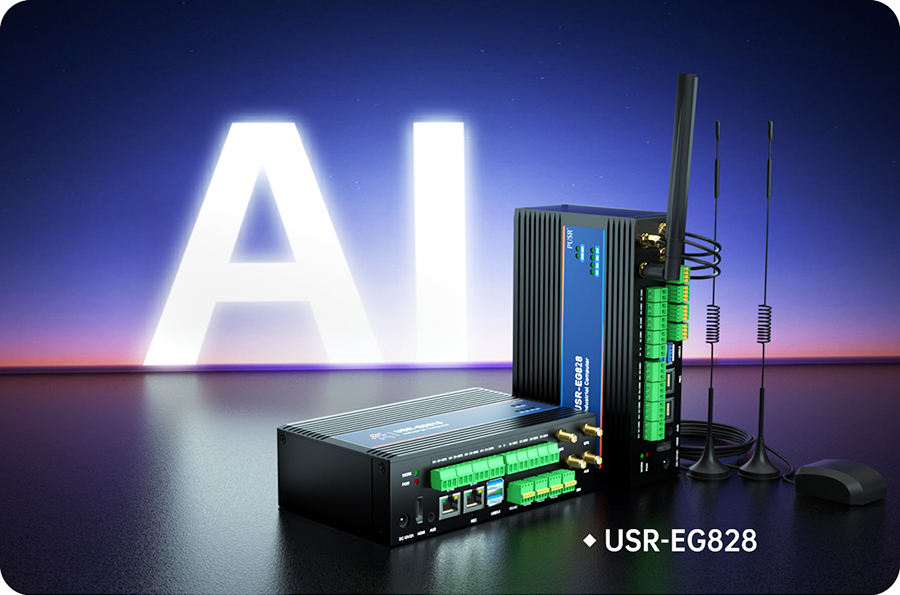
Design Logic: Unlike traditional "flameproof" devices, Zone 2 certified industrial mini PCs adopt an "intrinsically safe" design by limiting circuit energy (e.g., voltage ≤ 18V, current ≤ 1.5A) to ensure that even internal short circuits or electric sparks cannot ignite external gases. For example, the USR-EG828 industrial mini PC optimizes its power supply design to keep surge voltage below 18V, eliminating ignition risks at the source.
Material Selection: The casing uses aluminum alloy with a magnesium content ≤ 6% to avoid sparks from metal friction. The sealing ring is made of fluororubber, which can withstand temperature differences from -40°C to 85°C, ensuring an IP65 protection rating and preventing dust and moisture ingress.
2.2 Environmental Adaptability: From "Tolerating Harsh Conditions" to "Conquering Extremes"
The complexity of petrochemical scenarios requires industrial mini PCs to have "all-terrain" adaptability.
Wide Temperature Operation: The USR-EG828 supports operating temperatures from -10°C to 70°C. Its fanless cooling design and intelligent temperature control algorithm automatically reduce power consumption in high-temperature environments to prevent overheating. In low-temperature environments, its built-in heating circuit preheats key components to ensure startup success. Field test data from an oil field shows that the industrial mini PC can still operate stably at -25°C, with an 80% lower failure rate compared to ordinary equipment.
Anti-vibration Design: For scenarios with continuous vibrations during pipeline inspections, the USR-EG828 adopts a modular structure. Critical components (such as hard drives and motherboards) are doubly secured with silicone pads and metal brackets to reduce vibration impact on components. Its anti-vibration rating meets the IEC 60068-2-6 standard and can withstand vibrations in the frequency range of 5Hz to 500Hz, ensuring continuous data collection.
Corrosion Resistance: In the salt spray environment of coastal chemical plants, the USR-EG828's casing uses a three-proof coating (moisture-proof, salt spray-proof, and mold-proof), and its interfaces are gold-plated to prevent contact oxidation. A comparative test by a chemical plant shows that ordinary industrial mini PCs develop corrosion after six months in a salt spray environment, while the USR-EG828 remains intact after two years.
2.3 Multi-functional Integration: From "Single Detection" to "Holographic Perception"
Modern inspection robots need to simultaneously monitor gas, temperature, pressure, images, and other multi-dimensional data, posing high demands on the interface expansion and computing capabilities of industrial mini PCs.
Interface Matrix: The USR-EG828 provides 2 RS232 ports, 2 RS485 ports, CAN bus, 2 10/100Mbps Ethernet ports, and other industrial interfaces. It can simultaneously connect gas sensors, infrared thermal imagers, visible light cameras, pressure transmitters, and other devices, achieving "one machine for multiple inspections." For example, in tank inspections, it connects to a laser methane telemetry device via RS485 to monitor gas leaks in real time, uses CAN bus to connect temperature sensors to monitor tank wall temperatures, and uploads data to the cloud via Ethernet for remote analysis by management.
Edge Computing: Equipped with a Rockchip RK3568 quad-core processor and 1.0 TOPS NPU computing power, the USR-EG828 can run AI algorithms locally for real-time analysis of images and gas data. For example, its built-in "M300" edge service can intelligently identify infrared thermal images and automatically mark abnormal temperature points. It can also perform defect detection on visible light images, identifying pipeline corrosion, valve leaks, and other issues, increasing the fault detection rate to over 95%.
Protocol Compatibility: It supports industrial protocols such as Modbus, MQTT, and OPC UA and can directly connect to PLCs from brands like Siemens and Omron, enabling seamless integration of equipment status and inspection data. A case study from a refinery shows that through the protocol conversion function of the USR-EG828, its inspection robot achieves data interconnection with the existing DCS system, tripling inspection efficiency.
3. Application Scenarios: From "Theoretically Feasible" to "Practically Validated"
3.1 Tank Area Inspections: 24-hour "Safety Sentinels"
In large tank areas, traditional inspections require manual climbing of tanks and data recording, which is inefficient and poses fall risks. Inspection robots driven by explosion-proof Zone 2 certified industrial mini PCs can perform fully autonomous inspections:
Gas Monitoring: Using laser methane telemetry devices, they monitor gas concentrations around tanks in real time, with a response time ≤ 20 seconds and a detection accuracy of ±3%. Field test data from a chemical plant shows that robots can detect trace leaks 15 minutes in advance, providing crucial time for emergency response.
Temperature Monitoring: Infrared thermal imagers monitor tank wall temperatures and identify local hot spots, preventing explosion risks caused by temperature abnormalities. For example, when insulation damage on a tank caused a local temperature increase, the robot detected and alerted through thermal images, avoiding an accident.
Liquid Level Monitoring: Ultrasonic liquid level meters monitor tank liquid levels in real time, preventing overflow or empty tanks. A case study from an oil field shows that the liquid level data from robot inspections has an error ≤ 0.5% compared to manual measurements, significantly improving reliability.
3.2 Pipeline Inspections: Navigating the "Underground Labyrinth"
Petrochemical pipelines are often buried underground or traverse complex terrains, making manual inspections extremely difficult. Explosion-proof inspection robots can carry explosion-proof pan-tilt cameras and pipeline inspection sensors for "zero-blind-spot" inspections:
Corrosion Detection: Using electromagnetic ultrasonic thickness gauges, they non-destructively measure pipeline wall thickness and identify corrosion defects. In pipeline inspections at a refinery, a robot discovered a隐患 (hidden danger) where the wall thickness had been reduced to 30% of its original thickness, enabling timely repairs and avoiding pipeline rupture accidents.
Leak Location: By combining acoustic sensors and gas sensors, they accurately locate pipeline leak points. For example, when a natural gas pipeline leaked due to a welding defect, the robot used acoustic imaging technology to pinpoint the leak location with an error ≤ 50 cm, increasing repair efficiency by 80%.
Terrain Adaptation: With four-wheel drive and independent suspension systems, robots can climb 10° slopes and cross 150mm obstacles, adapting to complex野外 (field) terrains. In pipeline inspections at an oil field, robots operated stably on muddy roads after rain, achieving 100% inspection coverage.
3.3 Reactor Monitoring: Guarding the "Heart of Chemical Engineering"
Reactors are the core equipment in petrochemicals, and their operating status directly affects production safety. Explosion-proof inspection robots can replace manual labor for real-time monitoring of reactors:
Temperature and Pressure Monitoring: High-precision sensors monitor reactor internal temperatures and pressures in real time and automatically alert when limits are exceeded. A chemical plant's reactor experienced a sudden temperature increase due to a temperature control system failure, but the robot detected it through temperature monitoring and triggered an emergency shutdown, avoiding an explosion.
Stirrer Status Detection: Vibration sensors and current monitoring analyze the operating status of stirrers, identifying bearing wear, motor overload, and other faults. When a reactor's stirrer developed abnormal vibrations due to bearing lubrication issues, the robot detected it through vibration analysis and provided early warnings, reducing maintenance costs by 90%.
Leak Detection: Infrared thermal imaging and gas sensors monitor reactor seals for leaks. For example, when the flange gasket on a reactor aged and caused a gas leak, the robot detected local temperature abnormalities through infrared images and confirmed the leak through gas detection, preventing the spread of toxic gases.
4. Future Prospects: From "Single Devices" to "Intelligent Ecosystems"
The application of explosion-proof Zone 2 certified industrial mini PCs not only addresses the "safety pain points" of petrochemical inspections but also drives the industry towards intelligent and unmanned transformation. In the future, with the integration of technologies such as 5G, AI, and digital twins, explosion-proof inspection robots will exhibit three major trends:
Fully Autonomous Operations: Through SLAM laser navigation and AI path planning, robots can perform completely autonomous inspections without human intervention, further reducing safety risks.
Multi-robot Collaboration: Multiple robots can communicate in real time via 5G networks to form "inspection clusters," covering larger areas and improving inspection efficiency. For example, in a large refinery, 10 robots can collaboratively complete full-plant inspections, reducing the time from 72 hours to 8 hours.
Predictive Maintenance: Combined with digital twin technology, data collected by robots can be mapped in real time to virtual models, and AI algorithms can predict equipment failures, achieving full-chain intelligence "from inspection to maintenance." A pilot project at a chemical plant shows that predictive maintenance can reduce equipment downtime by 60% and maintenance costs by 40%.
5. Building a Bridge Between "Safety" and "Efficiency"
The future of petrochemical inspections belongs to solutions that can uphold safety bottom lines while breaking through efficiency limits. Explosion-proof Zone 2 certified industrial mini PCs serve as such a bridge—they eliminate safety hazards through strict explosion-proof certification, conquer extreme scenarios with strong environmental adaptability, and meet complex needs through multi-functional integration, transforming inspection robots from "theoretically feasible" to "practical tools." As a safety director at a chemical plant said, "With explosion-proof industrial mini PCs, we finally dare to let robots enter flammable and explosive areas alone because we know they are more reliable than humans." This, perhaps, is the best interpretation of the value of technology.
Industrial Gateways Ranked First in China by Online Sales for Seven Consecutive Years* Source: Frost & Sullivan; Based on the "2026 China Online Channel Industrial Gateways Market Independent Market Research Report" (2019-2025)
We use cookies to ensure that we give you the best
experience on our website. If you continue to use this site we will assume that you are happy with it.