In-depth Analysis of Low-Power Cat-1 Modems in Industrial IoT: Technological Advantages, Market Landscape, and Future Trends
As the Industrial Internet of Things (IIoT) advances deeper into various sectors, the choice of connectivity technology directly determines the breadth and depth of device deployment. While traditional 4G Cat-4 cellular modems can meet high-speed data transmission requirements, their high power consumption poses a critical drawback in battery-powered scenarios. Meanwhile, the gradual phase-out of 2G/3G networks due to spectrum resource release forces enterprises to accelerate technology migration. Against this backdrop, low-power Cat-1 modem, with their combination of "medium-to-low data rates, ultra-low power consumption, and wide coverage," have emerged as the "golden choice" for medium-to-low data rate scenarios in IIoT. Based on the latest 2025 industry data and typical case studies, this article systematically analyzes the core value of Cat-1 modem from four dimensions: technological evolution, market landscape, application scenarios, and future trends.
According to the "2025 Edition IoT Connectivity Technology Guide" jointly released by Telenor IoT and Analysys Mason, the phase-out of global 2G/3G networks is accelerating: Vodafone Germany plans to shut down its 2G network by the end of 2030, O2 has not yet specified a phase-out timeline, and China's three major operators have completely stopped new 2G user access. This trend directly propels Cat-1 as the "primary replacement" for 2G/3G devices. Data shows that global Cat-1 module shipments exceeded 120 million units in 2025, accounting for 38% of total 4G module shipments, a 22% increase from 2024, with industrial IoT scenarios accounting for 45%.
The core competitiveness of Cat-1 lies in its power consumption control capabilities. Taking the Meig Smart SLM320 Cat-1 module as an example, its average current in PSM (Power Saving Mode) is only 1.82 μA, reducing power consumption by over 90% compared to traditional 4G modules. In RRC idle mode, the average current is 1.92 mA, with a peak current of 73.49 mA, merely one-third of that of Cat-4. This极致 (extreme) power optimization enables Cat-1 modem to excel in battery-powered scenarios: for instance, in smart metering applications, devices equipped with Cat-1 modem can achieve a 10-year battery replacement-free lifespan, whereas traditional Cat-4 devices can only last 3-5 years.
Industrial sites host a large number of legacy devices based on protocols such as Modbus, Profinet, and DL/T645. Cat-1 modem, through "protocol reverse engineering" technology, can seamlessly integrate with imported PLC devices with over 20 years of history. For example, a steel enterprise successfully read data from Siemens S7-300 series PLCs using the USR-DR154 Cat-1 modem, enabling real-time equipment status monitoring and avoiding the high costs associated with replacing the entire system.
According to the "2025-2030 China Cellular Modem Industry Supply-Demand Landscape and Investment Value Research Report" by China Research & Consulting Group, the Chinese Cat-1 modem market reached RMB 4.2 billion in 2025, a 28% year-on-year increase, accounting for 48% of the total industrial-grade wireless cellular modem market. It is projected to rise to 65% by 2030, with the market size surpassing RMB 12 billion. Key drivers of growth include:
The current market exhibits a "head concentrated, long-tail dispersed" characteristic:
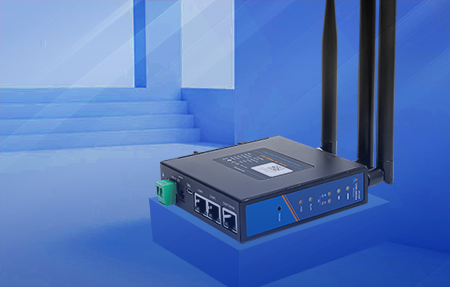
In PLC communication scenarios, the USR-DR154 Cat-1 modem, installed via a rail-mounted design within control cabinets, enables real-time equipment status monitoring and data acquisition. Its industrial-grade design (EMC Level 4 protection) resists electromagnetic interference, ensuring zero packet loss during data transmission. For example, an automotive parts manufacturer deployed Cat-1 modem, reducing equipment fault response times from 2 hours to 15 minutes and cutting annual downtime losses by RMB 8 million.
In distribution automation scenarios, Cat-1 modem support downstream rates of 5 Mbps and upstream rates of 10 Mbps, meeting the real-time data upload requirements of fault indicators and smart switches. Their dual-SIM single-standby design allows flexible operator switching based on on-site network quality, ensuring uninterrupted communication during extreme weather. State Grid data shows that Cat-1 modem accounted for 67% of newly added distribution automation terminals in 2025, a 22-percentage-point increase from 2024.
In field scenarios such as weather stations and water quality monitoring, the low power consumption of Cat-1 modem significantly extends device battery life. For example, a weather monitoring project adopted the USR-DR154 paired with a solar power system, achieving "one deployment, five years of maintenance-free operation." Its IP65 protection rating and lightning protection design ensure stable operation during extreme weather events like heavy rain and sandstorms, with a data acquisition completeness rate of 99.9%.
In vehicle tracking scenarios, Cat-1 modem, with their lower data transmission costs and module prices, have become the preferred solution for GPS trackers. For example, a logistics enterprise reduced annual data traffic fees per device from RMB 300 to RMB 80 by bulk purchasing Cat-1 modem. Simultaneously, through the USRIOT cloud platform, it achieved real-time vehicle location monitoring, route optimization, and fuel consumption analysis, cutting overall operational costs by 25%.
As a lightweight 5G technology, 5G RedCap offers theoretical speeds of up to 220 Mbps but relies on 5G SA (Standalone) networks. As of the end of 2025, only 150 operators globally have initiated 5G SA deployments, with complex and capital-intensive SA core network construction slowing progress. It is expected that high-income markets such as Western Europe, North America, and East Asia will complete SA network construction by 2030, creating conditions for RedCap deployment. Until then, Cat-1 will remain the mainstream choice for medium-to-low data rate scenarios, forming a synergistic pattern of "high-end using RedCap and mid-to-low end using Cat-1."
Satellite IoT extends connectivity to remote areas such as oceans, aviation, and polar regions using low Earth orbit (LEO) and geostationary orbit (GEO) satellites. Following 3GPP standard updates, satellite IoT can leverage the mature NB-IoT chipset ecosystem, reducing device costs and power consumption. For example, Skylo provides emergency SMS and narrowband telemetry services in North America and Europe, while Sateliot plans to offer commercial NB-IoT services via LEO satellites by the end of 2025. However,受限 (constrained) by regulatory approvals and spectrum allocations, satellite IoT is more suitable as a ground network supplement for remote area coverage or emergency fault switching in the short term.
With the implementation of the "Measures for the Security Assessment of Outbound Data Transfers," overseas projects must pass cybersecurity assessments in destination countries to transmit data back to Chinese headquarters. Cellular modems embedded with "SM algorithms + trusted chips" will become mandatory bidding requirements. For example, an enterprise was fined an amount exceeding its project gross profit for failing to pass Mexican data compliance certifications, directly leading to its withdrawal from the local market.
The rise of Cat-1 modem essentially reflects the transition of industrial IoT from "scale expansion" to "quality prioritization." For enterprises, technology selection should adhere to the "30% cost rule"—if the comprehensive cost of a 5G solution exceeds that of Cat-1 by 30% and fails to deliver quantifiable revenue growth, a retreat to 4G is warranted. Building software stickiness before hardware commoditization, establishing overseas channels before price wars erupt, and completing compliance systems before data regulations tighten are key to gaining an edge in the "low-power revolution" of industrial IoT.
Product Recommendation: The USRIOT USR-DR154 Cat-1 modem, with its "ultra-compact size, ultra-low power consumption, and ultra-strong adaptability," serves as a "hexagonal warrior" in industrial IoT scenarios. It supports multiple communication protocols such as MQTT, HTTPD, and SMS, compatible with mainstream industrial protocols; incorporates hardware watchdogs and encrypted data transmission to ensure zero data loss; and allows parameter configuration via Bluetooth scanning, leading the industry in ease of use. Whether in industrial automation, smart grids, environmental monitoring, or transportation and logistics, the USR-DR154 provides "out-of-the-box" solutions, empowering enterprises to rapidly achieve device connectivity and data cloud integration.