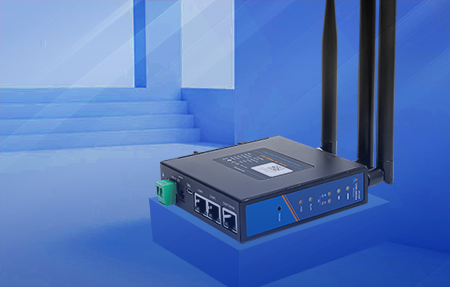
In-Depth Analysis of the Advantages and Disadvantages of PUSR 4G Industrial Routers: Precisely Addressing Pain Points in Industrial Scenarios to Facilitate Enterprise Digital Transformation
In today's rapid development of the Industrial Internet of Things (IIoT), 4G industrial routers, as core devices connecting the physical and digital worlds, are undertaking critical tasks such as data transmission, device networking, and remote monitoring. However, the complexity of industrial scenarios places stringent requirements on the stability, security, and compatibility of routers. As a well-known brand in the industrial communication field, PUSR's series of 4G industrial routers cover a diverse range of needs from lightweight applications to high-reliability scenarios through differentiated designs. This article will delve into the value of PUSR 4G industrial routers from three dimensions: technical principles, core advantages, potential pain points, and solutions, helping enterprises make precise selections and avoid deployment risks.
There are fundamental differences between industrial environments and home/office scenarios: characteristics such as high temperatures, high humidity, strong electromagnetic interference, unattended operations, and dispersed equipment require routers to possess "three highs" capabilities—high stability, high security, and high compatibility. The design logic of PUSR 4G industrial routers revolves around these pain points:
PUSR routers employ industrial-grade 32-bit processors, high-precision clock chips, and solid-state capacitors, enhancing anti-interference capabilities by more than three times compared to commercial routers. For example, the USR-G805s series passes the IEC 61000-4-5 lightning protection standard, withstanding 8kV electrostatic shocks and 6000V surge voltages, performing excellently in lightning-prone areas or scenarios with dense power equipment. Its metal enclosure design not only improves heat dissipation efficiency but also effectively shields against electromagnetic interference, ensuring signal transmission stability.
Typical Case: After deploying USR-G805s in a wind farm, the router operated continuously for 2 years without faults in a -30°C low-temperature environment, transmitting wind turbine vibration data in real-time via 4G networks. Combined with AI algorithms, it predicted bearing failures, reducing operations and maintenance costs by 40%.
PUSR routers support multi-protocol conversion functions, enabling the conversion of traditional PLC Modbus RTU protocols to Modbus TCP or the pushing of sensor data to cloud platforms via MQTT protocols. For example, the USR-G806P integrates a lightweight edge computing engine, allowing data cleaning and rule filtering (such as removing outliers) locally, uploading only critical data to the cloud, reducing bandwidth usage and cloud load.
Typical Scenario: A car manufacturing plant connected 300 robots via USR-G806P, collecting and preprocessing operational data in real-time. After compressing the data volume by 80%, it was uploaded to the MES system, reducing network latency from 500ms to 50ms and increasing predictive maintenance accuracy to 98%.
PUSR routers provide "hardware + software + cloud" three-level security protection:
Industry Application: A bank deployed USR-G805s to connect wireless ATMs, achieving encrypted transaction data transmission through VPN private networks and bidirectional SSL certificate verification, with no data leakage incidents occurring.
The PUSR cloud management platform supports functions such as batch device configuration, firmware OTA upgrades, traffic monitoring, and fault alerts. For example, administrators can remotely view router status, restart devices, or switch network links with one click via a mobile app, eliminating the need for on-site operations. Additionally, routers support the SNMP protocol, allowing integration into existing enterprise operations and maintenance systems (such as Zabbix and Nagios) for unified management.
Cost Comparison: After deploying 200 USR-G805s, a logistics enterprise reduced its operations and maintenance personnel from 5 to 2, saving 600,000 yuan in annual operations and maintenance costs.
Although PUSR 4G industrial routers excel in stability, security, and compatibility, the following issues still need to be noted in specific scenarios:
PUSR mainstream models (such as the USR-G805s) support 4G Cat4 networks, with a theoretical speed of 150Mbps and an actual download speed of approximately 50-80Mbps. For scenarios requiring the transmission of multiple high-definition videos (such as 4K surveillance) or large-scale data collection, upgrading to 5G routers (such as the USR-G816 5G version) may be necessary.
Solution: If 4G is currently the primary focus, priority can be given to models supporting dual-card aggregation (such as the USR-G806w), increasing bandwidth by bundling two 4G cards; future smooth upgrades to 5G devices can protect investments.
Although PUSR routers support operation at -40°C, battery-powered devices may fail to start due to reduced lithium-ion battery activity in extreme low temperatures.
Solution: Adopt a DC 9-36V wide voltage input and power the device through an external power supply; or choose customized models supporting low-temperature batteries (such as the USR-G805s-LT low-temperature version).
Some older devices may use non-standard protocols (such as proprietary protocols), requiring customized development for interconnection.
Solution: PUSR provides protocol development kits (SDKs) and API interfaces, supporting secondary development; or choose models supporting multiple protocols (such as the USR-G806P) to reduce customization costs.
The PUSR 4G industrial router series covers a range of models from lightweight to high-performance. The following are typical scenarios and model recommendations:
The core value of PUSR 4G industrial routers lies in "addressing industrial scenario pain points with industrial-grade standards." Through four capabilities—hardware reinforcement, protocol compatibility, security protection, and intelligent operations and maintenance—they help enterprises achieve device networking, data interconnection, and remote management, lowering the threshold for digital transformation. For enterprises with limited budgets but clear needs, the USR-G805s offers a cost-effective choice; for scenarios pursuing high performance and scalability, the USR-G806P is the ideal option; while the USR-G781 fills the market gap in lightweight data transmission.
Action Suggestion: If you are facing issues such as unstable device networking, high data security risks, and soaring operations and maintenance costs, contact us to obtain customized solutions. The PUSR professional team will provide full-process support from selection, deployment, to operations and maintenance based on your scenario requirements, helping enterprises build a stable, secure, and efficient industrial Internet of Things.