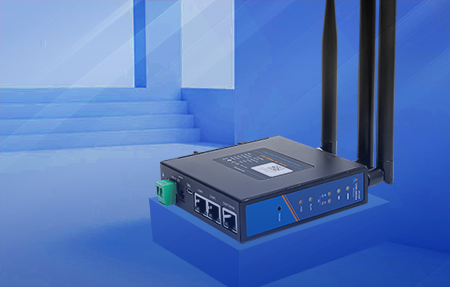
GSM modem is an industrial-grade modem that supports GSM wireless communication. It can be connected to the operator's GSM network by inserting the operator's SIM card to realize wireless GSM call, SMS, data and other functions.
The core module of GSM modem is actually the core module of the mobile phone. In fact, it is also an important module supplier for GSM mobile phones. Therefore, when it is powered on, the built-in software of the GSM modem starts to work. If a SIM card of a mobile operator is inserted, the GSM modem is completely connected to the mobile communication network as the mobile phone. At the same time, the computer can connect to the GSM modem through the serial port, for example, through the Hyper Terminal, you can connect to the user interface of the GSM modem, through a set of AT commands, you can operate the GSM modem, send and receive text messages. In fact, you can also make calls, send and receive faxes, etc.
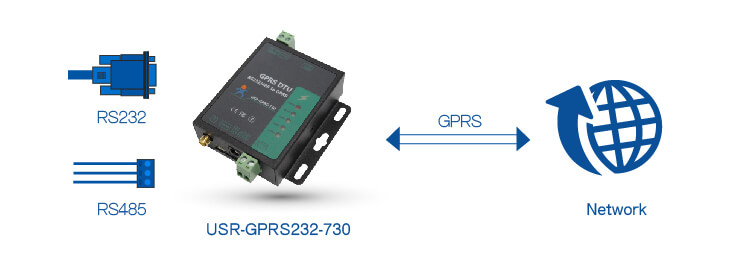
The main purpose of GSM modem is to send and receive short messages, saving time for sendingshort messages, and messages can be sent within a short time. In addition, it is small and convenient to carry, no need to go online, as long as the phone has a signal, it can send and receive short messages via the connection with the computer. Compared with ordinary mobile phones, this set of equipment has more advantages, because it is fully functional, it can be used for secondary development programming, and can be applied in different industries.
GSM modem products are widely used in M2M industries such as IoT industry chain, industrial automation, information dissemination, such as remote meter reading and centralized meter reading of smart grid, municipal street lamp control, water conservancy and hydrology monitoring, financial mobile POS terminal, energy (energy, water supply, heating, etc.) remote pipe network monitoring, water conservancy and hydrology monitoring, meteorological monitoring, environmental protection, intelligent transportation, intelligent home, media advertising release, digital medical, seismic monitoring, industrial remote sensing telemetry, fire safety, real-time online detection of coal mines, oil fields data collection and other fields.
GSM modems have gradually exited the mainstream market due to the phase-out of 2G/3G networks, while 4G modem and Cat-1 modem have become the mainstream choices in the IoT field, thanks to their advantages such as high speed, low latency, and mature network infrastructure. Below is an analysis of the core application scenarios and recommendations for the 4G modem USR-DR504 and the Cat-1 modem USR-DR154:
5-mode 13-band support: Enables high-speed 4G access via China Mobile, China Unicom, and China Telecom, while maintaining compatibility with 3G/2G networks to ensure stable connectivity in complex environments.
High speed and low latency: Based on 4G networks, it is ideal for data transmission scenarios with stringent real-time requirements.
Industrial-grade design: Supports 35mm standard DIN rail mounting, adapting to harsh industrial environments.
Rich functionality: Supports dual-socket connections, registration/heartbeat packets, remote SMS configuration, FOTA (Firmware Over-The-Air) self-upgrades, and more, meeting the needs of complex scenarios.
Scenario: PLC communication, remote equipment monitoring, data acquisition, and transmission.
Value: High speed ensures real-time data interaction, while industrial-grade design guarantees long-term stable operation.
Scenario: Power equipment status monitoring, remote meter reading, and fault fault warning.
Value: Low latency supports rapid response, and multi-band compatibility ensures connectivity across different carrier networks.
Scenario: Connecting outdoor equipment such as weather stations, water quality monitors, and air quality detectors.
Value: Wide voltage power supply and DIN rail mounting adapt to field environments, enabling reliable transmission of large volumes of monitoring data.
Scenario: Vehicle tracking, cold chain transportation monitoring, and intelligent warehouse management.
Value: High-speed networks support real-time positioning and status updates, ensuring full visibility throughout the logistics process.
Cat-1 technology: Offers an uplink speed of approximately 5Mbps and a downlink speed of 10Mbps, meeting medium-to-low-speed requirements at half the cost of Cat-4.
Ultra-compact size: Lipstick-sized, supports DIN rail mounting, saving space.Low power consumption design: Ideal for battery-powered devices, extending battery life.Dual-SIM single-standby: Features an embedded SIM card (with included data) and an external SIM card slot for flexible carrier network switching.
Scenario: Charging station status monitoring, charging data upload, and user payment settlement.
Value: Low cost enables large-scale deployment, while dual-SIM design ensures network stability.
Scenario: Connecting self-service vending machines, POS terminals, and shared devices.
Value: Compact size facilitates easy integration, supports remote configuration and firmware upgrades, reducing operational and maintenance costs.
Scenario: Soil moisture monitoring, greenhouse environment control, and remote scheduling of agricultural machinery.
Value: Low power consumption adapts to field environments, enabling reliable transmission of sensor data.
Scenario: Smart manhole covers, fire hydrant monitoring, and streetlight control.
Value: Wide network coverage supports device connectivity in remote areas, enabling real-time reporting of abnormal conditions.
Scenario: Smart door locks, home appliance networking, and home security.
Value: Low cost enables device interconnection, supporting voice/video communication needs.
| Dimension | USR-DR504 (4G Modem) | USR-DR154 (Cat-1 Modem) |
| Speed Requirement | High speed, low latency (e.g., industrial control) | Medium-to-low speed (e.g., environmental monitoring) |
| Cost Sensitivity | High (suitable for budget-abundant scenarios) | Low (preferred for cost-effectiveness) |
| Installation Space | Standard DIN rail mounting | Ultra-compact, flexible deployment |
| Power Consumption Requirement | High (requires continuous power supply) | Low (suitable for battery-powered devices) |
| Typical Scenarios | Industrial automation, smart grids, transportation and logistics | Charging stations, smart retail, smart agriculture |
Selection Recommendations:
Both modems support the USR Cloud platform, enabling remote monitoring, firmware upgrades, and other functions to further reduce operational and maintenance costs. Selecting the appropriate device based on specific scenario requirements can maximize return on investment.