April 26, 2020
Selection Guide for Cellular Modems
Selection Guide for Cellular Modems: From Scenario Requirements to Professional Solutions, PUSR Provides Precise Matching
What is the Function of a Cellular Modem?
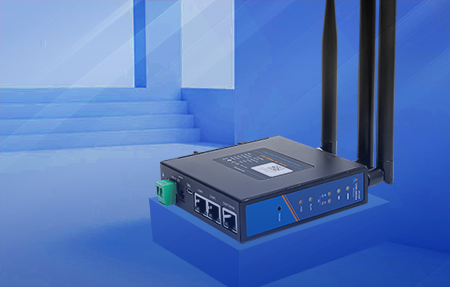
As the core hub of the Internet of Things (IoT) and industrial automation, a cellular modem (data transmission unit) holds its core value in breaking down data silos and achieving efficient collaboration between devices and the cloud. Taking a chemical industrial park as an example, by deploying the USR-DR154-E rail-mounted cellular modem, data from over 200 pressure sensors, thermometers, and other devices within the park can be collected in real-time and transmitted to a monitoring platform. Managers can view key parameters such as pipeline network pressure and storage tank temperature via their mobile phones. When the temperature of a certain storage tank exceeds a threshold, the cellular modem immediately triggers an SMS alarm and simultaneously activates the sprinkler system to automatically cool down, preventing accidents. This closed loop of "sensing - transmission - decision-making - execution" is precisely the core value of a cellular modem.
From a technical perspective, a cellular modem needs to possess three key capabilities:
Protocol Conversion: Support industrial protocols such as Modbus and MQTT, and be compatible with devices like PLCs and sensors.
Data Transparent Transmission: Convert serial port data into IP data to achieve seamless connection between devices and the cloud.
Edge Computing: Complete data preprocessing locally to reduce cloud load and improve response speed. For example, the USR-G786 4G cellular modem has built-in data filtering rules that can automatically eliminate outliers and only upload valid data to the platform, reducing traffic costs while enhancing data quality.
Who Needs a Cellular Modem?
The application scenarios of cellular modems cover four major fields: "energy, manufacturing, environmental protection, and transportation," with specific requirements as follows:
Energy Industry: Power grid monitoring, oil and gas pipeline inspection, and photovoltaic power plant operation and maintenance. For instance, an oil field achieved real-time monitoring of pumping unit status through the USR-DR771-E Cat-1 cellular modem, reducing fault diagnosis time from 2 hours to 10 minutes.
Smart Manufacturing: Industrial automation, assembly line monitoring, and equipment predictive maintenance. A car factory adopted the USR-DR504 rail-mounted 4G LTE cellular modem to connect over 100 AGV (Automated Guided Vehicle) trolleys, enabling path planning and task scheduling, and improving production efficiency by 15%.
Environmental Monitoring: Water quality monitoring, air quality monitoring, and noise pollution warning. An environmental protection bureau collected river water level data through the USR-DR154-E, combined it with AI algorithms to predict the risk of waterlogging, and scheduled drainage equipment in advance.
Smart Transportation: Intelligent streetlight control, traffic signal optimization, and shared parking space management. A city connected 5,000 streetlights through the USR-G786 4G cellular modem, achieving on-demand lighting and saving 30% of annual electricity consumption.
What Scenarios Are 4G Cellular Modems and Cat-1 Cellular Modems Suitable for, Respectively? What Are Their Advantages and Disadvantages?
4G Cellular Modems: High-Speed and Stable, Suitable for High Real-Time Scenarios
Typical Scenarios: Video surveillance, remote control, and large data transmission. For example, a logistics warehouse connected high-definition cameras through the USR-G786 4G cellular modem to monitor cargo stacking in real-time and trigger alarms immediately when cargo topples over.
High Speed: The theoretical downlink rate reaches 150Mbps, meeting the demand for high-definition video transmission.
Low Latency: The end-to-end latency is less than 50ms, suitable for remote control scenarios.
Wide Coverage: Relying on operator networks, it has a wide signal coverage range.
Limitations: High power consumption (approximately 3W under full load), requiring continuous power supply; and higher cost compared to Cat-1.
Cat-1 Cellular Modems: Low Power Consumption and Low Cost, Suitable for Small Data Volume Scenarios
Typical Scenarios: Environmental monitoring, equipment status reporting, and smart electricity meters. For example, an agricultural greenhouse collected soil moisture data through the USR-DR771-E Cat-1 cellular modem, uploading only 10 records per day, with an annual traffic cost of less than 10 yuan.
Advantages:
Low Power Consumption: The sleep current is less than 1mA, suitable for solar-powered scenarios.
Low Cost: The module price is 30% lower than that of 4G, and the data plan is more flexible.
Long Battery Life: The built-in battery can support continuous device operation for more than 3 years.
Limitations: The uplink rate is only 5Mbps, not suitable for video transmission; and the signal coverage is weaker than that of 4G.
How to Select a Cellular Modem from PUSR
PUSR provides a "scenario-based selection tool" that allows users to precisely match their needs through the following steps:
Clarify Communication Requirements:
If high-speed transmission (such as video surveillance) is required, choose the USR-G786 4G cellular modem.
If low-cost and long battery life are required (such as environmental monitoring), choose the USR-DR771-E Cat-1 cellular modem.
If compact installation is required (such as inside distribution cabinets), choose the USR-DR154-E rail-mounted cellular modem.
If multi-network redundancy is required (such as monitoring critical equipment), choose the USR-DR504 rail-mounted 4G LTE cellular modem.
Evaluate Interface Types:
Sensor Interface: The USR-DR154-E supports RS485/RS232/TTL, compatible with most industrial devices.
Control Interface: The USR-G786 provides 2 DO (Digital Output) channels, which can directly link to alarms.
Storage Expansion: The USR-DR504 supports TF card storage, which can cache data when the network is interrupted.
Consider Environmental Adaptability:
Wide Temperature Design: The USR-DR771-E has an operating temperature range of -40℃ to 85℃, suitable for cold regions in the north.
Lightning Protection and Moisture Resistance: The USR-DR504 has passed IP65 protection certification and can withstand heavy rain.
Electromagnetic Compatibility: The USR-G786 has passed CE/FCC certification and is suitable for strong electromagnetic environments.
If you still have questions about the selection, you can click here to submit a requirement form, and the PUSR technical team will contact you within 2 hours to provide:
A free scenario analysis report;
A customized networking solution;
Device compatibility testing services.
The selection of a cellular modem is not only a technical decision but also a long-term investment in production efficiency and safety. With the philosophy of "scenario-driven and technology-empowered," PUSR helps you build reliable and efficient IoT infrastructure.
Industrial loT Gateways Ranked First in China by Online Sales for Seven Consecutive Years **Data from China's Industrial IoT Gateways Market Research in 2023 by Frost & Sullivan
We use cookies to ensure that we give you the best
experience on our website. If you continue to use this site we will assume that you are happy with it.