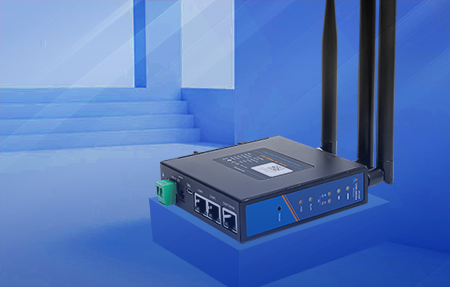
These three communication ports are serial ports, which are different in the following aspects:
1. Communication distance
The maximum communication distance of RS232 port is 15 meters, while the maximum communication distance of rs422/485 port is 1200 meters.
2. Numbers of connected devices
RS232 can only connect to one device, while RS485 can connect to multiple devices.
3. Definition of RS232, RS422, and RS485 ports
RS232 is a standard interface. It is a D-type-9 needle. The signal definition of the interface of the connected device is the same.
While RS422/RS485 is a non-standard interface, usually a 15-pin serial interface (there are also 9-pin interfaces), and the pin definition of each device is different. In addition, it needs to be explained that there are differences between RS422 and RS485: RS422 is 4-wire system, full duplex mode; RS485 is two-wire system, half duplex mode.
Both of RS232, RS422 and RS485 is standard serial data interface. RS232 is the most widely used serial interface in PC communication. RS232 is defined as a single-terminal standard for increasing communication distance in low-rate serial communication. RS232 adopts unbalanced transmission mode, which is called single-terminal communication, while RJ45 interface is usually used for data transmission, the most common application is network card interface.
At a time when the Internet of Things (IoT) is flourishing, countless devices are scattered in every corner like stars, ranging from precision instruments in industrial production workshops to intelligent sensors in urban corners, and from environmental monitoring equipment in agricultural greenhouses to various controllers in smart homes. These devices are like the cells of the IoT ecosystem, each undertaking specific functions. And achieving efficient and stable data interaction and communication among them is the cornerstone for building the entire IoT edifice.
However, reality is not always smooth sailing. Different devices often adopt different interface standards. The common RS232, RS485, and RS422 interfaces each have their own characteristics, with significant differences in communication distance, anti-interference ability, and data transmission rate. This is similar to people speaking different languages trying to communicate. Without effective translation tools, information transmission will be fraught with difficulties. In IoT projects, this issue of interface incompatibility often leads to the inability of devices to communicate normally, and data cannot be transmitted in a timely and accurate manner, thereby affecting the operational efficiency and stability of the entire system and becoming a deep-seated pain point restricting the development of the IoT.
The emergence of serial device servers is like a precise key, providing a perfect solution to this problem. It can connect serial devices with different interface types to the Ethernet, enabling networked communication among devices, breaking interface limitations, and allowing various devices to "converse" freely on the IoT stage.
The RS232 interface is a common serial communication interface widely used in early computer peripheral connections and short-distance device communication. It has the advantages of simple implementation and low cost, but its limitations are also very obvious in IoT applications.
Pain points: The communication distance of the RS232 interface is usually relatively short, generally not exceeding 15 meters, which makes it inadequate in IoT scenarios requiring long-distance communication. Moreover, it only supports point-to-point communication. In a project where multiple devices need to be connected, multiple RS232 interfaces and complex wiring are required, increasing system cost and complexity. In addition, the RS232 interface has weak anti-interference ability and is prone to data transmission errors due to interference in industrial sites or outdoor environments with complex electromagnetic environments.
Serial device server solution: A serial device server can connect RS232 devices to the Ethernet, enabling remote data transmission over the network. In this way, the communication distance is no longer limited by the RS232 interface itself. As long as there is network coverage, devices can communicate with each other. At the same time, a serial device server supports multi-device connections. One serial device server can connect to multiple RS232 devices simultaneously and manage and communicate through different ports, greatly simplifying the wiring structure and reducing system costs. In addition, the serial device server has a certain anti-interference ability and can perform checksum and error correction on the transmitted data to improve the accuracy of data transmission.
The RS485 interface has been widely used in industrial automation, intelligent buildings, and other fields. It has the advantages of long communication distance and support for multi-point communication, meeting the needs of long-distance and multi-device connections. However, in practical applications, RS485 also faces some challenges.
Pain points: Although the theoretical communication distance of RS485 can reach 1200 meters, in actual engineering, due to factors such as cable quality and wiring environment, the communication distance is often greatly reduced. Moreover, devices in an RS485 network need to follow strict communication protocols and address allocation rules; otherwise, communication conflicts and data confusion problems are prone to occur. In addition, the configuration and debugging of the RS485 interface are relatively complex and require professional technicians to operate, increasing the implementation difficulty and cost of the project.
Serial device server solution: A serial device server can provide more flexible and convenient network connection methods for RS485 devices. By connecting RS485 devices to a serial device server and then accessing the Ethernet, not only can the communication distance be further extended, but also the advantages of the network can be utilized to achieve remote monitoring and management. The serial device server can centrally manage and configure devices in the RS485 network, automatically allocate addresses and communication parameters, avoiding errors that may occur during manual configuration. At the same time, the serial device server provides a friendly user interface and configuration tools, making device configuration and debugging simpler and more convenient and reducing the requirements for technicians.
The RS422 interface is a high-speed, full-duplex serial communication interface suitable for application scenarios with high requirements for data transmission rate and real-time performance, such as high-speed data acquisition systems and precision instrument control. However, in IoT applications, RS422 also faces the problem of incompatibility with interfaces of other devices.
Pain points: When RS422 interface devices communicate with devices adopting different interface standards, interface conversion is required, which necessitates additional conversion equipment and complex wiring. Moreover, due to the relatively limited application of the RS422 interface, the selection and procurement of related devices are also restricted to a certain extent, increasing project costs and risks.
Serial device server solution: A serial device server can easily achieve conversion and communication between the RS422 interface and other interface types. By connecting RS422 devices to a serial device server and then communicating with other devices through the Ethernet, no additional interface conversion equipment is required, simplifying the system structure. At the same time, the serial device server supports the conversion of multiple communication protocols and data formats, meeting the communication needs of different devices. In addition, with the development of the IoT, more and more devices are beginning to support network communication. The serial device server provides a convenient way for RS422 devices to access the IoT, enabling these devices to better integrate into the IoT ecosystem.
The serial device server has powerful compatibility and can support multiple serial port interface types, including RS232, RS485, and RS422. Whether it is an old industrial device or a new intelligent sensor, as long as it has a serial port interface, it can be connected to the Ethernet through a serial device server to achieve networked communication. This compatibility makes the serial device server an ideal choice for connecting different devices in IoT projects, enabling easy integration of various heterogeneous devices and the construction of a unified communication platform.
The serial device server supports multiple network connection methods, such as wired Ethernet and Wi-Fi. Users can choose the appropriate network connection method according to actual project requirements and on-site environment. In places with wired network coverage, wired Ethernet connections can be used to ensure communication stability and high speed; in places without wired networks or where wiring is difficult, Wi-Fi connections can be used to achieve wireless access of devices, improving deployment flexibility and convenience.
The reliability of data transmission is one of the key indicators of an IoT system. The serial device server adopts various technical means to ensure the accuracy and stability of data transmission. It has data checksum and error correction functions and can perform real-time detection and correction on the transmitted data to avoid data loss and errors. At the same time, the serial device server also supports data caching and retransmission mechanisms. In the event of network failures or communication interruptions, it can automatically cache data and retransmit it after the network is restored to ensure complete data transmission.
The serial device server provides a friendly user interface and convenient management and configuration tools. Users can remotely manage and configure the serial device server through a web browser or dedicated software. Without on-site operations, they can complete device parameter settings, communication protocol selection, port mapping, and other operations. In addition, the serial device server also supports batch configuration and management functions, enabling simultaneous configuration and management of multiple devices, greatly improving work efficiency.
The industrial automation production line of a large manufacturing enterprise adopted a large number of devices and controllers with RS232 and RS485 interfaces. Due to incompatible communication among devices, production data could not be shared and monitored in a timely manner, seriously affecting production efficiency. To solve this problem, the enterprise introduced serial device servers. By connecting various devices and controllers to serial device servers and then accessing the enterprise intranet, networked communication among devices was achieved. Production management personnel can obtain production data in real time through the monitoring center, promptly identify problems in the production process and make adjustments, improving production efficiency by more than 30%.
In a large intelligent building, a large number of environmental monitoring sensors, such as temperature sensors, humidity sensors, and air quality sensors, need to be installed, most of which adopt the RS485 interface. To achieve centralized management and remote monitoring of these sensors, the project party used serial device servers. The serial device servers connected the various sensors to the Ethernet and realized real-time data upload and storage through a cloud platform. Management personnel can view the environmental data inside the building anytime and anywhere through a mobile app or computer client and perform intelligent regulation based on the data, providing people with a more comfortable and healthy indoor environment.
Among numerous serial device server products, the USR-TCP232 - 410S stands out with its excellent performance and convenient user experience. It has a compact and exquisite appearance design and does not take up too much space, making it very convenient for installation in equipment cabinets or control boxes.
This serial device server supports 4 serial ports and can connect to multiple devices with different interface types simultaneously, meeting diverse device connection requirements. It is compatible with RS232, RS485, and RS422 interfaces and can easily cope with various complex communication scenarios. In terms of network connection, the USR-TCP232 - 410S supports wired Ethernet connections, ensuring stable and reliable communication and fast data transmission speed.
Its configuration and management are also extremely simple. Users can easily complete device parameter settings and communication configuration through a web browser without professional technical knowledge or complex operation steps. Moreover, it provides rich development interfaces and protocol support, facilitating users' secondary development and integration to meet the personalized needs of different projects.
As a key device for IoT communication, serial device servers provide an effective solution to the communication problems among devices with different interfaces. With their powerful compatibility, flexible network connection methods, reliable data transmission, and convenient management and configuration, they have become indispensable communication tools in IoT projects.
If you are troubled by device communication problems in your IoT project, you may consider introducing serial device servers. Whether in industrial automation, intelligent buildings, intelligent transportation, or other fields, serial device servers can bring efficient and stable communication guarantees to your project. Contact PUSR, and let's join hands with the USR-TCP232 - 410S serial device server to jointly open a new era of seamless IoT connectivity and create a better future!