April 23, 2020
The working temperature ranges of the Industrial Devices and Commercial Devices
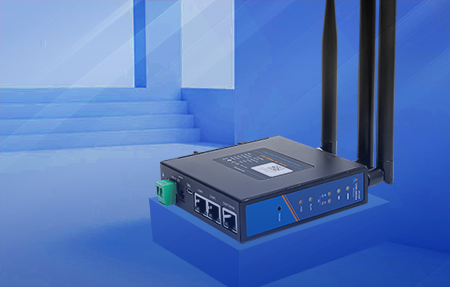
Industrial Router and Serial Port to Ethernet Server: An Analysis of Differences Between Industrial-Grade and Commercial-Grade Equipment and a Guide to Scenario-Based Selection
In the context of the rapid development of the Industrial Internet of Things (IIoT), Industrial routers and Serial port to Ethernet server serve as the core hubs connecting devices to networks. Their performance differences directly impact system stability and data transmission efficiency. This article will conduct an in-depth analysis of the differences between industrial-grade and commercial-grade equipment from three dimensions: design standards, functional characteristics, and application scenarios. It will also provide selection strategies combined with typical scenarios to help clients precisely match their needs.
1. Core Differences Between Industrial-Grade and Commercial-Grade Equipment
1.1 Environmental Adaptability: From "Greenhouses" to "Battlefields"
Industrial-grade equipment: It features a fully enclosed metal casing (e.g., with an IP65 protection rating), built-in wide-temperature components (-40°C to 85°C), and supports dustproof, waterproof, and anti-corrosion designs. For example, the Baima BMR500 Industrial router can operate stably in environments ranging from -35°C to 75°C, while commercial routers typically only support temperatures from 0°C to 55°C. Commercial-grade equipment: It mainly uses plastic casings and only meets basic indoor protection requirements. High temperatures or humid environments can easily lead to component aging and signal attenuation. Pain point solution: Industrial-grade equipment can be deployed in extreme environments such as outdoor base stations, mines, and marine monitoring, avoiding equipment downtime caused by environmental factors and reducing maintenance costs.
1.2 Communication Stability: Upgrading from "Intermittent Disconnections" to "Permanent Online"
Industrial-grade equipment:
Multi-level link detection: It supports PPP layer heartbeats, ICMP probes, TCP Keepalive, and application layer heartbeat mechanisms to automatically recover from network failures. For example, the Daphile Industrial router achieves real-time data backhaul in remote areas through 3G/4G wireless networking.
Hardware-level redundancy: It features dual power inputs and dual SIM card slots to ensure seamless switching in case of a single link failure. Commercial-grade equipment: It usually only relies on software watchdogs, is prone to disconnections during network fluctuations, and lacks multi-link backup capabilities. Pain point solution: Industrial-grade equipment can ensure the continuous operation of critical systems (such as power monitoring and traffic signal control), avoiding safety accidents caused by network interruptions.
1.3 Data Security: Strengthening from "Basic Protection" to "Military-Grade Encryption"
Industrial-grade equipment:
Protocol support: It supports various VPN protocols such as IPSEC, PPTP, L2TP, GRE, and OPENVPN to build encrypted tunnels.
Authentication mechanisms: It integrates Radius authentication and APN/VPDN private networks to prevent data leakage. For example, Industrial routers encrypt transaction data through VPN tunnels in financial ATM monitoring. Commercial-grade equipment: It only supports basic encryption such as WPA2, which is easily hackable, and lacks private network isolation capabilities. Pain point solution: Industrial-grade equipment can meet the data security requirements of highly sensitive scenarios such as healthcare and finance, avoiding compliance risks.
1.4 Interface Expandability: Breaking through from "Single Function" to "Full-Scenario Coverage"
Industrial-grade equipment:
Multi-interface design: It comes standard with RS232/RS485 serial ports, DI/DO digital input/output interfaces, and relay control interfaces, supporting Modbus TCP/RTU protocols. For example, a Serial port to Ethernet server can connect traditional PLCs and sensors to an IP network for remote monitoring.
Protocol conversion capabilities: It supports the mutual conversion between industrial protocols such as Modbus, Profinet, and EtherCAT and TCP/IP protocols, breaking down device compatibility barriers. Commercial-grade equipment: It usually only provides a limited number of LAN/WAN ports and lacks serial port and industrial protocol support. Pain point solution: Industrial-grade equipment can simplify industrial site wiring, reduce the cost of upgrading old equipment, and improve system integration efficiency.
2. Typical Application Scenarios and Selection Strategies
Scenario 1: Smart City - Intelligent Traffic Signal Control
Demand pain points: Traffic signal controllers need to operate 24/7 and are deployed in outdoor open environments, requiring resistance to high temperatures, lightning strikes, and electromagnetic interference. At the same time, they need to transmit real-time traffic flow data back to the command center and support remote control. Selection recommendations:
Industrial router: Choose a model that supports dual SIM card redundancy, IP65 protection, and GPS positioning (such as the Baima BMR500) to ensure automatic carrier switching in signal coverage blind spots and record device location information.
Serial port to Ethernet server: Select a device that supports RS485 to TCP/IP conversion and the Modbus TCP protocol to connect traditional signal controllers to an IoT platform for centralized management.
Scenario 2: Industrial Automation - Production Line Equipment Monitoring
Demand pain points: Production line equipment (such as PLCs and robots) is widely distributed and requires serial communication. At the same time, data needs to be uploaded to an MES system to support real-time alarms and process optimization. Selection recommendations:
Industrial router: Prioritize models with multiple LAN ports that support VLAN division (such as the Daphile R300A) to isolate traffic from different devices and avoid broadcast storms. At the same time, configure a 4G module to solve the problem of WiFi signal blind spots.
Serial port to Ethernet server: Select a device that supports virtual serial port mapping and TCP Client mode to transparently transmit PLC data to the MES server, reducing intermediate link delays.
Scenario 3: Energy Monitoring - Wind Farm Data Collection
Demand pain points: Wind turbines in wind farms are distributed in mountainous areas or offshore, with harsh environments. They need to collect parameters such as vibration and temperature and transmit them back to the monitoring center wirelessly to support fault warnings. Selection recommendations:
Industrial router: Choose a model that supports wide temperatures (-40°C to 85°C) and electromagnetic interference resistance (EMC Level 4) to ensure stable operation in strong winds and salt spray environments. At the same time, configure a high-gain antenna to enhance signal penetration.
Serial port to Ethernet server: Select a device that supports Modbus RTU to TCP conversion and encrypted data transmission to ensure the security of sensitive data. Also, configure a heartbeat packet mechanism to monitor the device's online status in real time.
Scenario 4: Medical IoT - Remote Patient Monitoring
Demand pain points: Medical devices (such as electrocardiograph machines and sphygmomanometers) need to transmit data via serial ports or Bluetooth. At the same time, the data needs to be encrypted and uploaded to the cloud for remote diagnosis by doctors. Moreover, the devices need to comply with medical industry certification standards. Selection recommendations:
Industrial router: Choose a model that supports FCC/CE medical certification and HIPAA compliance to ensure that data transmission complies with privacy regulations. At the same time, configure USB interfaces to support Bluetooth gateway expansion and be compatible with various medical devices.
Serial port to Ethernet server: Select a device that supports SSL/TLS encryption and allows multiple clients to access it simultaneously to achieve concurrent data uploads from multiple devices and improve diagnostic efficiency.
3. Guide to Avoiding Pitfalls in Selection: Four Core Principles
Environmental matching priority: Select equipment based on the deployment environment (temperature, humidity, protection rating) to avoid the mistake of using commercial equipment in industrial settings. For example, outdoor scenarios must choose equipment with an IP65 or higher protection rating.
Protocol compatibility verification: Confirm in advance the serial port protocols (RS232/485/422), network protocols (Modbus TCP/RTU, Profinet), and industrial bus protocols (CAN, EtherCAT) supported by the equipment to ensure seamless integration with existing systems.
Redundancy design emphasis: In critical scenarios (such as power and transportation), choose equipment that supports dual power supplies, dual SIM cards, and dual-link backups to avoid system paralysis caused by single-point failures.
Management convenience: Prioritize equipment that supports cloud platform remote management and batch configuration (such as the Baima M2M equipment cloud platform) to reduce later-stage operation and maintenance costs.
4. Defining Needs by Scenarios and Driving Selection by Needs
The selection of Industrial routers and Serial port to Ethernet servers is essentially a precise match between "scenario-based needs" and "equipment capabilities." By clarifying the core pain points of application scenarios (such as environmental adaptability, communication stability, data security, and interface expandability) and combining the differentiated advantages of industrial-grade equipment, customized solutions can be provided for clients to improve system reliability, reduce operation and maintenance costs, and ultimately maximize commercial value.
Industrial loT Gateways Ranked First in China by Online Sales for Seven Consecutive Years **Data from China's Industrial IoT Gateways Market Research in 2023 by Frost & Sullivan
We use cookies to ensure that we give you the best
experience on our website. If you continue to use this site we will assume that you are happy with it.