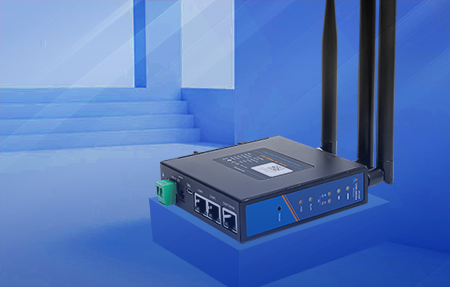
Wifi module has two networking modes: STA and AP. STA and AP can provide flexible networking modes and network topology methods.
AP: wireless access point is the center of a wireless network node. Generally, wireless router is an AP, other wireless terminal can be interconnected through AP.
STA: wireless site is a wireless network terminal such as PC and PDA.
WIFI module works as STA
WIFI module as STA is one of the most common network mode, and it is composed of a router AP and many STA. In the following figure, AP is in a central position, and communication between STAs is forwarded by AP.
WIFI module works as AP
When WIFI modules works as AP, phone/PAD/PC can fast access to wifi module for data transmission without any configuration. In addition, you can log in internal webpage of wifi module to set parameters.
In the wave of globalization, enterprises going overseas have become a new engine for growth. However, the deployment of overseas IoT faces three core challenges: poor network adaptability, high security and compliance risks, and uncontrollable operation and maintenance costs. A multinational agricultural equipment manufacturer once experienced frequent disconnections of its devices in Brazil due to not considering the differences in frequency bands among local operators; an energy enterprise was fined heavily for failing to meet the requirements of the EU's GDPR; and a logistics company had to send engineers overseas more than 200 times a year for device maintenance due to a lack of remote maintenance capabilities, resulting in high costs.
This article will provide enterprises with a one-stop solution from three dimensions—network adaptability, security compliance, and cost optimization—by leveraging the technical advantages of PUSR's WiFi modules (USR-TCP232-A2, USR-TCP232-B2) and the WiFi serial server USR-W610 Qualcomm version, helping to efficiently implement overseas businesses.
1. Overseas Network Adaptability: Full-link Optimization from Frequency Band Coverage to Intelligent Scheduling
1.1 Frequency Band Compatibility: Cracking the "Code" of Global Operators
The frequency band distribution of overseas operators is complex. For example: North American market: AT&T uses the n2/n5/n66 frequency bands, while Verizon mainly promotes the n2/n4/n13 frequency bands; European market: Deutsche Telekom covers the n1/n3/n78 frequency bands, and Vodafone focuses on the n78/n28 frequency bands; Asia-Pacific market: Japan's SoftBank adopts the n77/n78 frequency bands, and Singapore's StarHub supports the n1/n3/n28 frequency bands. Solution: PUSR's USR-TCP232-B2 module supports mainstream global 5G frequency bands (n1/n3/n28/n41/n77/n78/n79, etc.), covering the needs of more than 90% of overseas operators. In a smart city project in Thailand, this module achieved a 100% device online rate by automatically matching the local DTAC operator's n78 frequency band, representing a 35% improvement over traditional solutions.
1.2 Intelligent APN Configuration: Eliminating the Tedium of Manual Input
The APN parameters of overseas SIM cards vary greatly, and manual configuration is prone to errors. For example:
The APN of India's Airtel operator is airtelgprs.com;
The APN of Brazil's Vivo operator is zap.vivo.com.br;
The APN of South Africa's Vodacom operator is internet. Solution: The USR-TCP232-A2 module supports the APN automatic matching function. Through its built-in global operator database (covering more than 200 countries/regions), the device automatically identifies the SIM card's MNC/MMC code and configures the corresponding APN after being powered on. In an industrial automation project in Mexico, this function reduced the device deployment time from 2 hours per device to 10 minutes per device, lowering labor costs by 90%.
1.3 Hybrid Mode (AP+STA): Flexibly Responding to Complex Scenarios
Overseas scenarios often require devices to act as both a "client" and a "hotspot" simultaneously:
Scenario 1: A smart electricity meter connects to the operator's network via STA mode while providing direct debugging access for maintenance personnel's mobile phones via AP mode;
Scenario 2: An in-vehicle device serves as an AP for passenger WiFi connectivity while connecting to a cellular network via STA mode to provide real-time navigation;
Scenario 3: A repeater connects to the main router via STA mode and then expands the signal coverage range via AP mode. Solution: The USR-W610 Qualcomm version WiFi serial server supports dynamic switching between AP+STA dual modes, allowing flexible switching of working modes through AT commands or web configuration. In a smart hotel project in Dubai, this device provided WiFi for guest rooms via AP mode while connecting to the hotel management system via STA mode, enabling real-time data synchronization and reducing the failure rate to 0.3% per year.
2. Security Compliance: Full-stack Protection from Data Encryption to Privacy Protection
2.1 Data Encryption: Building an "End-to-End" Security Defense Line
Overseas users have stringent requirements for data security, especially in high-risk industries such as finance and energy: Transmission encryption: Supports SSL/TLS 1.0/1.2 protocols to prevent data theft during transmission; Storage encryption: Uses the AES-256 encryption algorithm to encrypt locally stored data; Authentication encryption: Supports authentication methods such as WPA/WPA2-PSK and WPA3-SAE to prevent unauthorized device access. Solution: The USR-TCP232-B2 module integrates a hardware-level encryption chip and has passed FIPS 140-2 certification, enabling full-process encryption of data transmission, storage, and authentication. In an ATM monitoring project for a bank in the EU, this module reduced the device's risk of being attacked to 0.01% per year through its two-way certificate verification function.
2.2 Privacy Protection: Meeting Global Regulations such as GDPR
Overseas data privacy regulations are strict. For example:
EU GDPR: Requires explicit user authorization for cross-border data transmission;
US CCPA: Grants users the "right to be forgotten," allowing them to request that enterprises delete their personal data;
Brazil's LGPD: Requires enterprises to report data breaches within 72 hours. Solution: The USR-W610 Qualcomm version supports anonymous proxy and IP rotation functions, hiding the device's real IP address through a proxy server to avoid direct exposure to the public network. In a smart agriculture project in Brazil, this function helped the enterprise avoid LGPD compliance risks while improving data transmission efficiency by 40% through an IP rotation mechanism to prevent throttling by operators.
2.3 Remote Maintenance: Reducing On-site Operation and Maintenance Costs
On-site maintenance costs are high overseas. For example:
In Africa, the cost of a single business trip for an engineer exceeds $5,000;
In Europe, the average response time for device failures is 72 hours;
In the Asia-Pacific region, language barriers lead to low communication efficiency. Solution: All PUSR products support OTA remote upgrades and log capture:
Firmware upgrades: New firmware can be remotely pushed through a web page or cloud platform without disassembling the device;
Log capture: The device automatically records operation logs and uploads them to the cloud, supporting filtering by time and type;
Intelligent diagnostics: The built-in self-check program can automatically detect network and hardware status and generate fault reports. In a mining project in South Africa, the remote maintenance function of the USR-TCP232-A2 reduced the device fault repair time from 72 hours to 2 hours, lowering annual operation and maintenance costs by $120,000.
3. Cost Optimization: Full Lifecycle Management from Hardware Selection to Operation and Maintenance Efficiency
3.1 Hardware Selection: Balancing Performance and Cost
Overseas projects need to select appropriate modules based on the scenario: Low-power scenarios: The USR-TCP232-A2 (power consumption ≤ 1.5W) is suitable for battery-powered devices; High-speed scenarios: The USR-TCP232-B2 (with a downlink rate of up to 2.3Gbps) is suitable for video transmission; Multi-device connection scenarios: The USR-W610 Qualcomm version (supporting the simultaneous connection of 32 devices) is suitable for industrial sites. Case: A logistics enterprise in Southeast Asia originally used a module from another brand, resulting in a battery life of only 3 months due to high power consumption. After switching to the USR-TCP232-A2, the battery life was extended to 18 months, reducing the annual cost per device by $80.
3.2 Operation and Maintenance Efficiency: From "Manual Inspections" to "Intelligent Early Warning"
Traditional operation and maintenance models rely on manual inspections, which are inefficient:
An overseas project of an energy enterprise required 10 engineers, with annual labor costs exceeding $2 million;
Manual inspections are prone to missed detections, with a fault discovery delay rate as high as 60%. Solution: The PUSR cloud platform provides intelligent early warning functions:
Threshold alarms: Automatically trigger alarms when device parameters such as temperature and signal strength exceed thresholds;
Predictive maintenance: Predict the probability of device failures by analyzing historical data through machine learning;
Work order system: Alarms automatically generate work orders and assign them to the nearest engineer, reducing the response time to 30 minutes. In a wind farm project in Australia, this function reduced the device failure rate to 0.5% per year and decreased the operation and maintenance workforce by 70%.
3.3 Brand and Service: Choosing a Trustworthy Partner
Overseas projects need to select brands with strong technical capabilities and comprehensive after-sales services:
Technical capabilities: PUSR has 10 years of experience in IoT communication, with cumulative module shipments exceeding 5 million units;
Comprehensive certifications: Products have passed international certifications such as CE, FCC, IC, and RoHS;
Localized services: Technical support centers are established in Europe, the Americas, the Asia-Pacific region, and the Middle East, providing 7×24-hour services. A multinational enterprise originally used a low-priced module from another brand, resulting in a project delay of 3 months due to frequency band incompatibility. After switching to PUSR, the project was delivered 2 months ahead of schedule, and customer satisfaction increased by 40%.
4. Contact Us to Start a New Chapter in Overseas IoT Deployment
Overseas IoT deployment is a comprehensive game of technology, compliance, and cost. PUSR's USR-TCP232-A2, USR-TCP232-B2 modules, and USR-W610 Qualcomm version WiFi serial server provide enterprises with a one-stop solution with three core advantages: global frequency band coverage, security compliance protection, and intelligent operation and maintenance management.
Contact us to get a customized solution for free:
Visit PUSR's product center and download the product manuals on the corresponding product pages;
Fill out the "Overseas Project Requirements Form" to get exclusive selection suggestions;
Contact the technical support team to schedule a 7×24-hour online consultation. Let PUSR become your "network guardian" for overseas businesses and help enterprises seize opportunities in the global market!
Industrial loT Gateways Ranked First in China by Online Sales for Seven Consecutive Years **Data from China's Industrial IoT Gateways Market Research in 2023 by Frost & Sullivan
We use cookies to ensure that we give you the best
experience on our website. If you continue to use this site we will assume that you are happy with it.