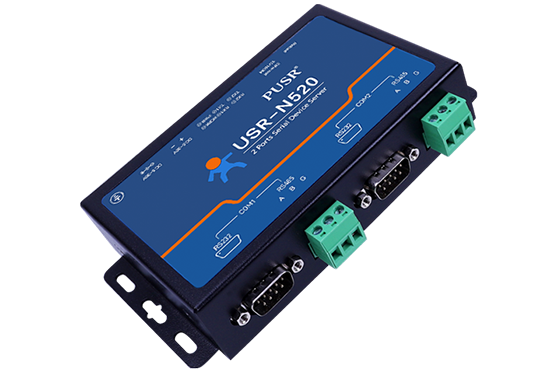
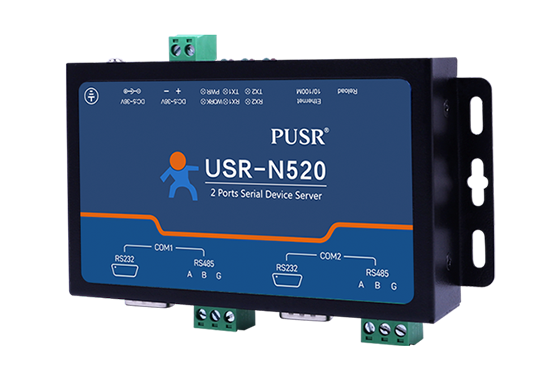
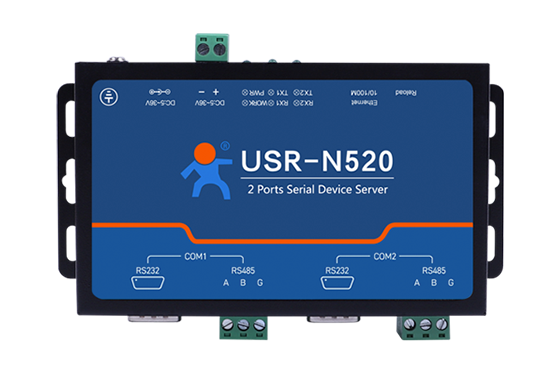
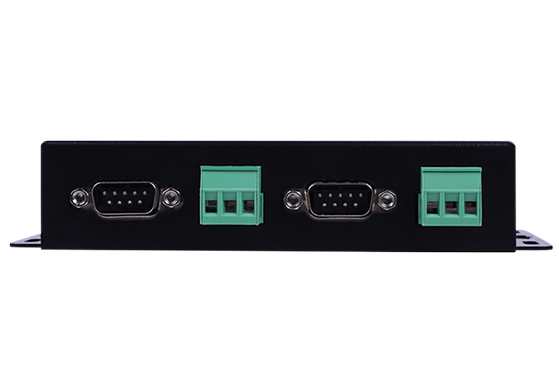
USR-N520
2 Port Secure Serial Device Server[MQTT/SSL]
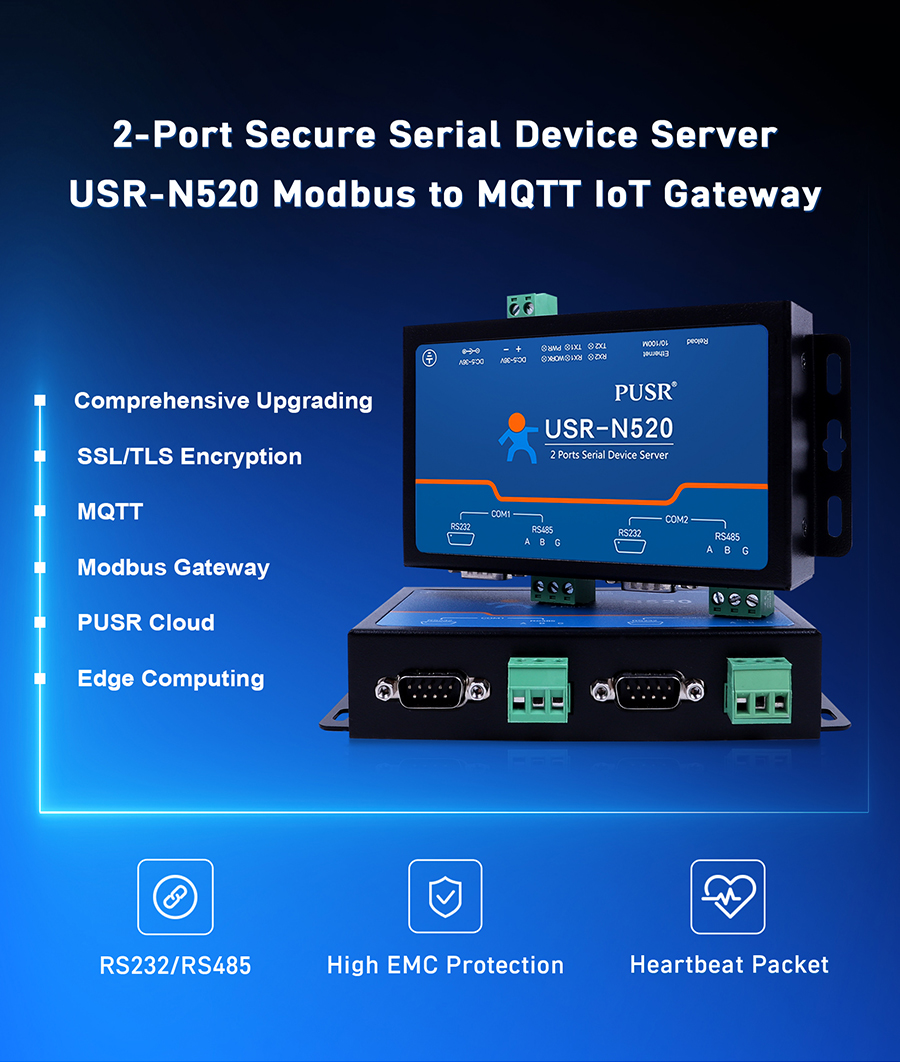
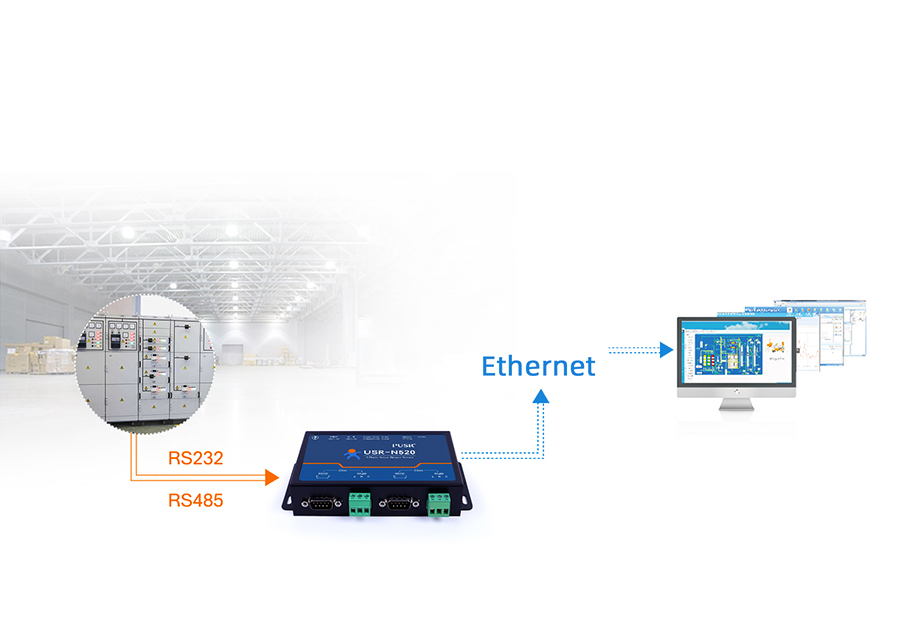
USR-N520 is 2 serial Port Secure Serial Device Server which can connect RS-232/485 serial devices to the TCP/IP network. It supports bi-directional communication.
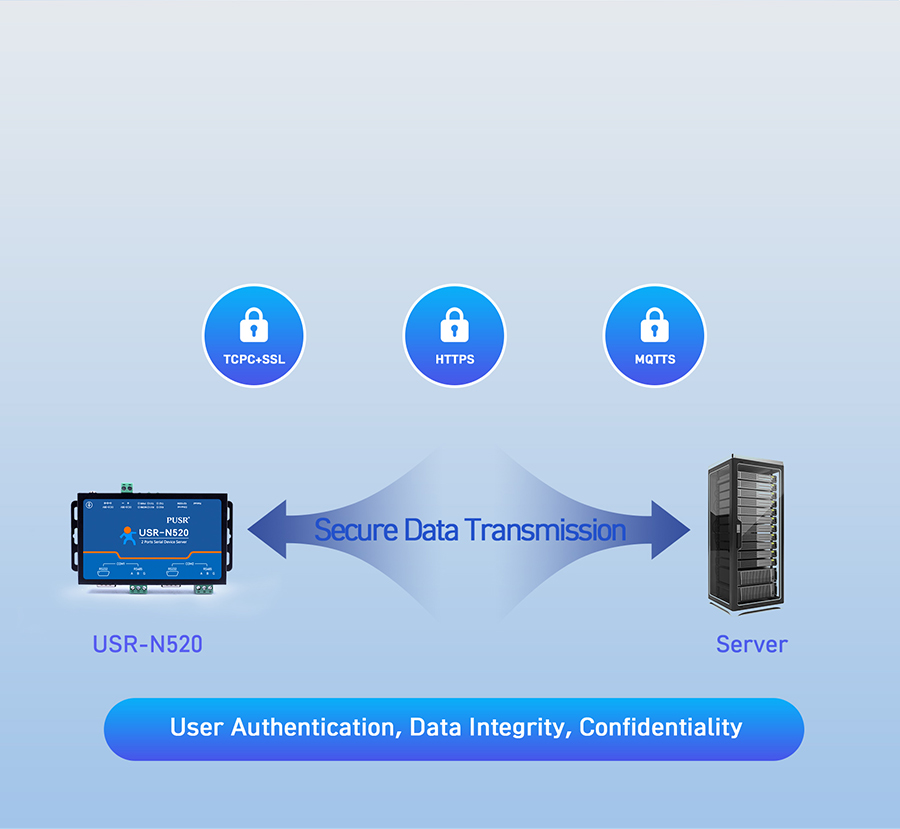
Supports SSL/TLS encryption in TCP client, HTTP client and MQTT operation modes, supports two-way certificates authentication.
PUSR Cloud Management
Easy to achieve edge computing, pair connection, remote operation and maintenance.
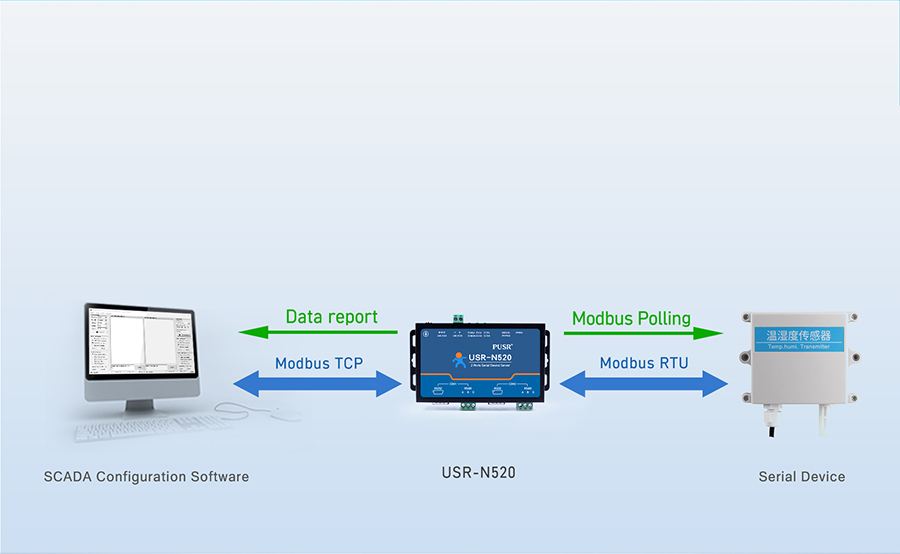
Modbus Gateway
ETransfer between Modbus RTU and Modbus TCP protocol, support Modbus multi-host polling. Support up to 128 data points for data collection and Modbus address mapping.
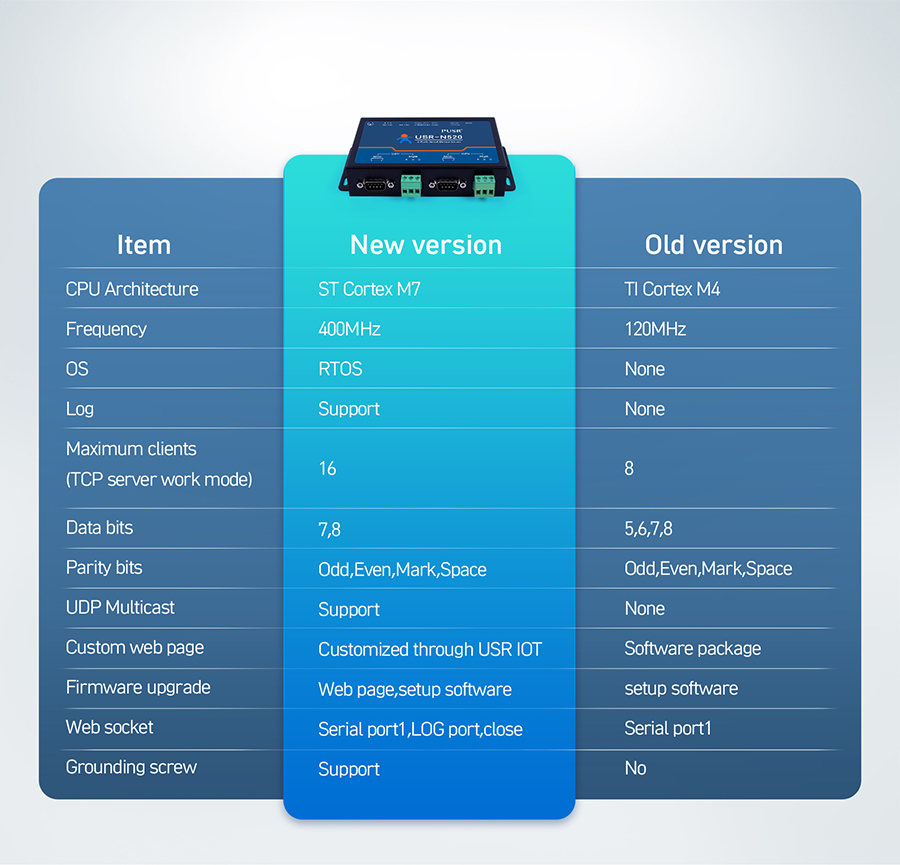
Scheme comparison
Scheme Upgrade to Provide Better Experience
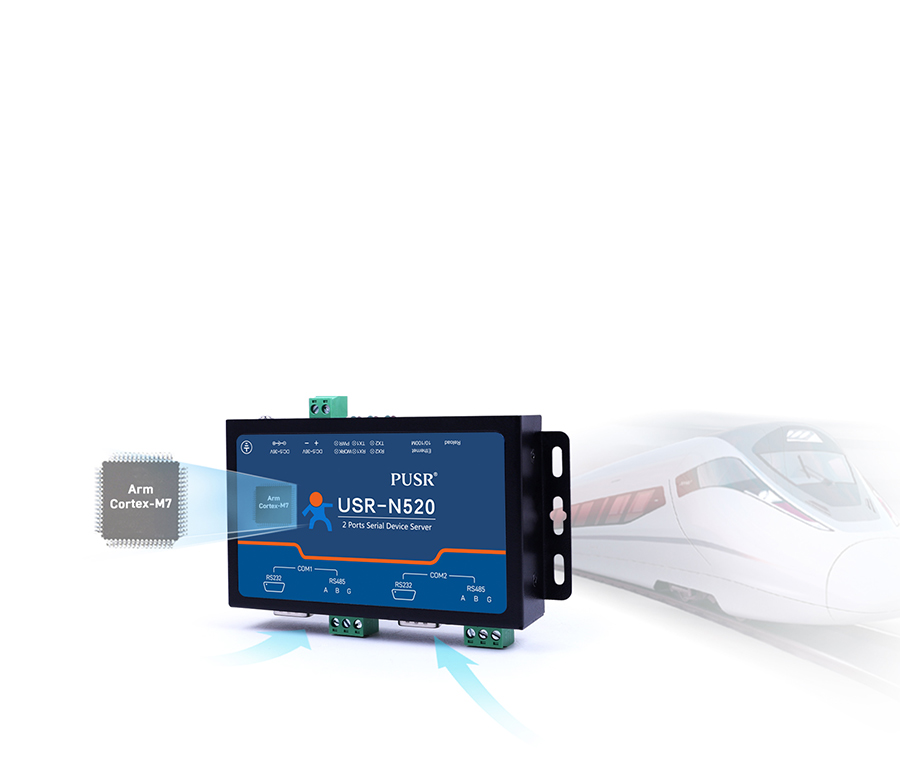
Master chip adopts ST crotex-M7 core, the main frequency is up to 400Mhz, fast processing speed, high stable and reliable performance。
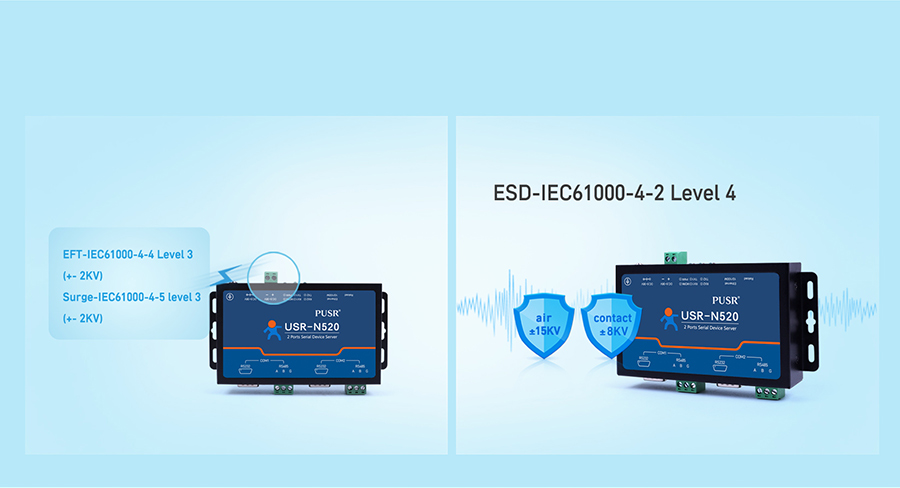
Multiple hardware protection
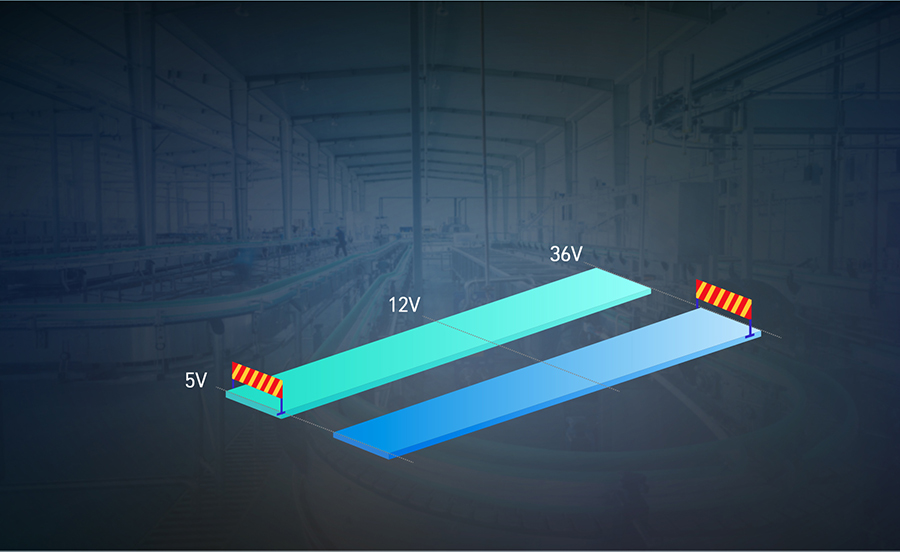
Redundant Power Supply
Wide input voltage DC 5-36V,with reverse polarity protection
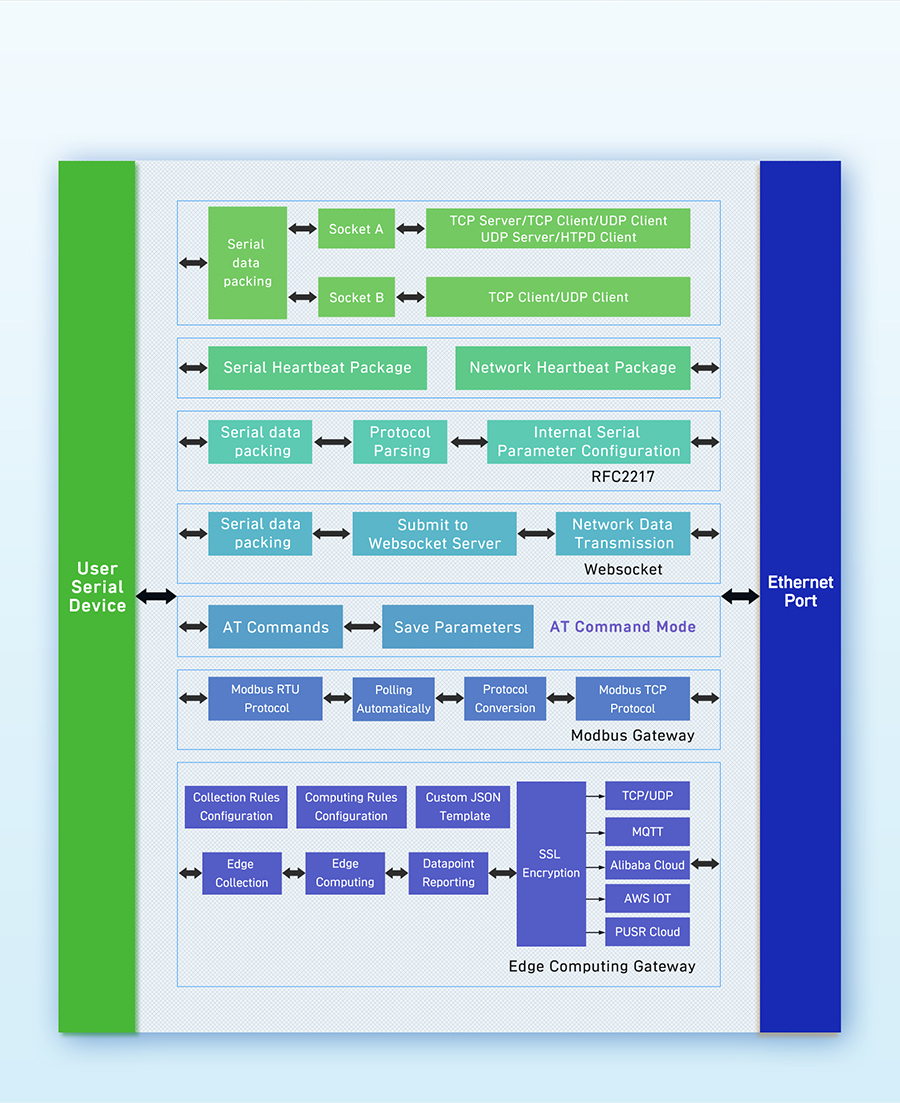
Block Diagram
Work mode
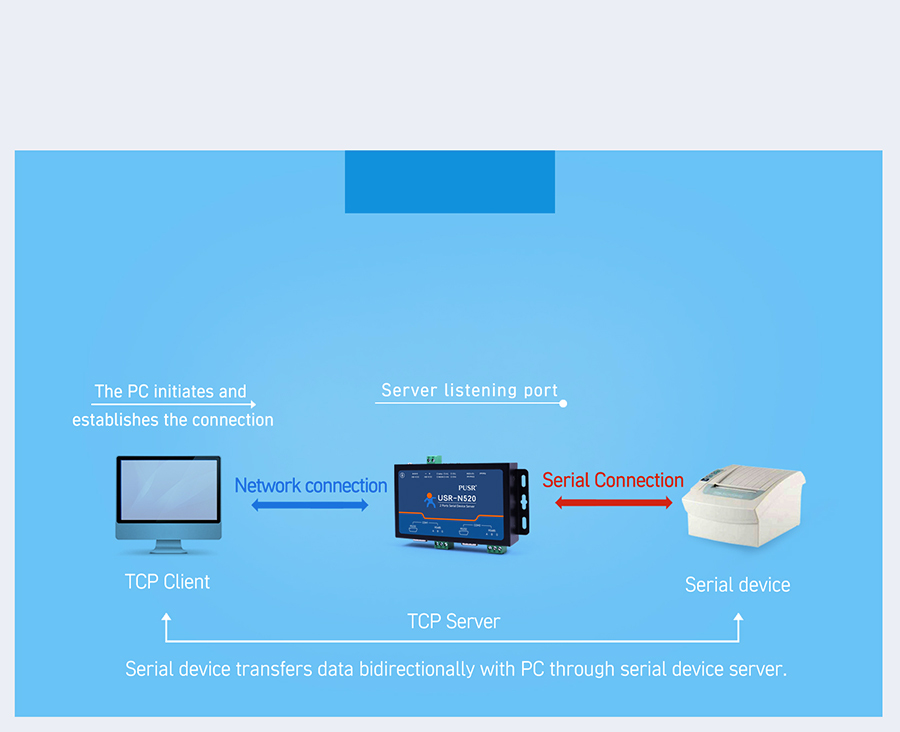
TCP Server
The server listens to the specified port and waits for the TCP client to connect, the data sent by the serial device will be transparently transmitted to all successfully connected clients through the serial device server.
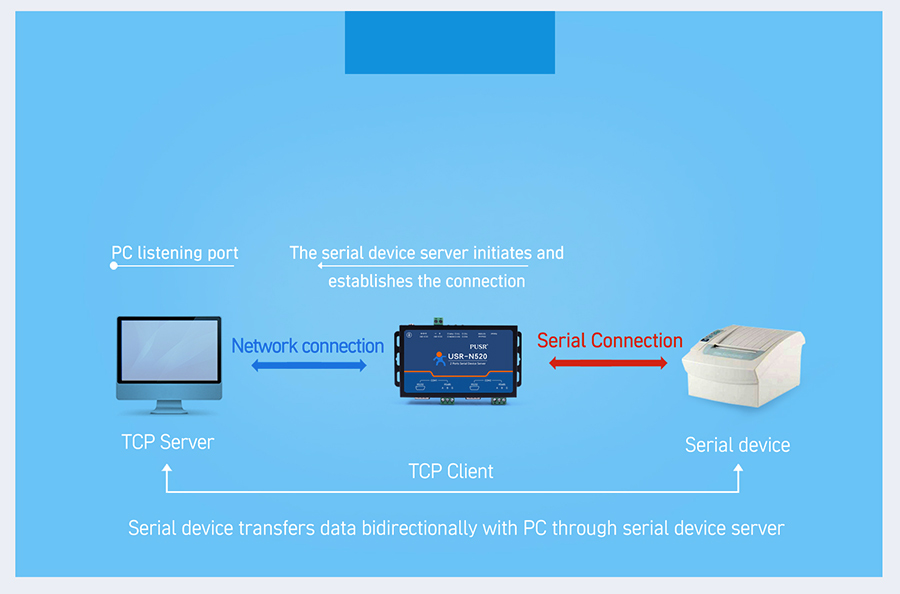
TCP Client
The serial device server initiates a TCP connection to the specified IP address. If the connection fails, the serial server will continue to try to reconnect until it succeeds. If the connection is successful, the server can transparently transmit data with the serial device in two-way.
UDP mode
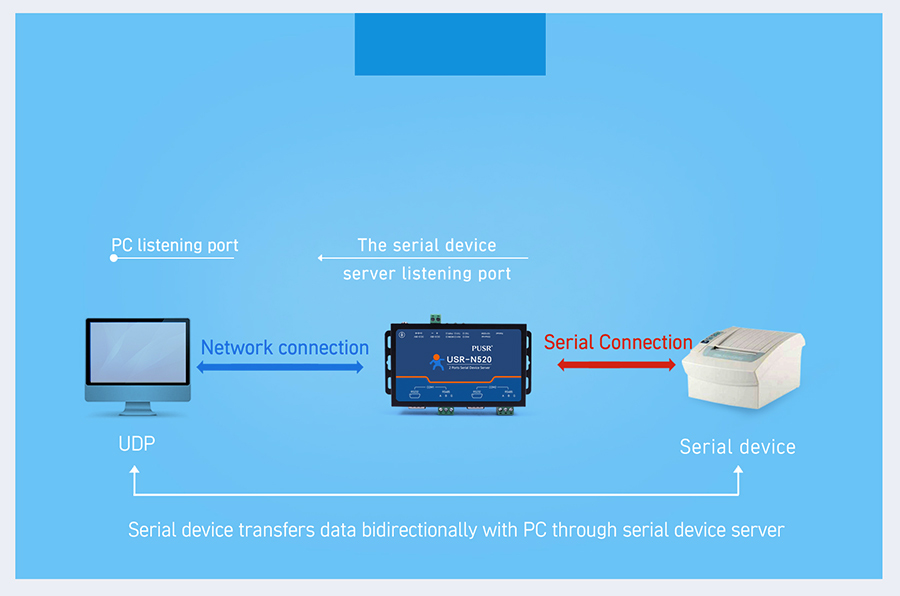
The serial device server sends the data of the serial device to the designated IP network device. The serial device server monitors the port meanwhile and forwards all received data to the serial device.
HTTPD Client
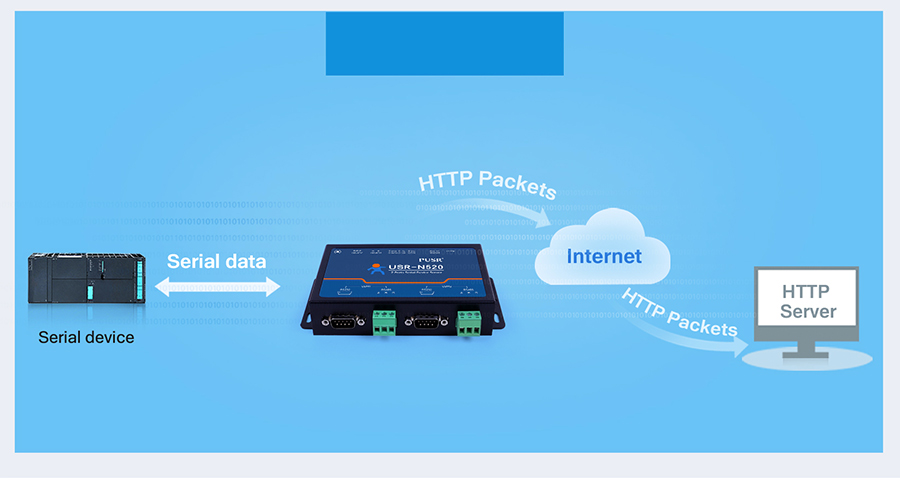
Serial port data can be submitted to a specified server by GET or POST method.
Product Details
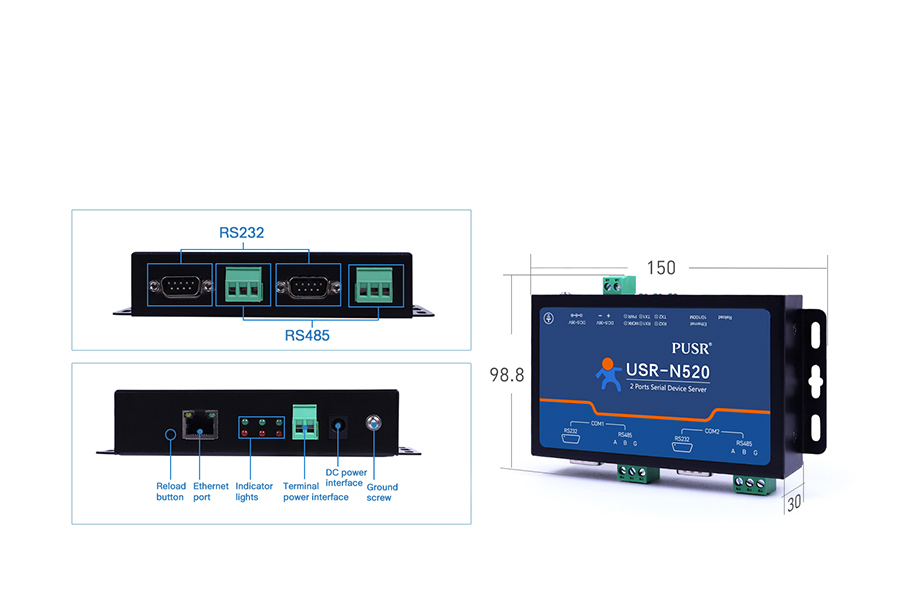
150*98.8*30 mm(L*W*H, including terminals and mounting ears).
Application Case
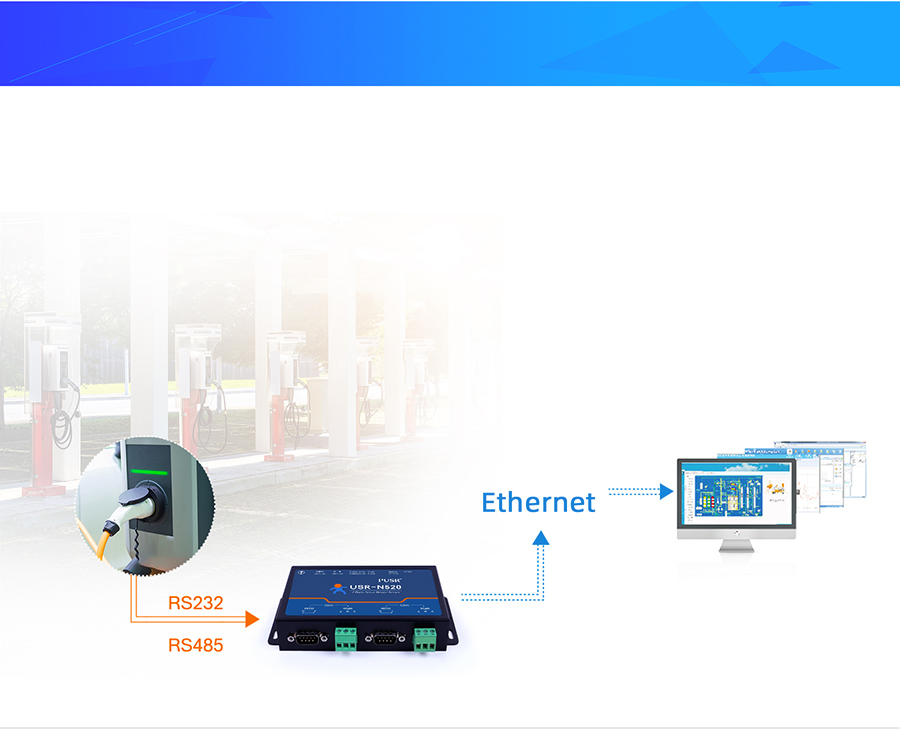
Charging Pile Application Case
N520 can connect the charging pile to the charging intelligent service platform to realize two-way data transmission between the charging device and the platform. The billing information and power usage can be viewed remotely through the platform to facilitate operation and maintenance.
Industrial Automation Application Case
The application of N520 in traditional industrial scenarios can effectively solve the problem that workers need to monitor equipment on-site, save labor costs, and increase production efficiency and safety factors. Data management makes he production process control more refined.
Item
Parameter
Description
Hardware
Parameters
Input Voltage
DC 5.0~36.0V
Input Current
67mA @12V
Dimensions
150*98.8*30 mm (L*W*H, including terminals and mounting ears)
Installation
Panel mounting
Ground Screw
1
Operating
Temperature
-40~85℃
Storage Temperature
-40~105℃
Operating Humidity
5%~95% RH(non-condensing)
Storage Humidity
5%~95% RH(non-condensing)
Certifications
CE/FCC/ROSH
Interface
Parameters
Ethernet Port Spec.
RJ45, 10/100Mbps, auto MDI/MDIX
Ethernet Port No.
1
Serial signals
RS232: RXD, TXD, GND, RTS, CTS
RS485:A+,B-,GND
Serial Port No.
2
Serial Baud Rate
600-230.4K(bps)
Data Bit
7, 8
Parity
None, Even, Odd
Flow Control
None, RTS/CTS (RS-232 only), XON/XOFF
RS-485 Pull-up and
Pull-down Resistor
2.2KΩ
Hardware
Protection
ESD-IEC61000-4-2
Level 4
Air±15KV, contact±8KV
Surge-IEC61000-4-5
level 3
±2KV
EFT-IEC61000-4-4
Level 3
±2KV
Software
Parameters
Network Protocol
IP/TCP/UDP/ARP/ICMP/IPV4/DHCP/DNS
IP Mode
Static IP, DHCP
Modbus Gateway
Support
Websocket
Support
HTTP Client
Support
UDP Broadcast
Support
User Configuring
Setup utility, webpage, AT commands
Serial Packets Cache
Dynamic packet cache. For example:
When the packet length is 10 byte, the serial port can cache
450 packets(4.5KB). When the packet length is 1460 bytes, the serial port can
In the Era of Rapid Development of the Industrial Internet of Things (IIoT), Seamless Communication and Data Security Among Devices Have Become Core Requirements for Enterprises' Digital Transformation
PUSR's Serial Device Server USR-N520, with its dual-serial-port design, multi-protocol support, edge computing capabilities, and high security, has become the preferred communication solution in fields such as industrial automation, energy management, and smart cities.
1. Dual-Serial-Port Design: Flexibly Adapting to Diverse Needs in Industrial Settings
1.1 Dual Independent RS232/RS485 Serial Ports Supporting Free Protocol Switching
The 2-port serial-to-Ethernet converter N520 is equipped with two independent physical serial ports. Each port can be flexibly switched to RS232 or RS485 mode via a DIP switch, meeting the communication needs of different devices. For example:
Scenario 1: Industrial Automation Production Line The PLC (RS485) on the production line needs to be connected simultaneously with the host computer (RS232). The N520 can configure one port as RS485 for communication with the PLC and the other port as RS232 for interaction with the host computer, avoiding the additional investment in protocol converters.
Scenario 2: Environmental Monitoring System The temperature and humidity sensor (RS232) and anemometer (RS485) are uniformly connected to Ethernet via the 2-port serial-to-Ethernet converter N520, enabling centralized data collection and cloud uploading.
1.2 High-Precision Parameter Configuration to Ensure Communication Stability
Each serial port supports independent configuration of baud rates (600bps-230.4Kbps), data bits (5-8 bits), stop bits (1-2 bits), and flow control modes (hardware RTS/CTS or software XON/XOFF). For example:
Case: Weighbridge Weighing System The weighbridge instrument (RS485) needs to work simultaneously with the ticket printer (RS232). The 2-port serial-to-Ethernet converter N520 ensures the real-time and accuracy of data transmission by configuring the parameters of both ports, avoiding printing errors caused by protocol mismatches.
1.3 Industrial-Grade Hardware Design to Adapt to Harsh Environments
The 2-port serial-to-Ethernet converter N520 adopts EMC Level 3 protection standards and is equipped with a watchdog circuit, enabling it to withstand extreme temperatures ranging from -40°C to 85°C and b electromagnetic interference. Its wide voltage input (DC 5-36V) and reverse power connection protection design ensure stable device operation even during voltage fluctuations or wiring errors. For example:
Application: Outdoor Charging Stations The RS485 communication module of the charging station needs to be exposed outdoors for a long time. The IP30 protection rating and lightning resistance capability of the 2-port serial-to-Ethernet converter N520 can effectively extend the device's lifespan and reduce maintenance costs.
2. Data Encryption and PUSR Cloud Management: Building a Secure and Efficient IoT Ecosystem
2.1 Multi-Level Encryption Mechanism to Ensure Data Transmission Security
The 2-port serial-to-Ethernet converter N520 supports SSL/TLS encryption protocols. Bidirectional certificate authentication can be enabled in TCP Client, HTTP Client, and MQTT modes to prevent data eavesdropping and tampering. For example:
Scenario: Financial Self-Service Terminals The transaction data of ATMs is uploaded to the cloud via the MQTT encrypted channel of the 2-port serial-to-Ethernet converter N520, ensuring the security of user information and funds and meeting the compliance requirements of the financial industry.
2.2 PUSR Cloud Platform: Enabling Remote Operation and Maintenance and Intelligent Management
Through the PUSR Cloud platform, users can remotely monitor the operating status, configure parameters, and upgrade firmware of the 2-port serial-to-Ethernet converter N520, significantly reducing on-site maintenance costs. For example:
Case: Smart Agriculture Irrigation System Multiple soil moisture sensors distributed in farmland are connected to the cloud via the 2-port serial-to-Ethernet converter N520. Administrators can view data in real-time and adjust irrigation strategies through a mobile app without being on-site.
2.3 Industry Adaptability Analysis
Energy Industry: The power meter data of substations is encrypted and uploaded to the monitoring center to prevent grid paralysis caused by hacker attacks.
Medical Field: The serial port data of medical devices is encrypted and transmitted to the HIS system via the 2-port serial-to-Ethernet converter N520 to ensure patient privacy security.
Smart Cities: The RS485 control signals of traffic lights are encrypted and transmitted to the command center via the 2-port serial-to-Ethernet converter N520 to avoid traffic chaos caused by signal interference.
The 2-port serial device server N520 has a built-in Modbus gateway function, enabling seamless integration of traditional Modbus RTU devices (such as sensors and actuators) into a Modbus TCP network. It supports the collection and address mapping of up to 128 data points. For example:
Scenario: Factory Energy Management System The electricity meters (Modbus RTU) dispersed in the workshop are converted to the Modbus TCP protocol via the N520 and uploaded to the energy management platform in a centralized manner, enabling energy consumption analysis and optimization.
3.2 Typical Application Scenarios
Unattended Weighing System: The 2-port serial device server N520 connects the barrier gate, weighbridge instrument, LED display, and RFID reader. Through the Modbus gateway function, it realizes automatic vehicle identification, weighing data collection, and display control.
Industrial Boiler Monitoring: The temperature and pressure sensors (Modbus RTU) of the boiler are connected to the SCADA system via the 2-port serial device server N520, enabling remote monitoring and alarm linkage.
4. Edge Computing Capability: Empowering Devices with Local Decision-Making Authority
4.1 Data Preprocessing and Intelligent Reporting
The 2-port serial device server N520 is equipped with a Cortex-M7 processor (clock speed 400MHz), which can filter, compress, and cache the collected data locally. Only key information is uploaded to the cloud, reducing the server's burden. For example:
Case: Wind Farm Vibration Monitoring The massive data generated by the wind turbine vibration sensors is processed by the edge computing capability of the 2-port serial device server N520, and only abnormal vibration frequency bands are uploaded, reducing cloud storage and computing costs.
4.2 Custom JSON Format Reporting to Adapt to Diverse Platforms
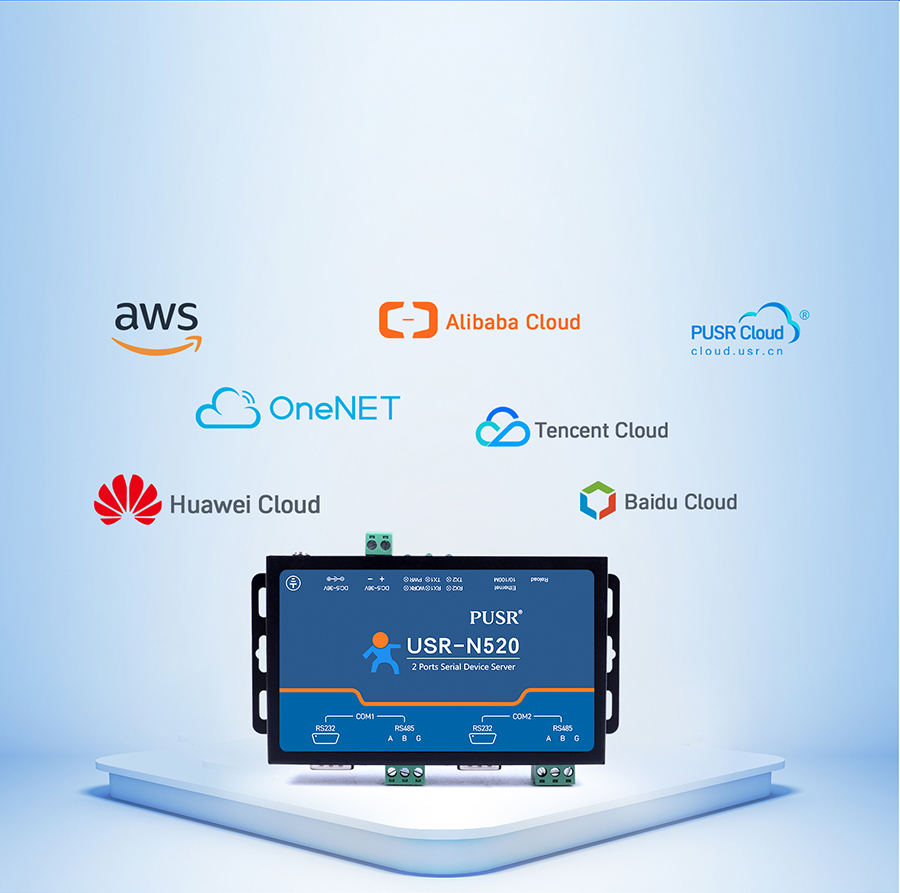
Users can define the data reporting format (such as {"temp":25.5, "humidity":60}) through a configuration tool, enabling the 2-port serial device server N520 to directly interface with mainstream IoT platforms such as Alibaba Cloud and Amazon Web Services without secondary development.
4.3 Core Advantages of Edge Computing
Real-Time Performance: Data is processed locally, with a response delay of less than 10ms, meeting the stringent requirements of industrial control scenarios.
Reliability: When the network is interrupted, the 2-port serial device server N520 can store data locally and automatically resend it when the network is restored, avoiding data loss.
Security: Sensitive data is encrypted locally before being uploaded, reducing the risk of leakage during transmission.
5. MQTT Communication Configuration: Five Steps to Quickly Connect Devices to the Network
5.1 Hardware Connection and Driver Installation
Connect the 2-port serial device server N520 to a router or switch via a network cable, ensuring that the Link light is on (green). Use a USB-to-TTL module to connect to the debugging serial port of the N520. After installing the CH340 driver, confirm the port number (such as COM3) in the Device Manager.
5.2 Parameter Configuration and MQTT Connection
Log in to the Configuration Tool: Open the SerialPort_To_Network_ConfigTools software and select the COM port corresponding to the 2-port serial device server N520.
Set Network Parameters: Configure a static IP (such as 192.168.1.100) or enable DHCP for dynamic acquisition.
Enable MQTT Function: Select MQTT Client in the "Working Mode," fill in the server address (such as mqtt.example.com), port (1883), and ClientID (it is recommended to use the MAC address).
Subscribe and Publish Topics: Set the topic published by the device (such as /device/n520/data) and the control topic subscribed to (such as /device/n520/cmd).
Save and Restart: Click "Save Configuration" and then restart the device. Observe the log showing "MQTT CONNECTED" to indicate a successful connection.
5.3 Verify Communication Effect
Subscribe to the published topic of the 2-port serial device server N520 using the MQTTX client and send a test message (such as {"cmd":"test"}). If the debugging serial port of the N520 outputs the same content, the communication is normal.
6. Dual-RS485 Port Project Applications: Building a High-Redundancy Communication System
6.1 Typical Project Scenarios
Rail Transit Signal Control: The dual RS485 ports are connected to the primary and backup signal controllers respectively. When the primary link fails, it automatically switches to the backup link, ensuring zero interruption of signal transmission.
Sewage Treatment Plant: The two ports are connected to the flow meters at the water inlet and outlet respectively, enabling independent data collection and comparative analysis to avoid data distortion caused by single-point failures.
6.2 Key Points for Project Implementation
Redundancy Design: Configure independent power supplies and network links for each port to improve system reliability.
Protocol Isolation: Map the two ports to different virtual COM ports through the virtual serial port function of the 2-port serial device server N520 to avoid protocol conflicts.
Centralized Monitoring: Use the PUSR Cloud platform to uniformly manage multiple 2-port serial device server N520 devices, enabling fault warning and batch configuration.
2-Port Serial Device Server N520 - The Communication Foundation of the Industrial Internet of Things
The PUSR Serial Device Server N520, with its dual-serial-port flexibility, high security, edge computing capabilities, and ease of use, has become a key device in the field of the industrial Internet of Things. Whether it is the intelligent transformation of traditional factories or the construction of emerging smart cities, the N520 can provide reliable communication guarantees, helping enterprises achieve digital transformation and efficiency improvement. Choosing the 2-port serial device server N520 means choosing a stable, efficient, and secure IoT future.
Industrial loT Gateways Ranked First in China by Online Sales for Seven Consecutive Years **Data from China's Industrial IoT Gateways Market Research in 2023 by Frost & Sullivan
We use cookies to ensure that we give you the best
experience on our website. If you continue to use this site we will assume that you are happy with it.