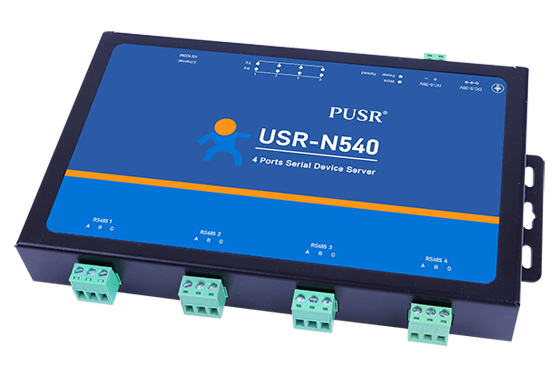
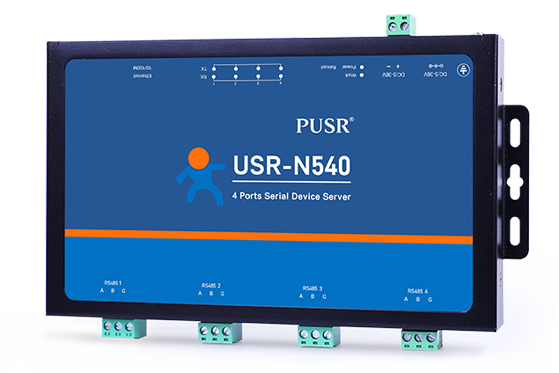
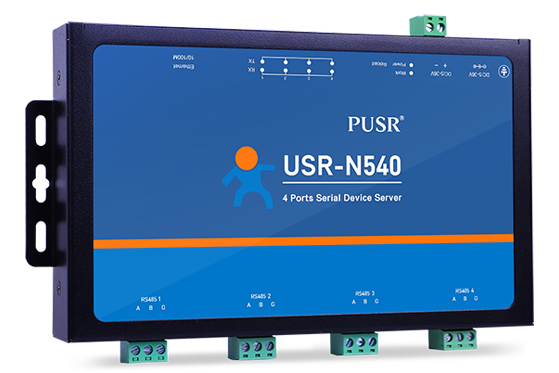
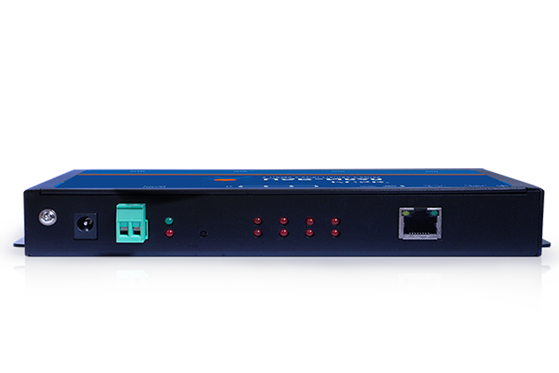
USR-N540
4 Ports Serial to IP Converter [MQTT/SSL]
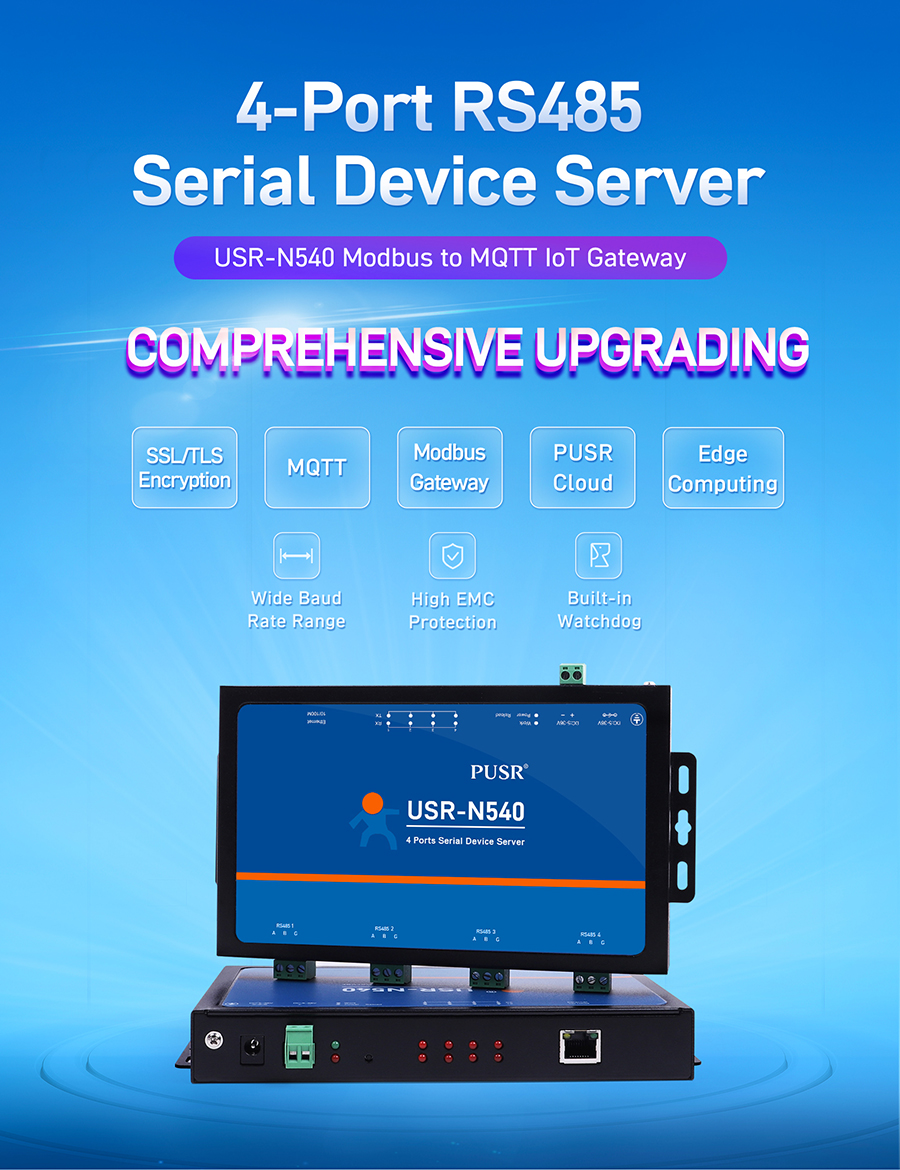
USR-N540-H7-4 is a 4-port Serial to IP Converter. RS485 to Ethernet converter can realize bi-directional transparent transmission between RS485 and network.
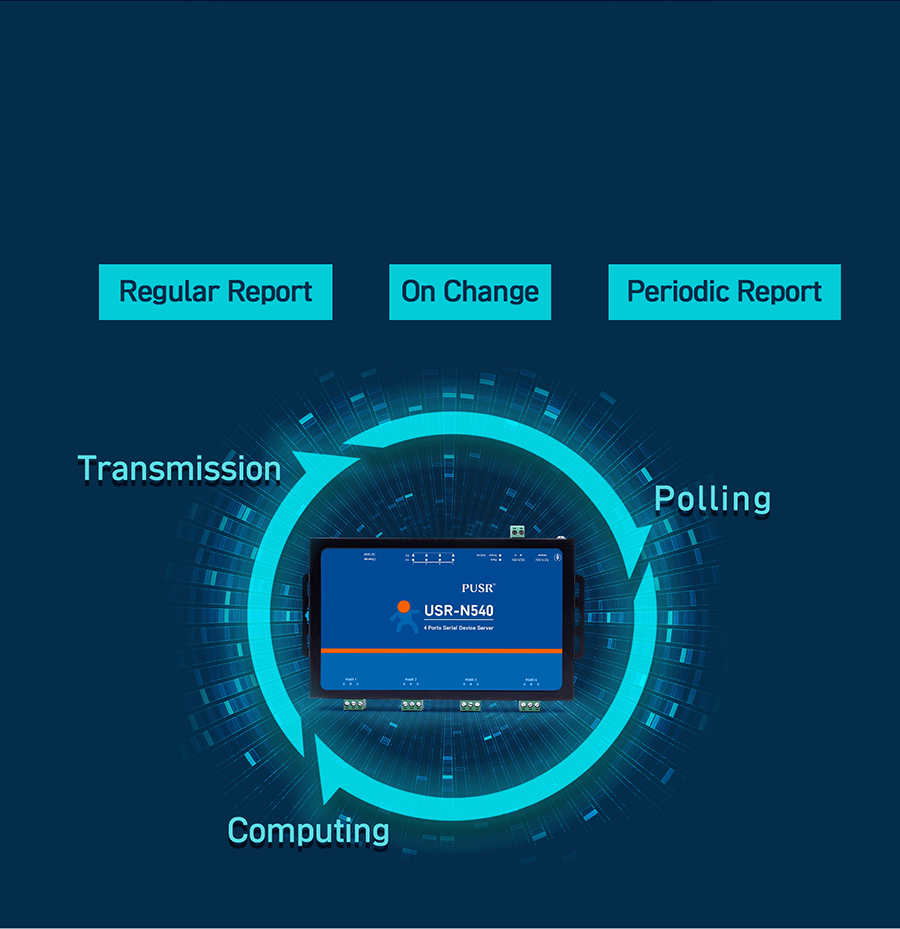
N540 actively execute data collection and internal calculate,then transmits to cloud platform by customized Json format. Edge computing gateways can effectively relieve the pressure on the server.
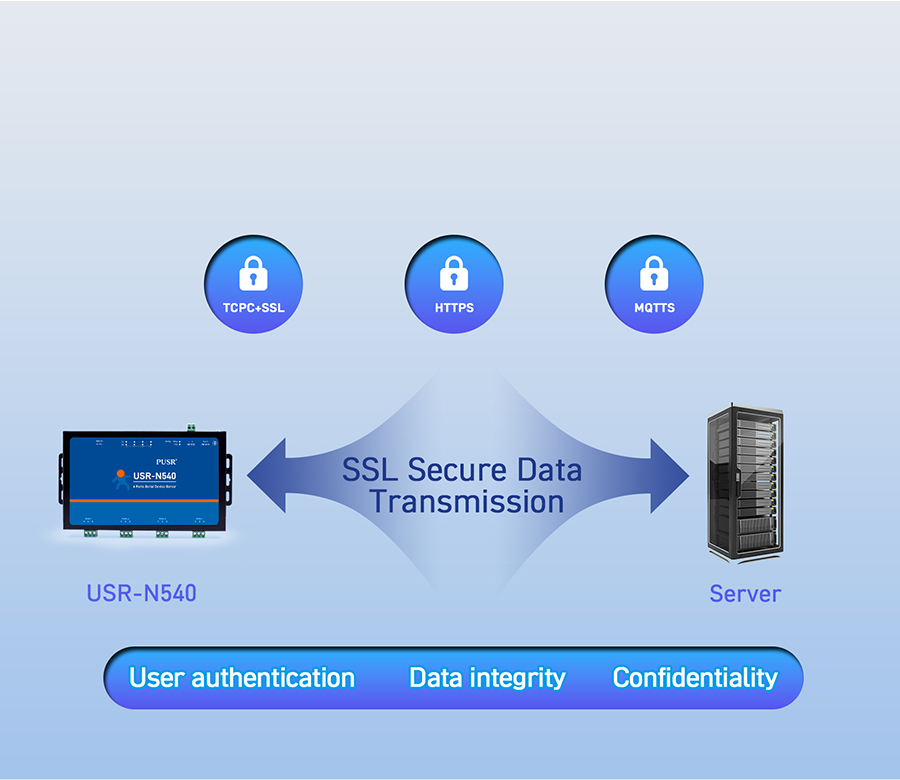
Data transmission encryption
Supports SSL/TLS encryption in TCP client, HTTP client and MQTT operation modes Supports two-way certificates authentication
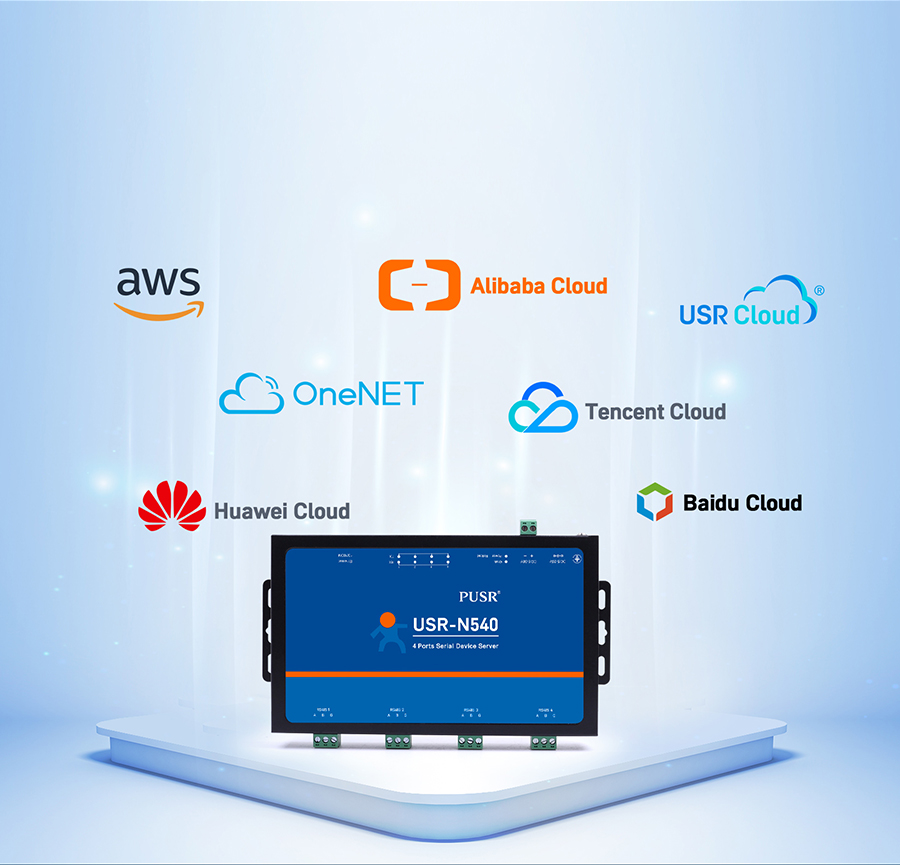
PUSR Cloud Management
Easy to achieve edge computing, pair connection, remote operation and maintenance.
Modbus Gateway
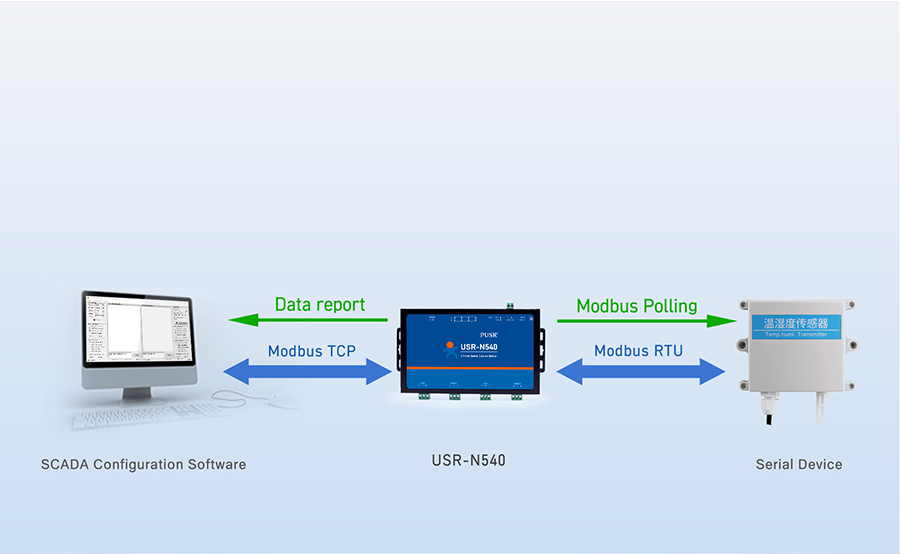
Transfer between Modbus RTU and Modbus TCP protocol, support Modbus multi-host polling. Support up to 128 data points for data collection and Modbus address mapping.
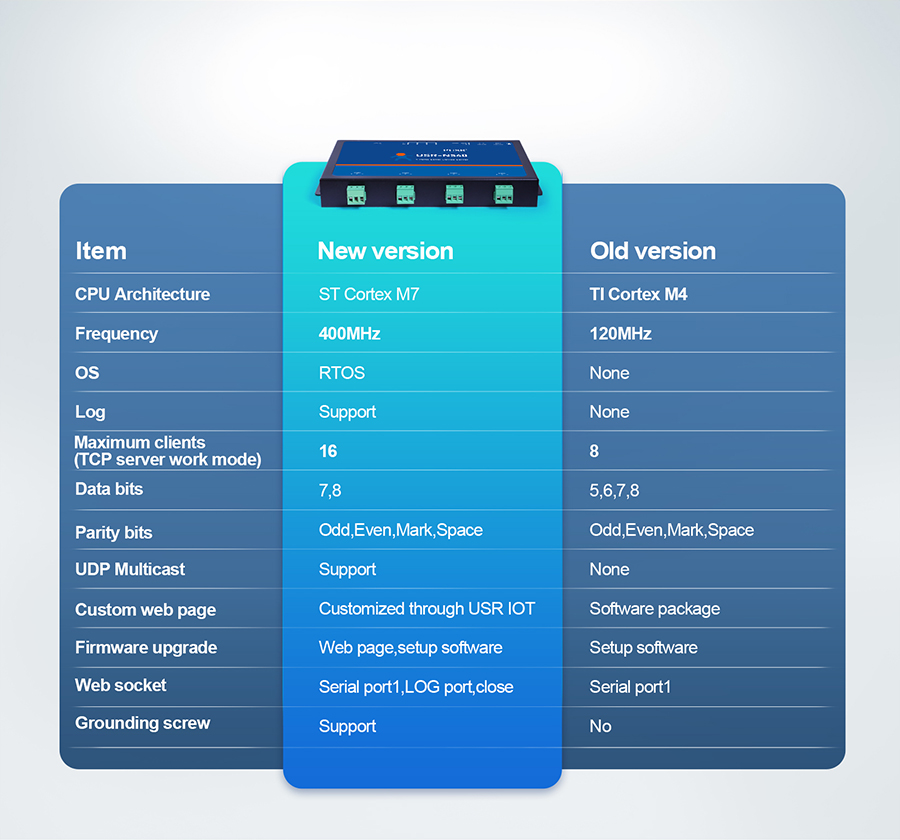
Comparison of new and old schemes
Scheme upgrade to provide better experience
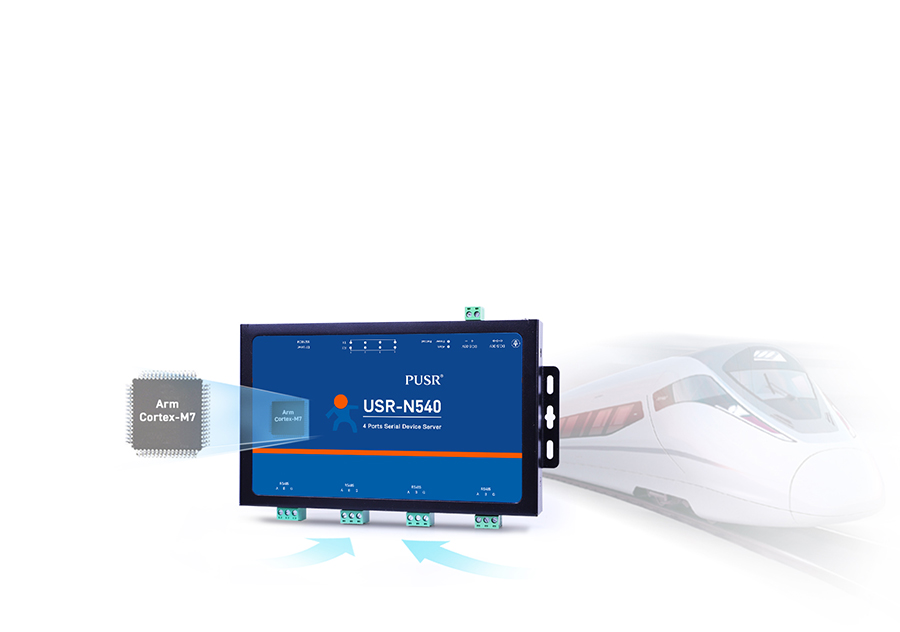
Master chip adopts ST crotex-M7 core, the main frequency is up to 400Mhz, fast processing speed, high stable and reliable performance.
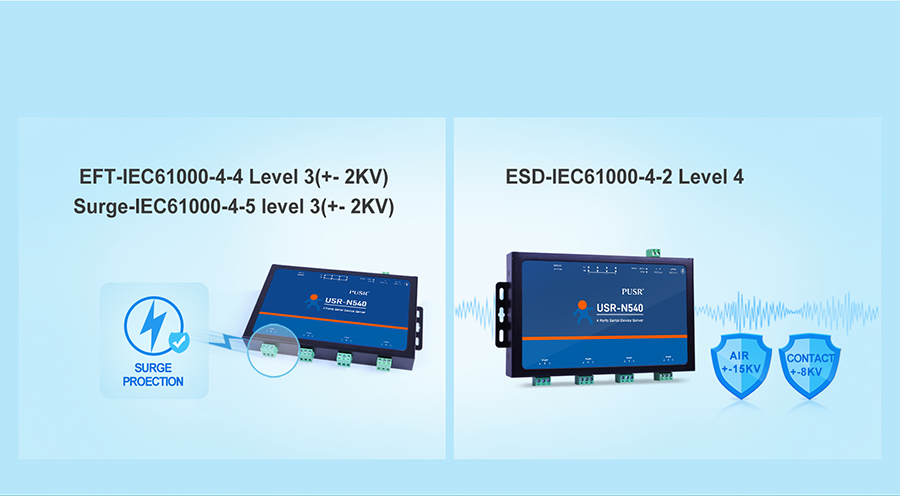
Multiple hardware protection
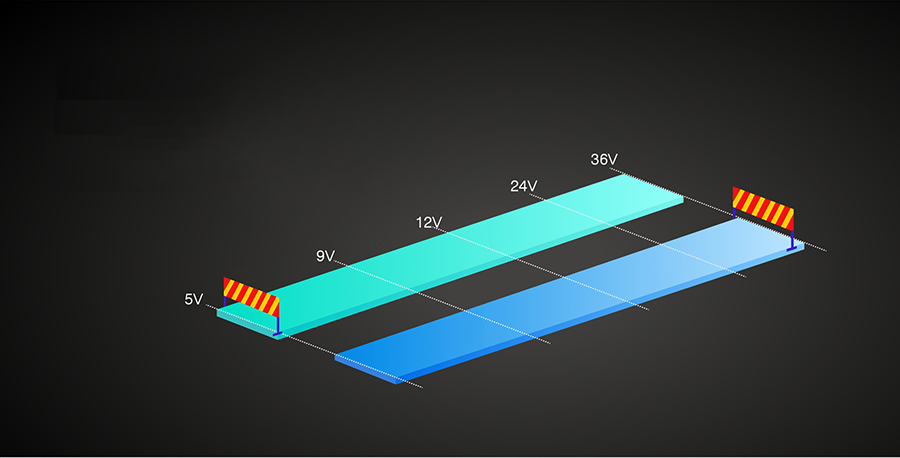
Redundant Power Supply
Wide input voltage DC 5-36V, with reverse polarity protection.
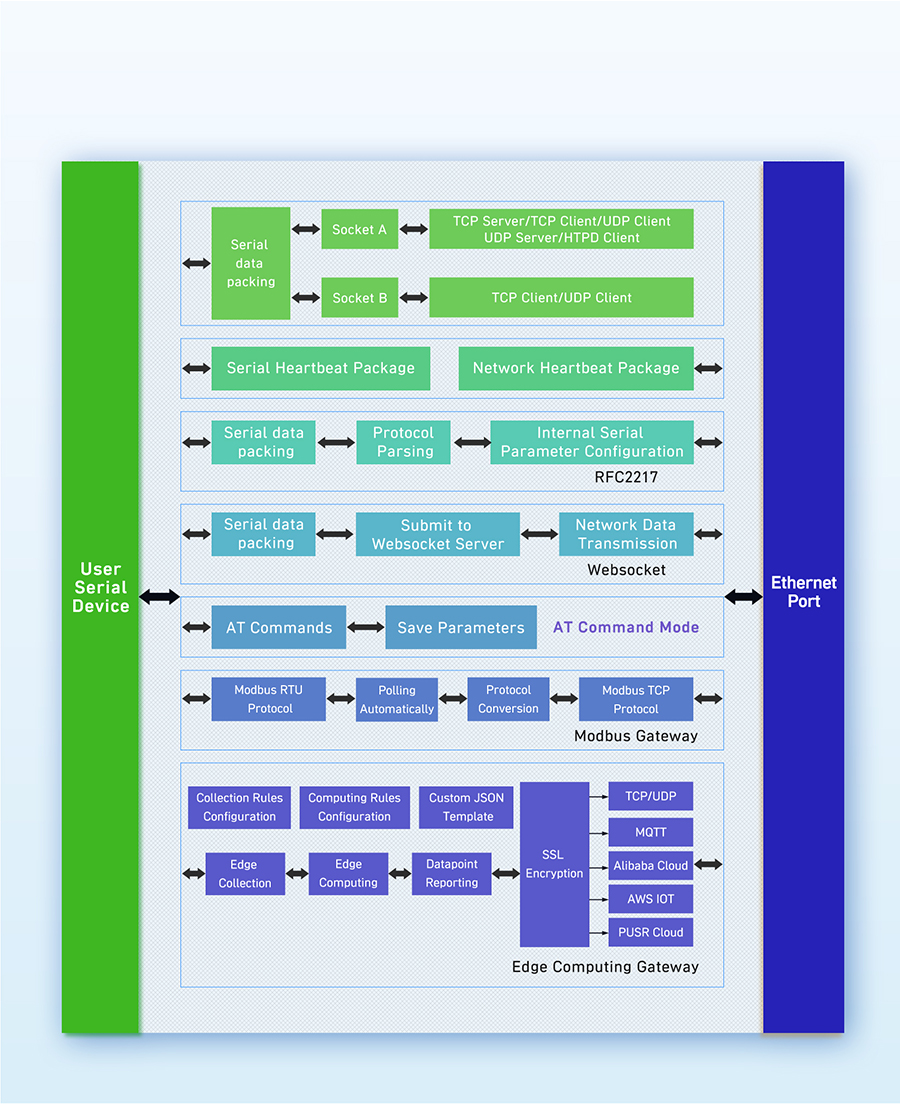
Block Diagram
Work mode
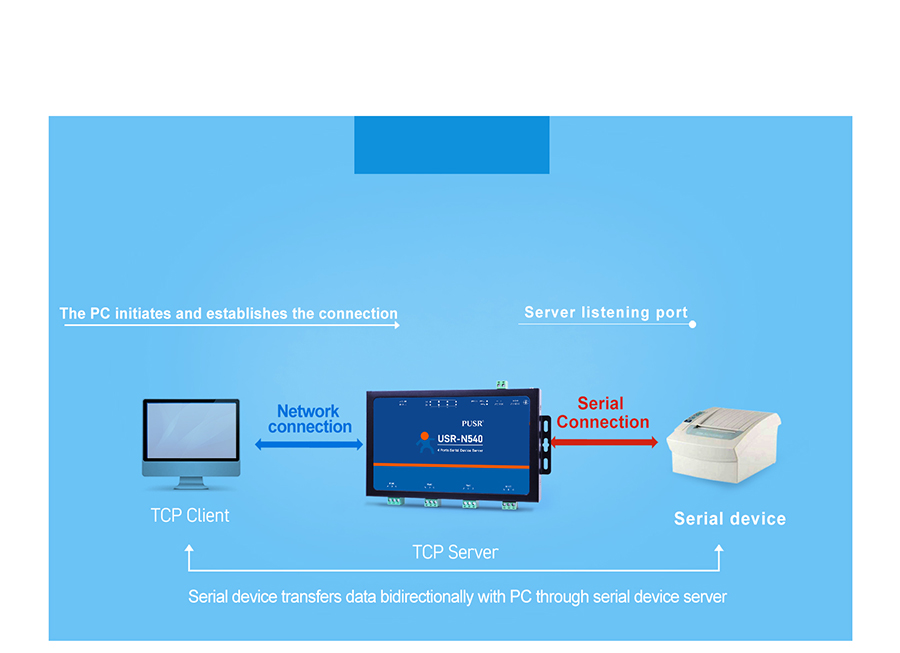
TCP Server
The server listens to the specified port and waits for the TCP client to connect, The data sent by the serial device will be transparently transmitted to all successfully connected clients through the serial device server.
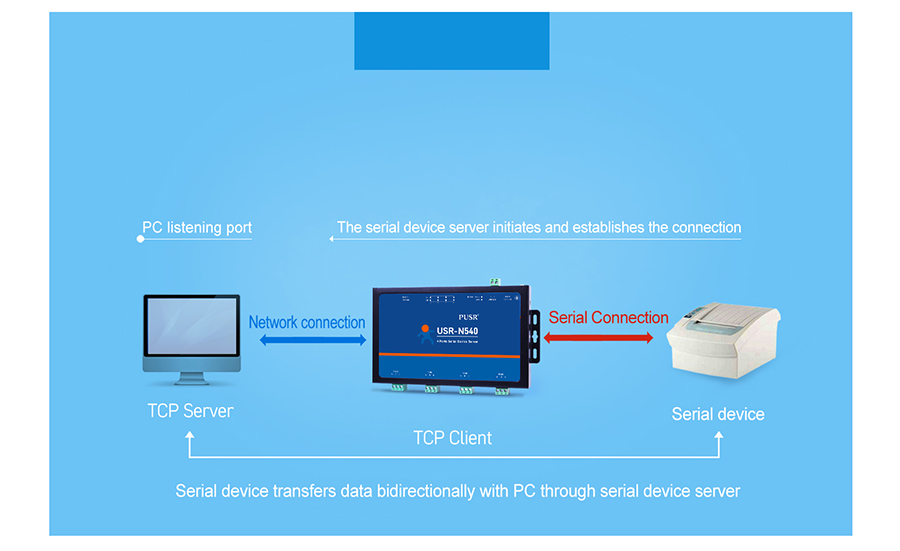
TCP Client
The serial device server initiates a TCP connection to the specified IP address. If the connection fails, the serial server will continue to try to reconnect until it succeeds. If the connection is successful, the server can transparently transmit data with the serial device in two-way.
UDP mode
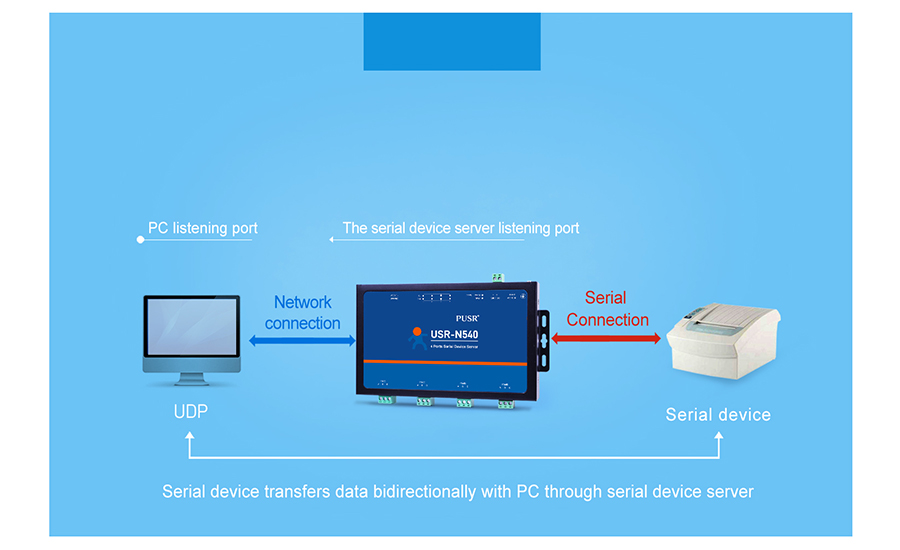
The serial device server sends the data of the serial device to the designated IP network device. The serial device server monitors the port meanwhile and forwards all received data to the serial device.
HTTPD Client
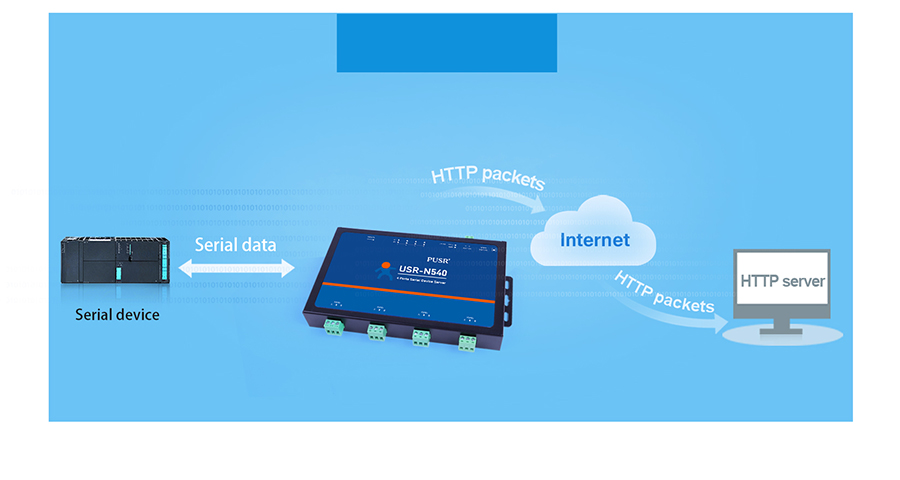
Serial port data can be submitted to a specified server by GET or POST method.
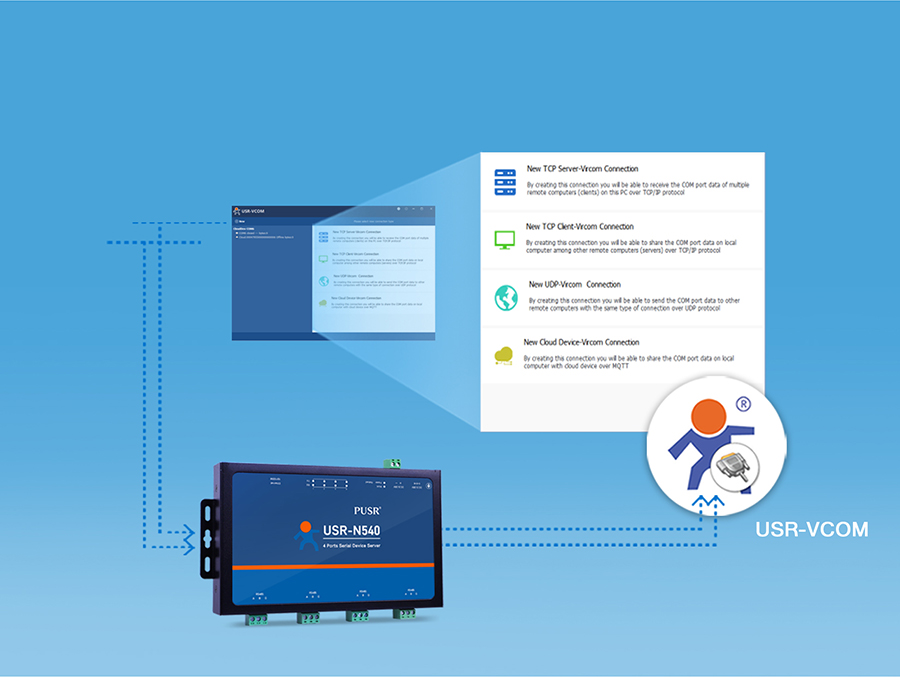
Virtual Com Software
Product Details
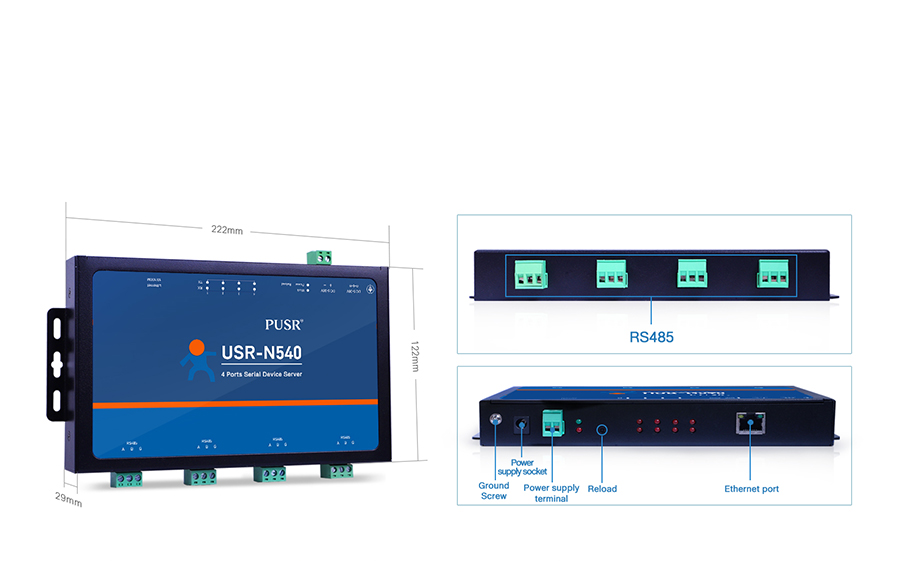
Dimensions :222*122*29 mm (L*W*H , Including terminals and mounting ears)
Application case
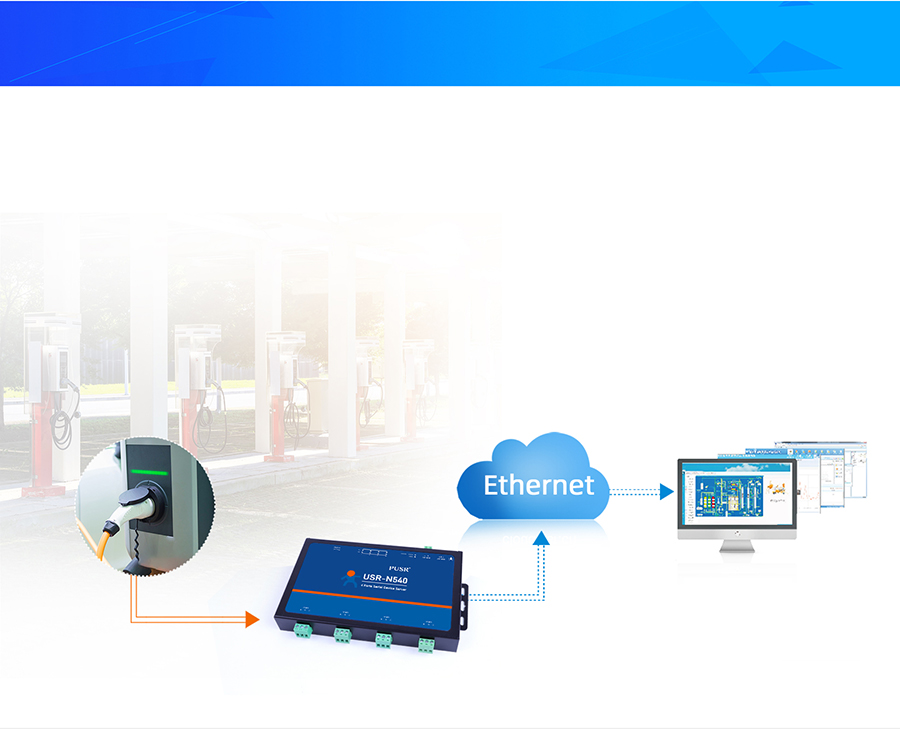
Charging pile application case
Dimensions :222*122*29 mm (L*W*H , Including terminals and mounting ears)
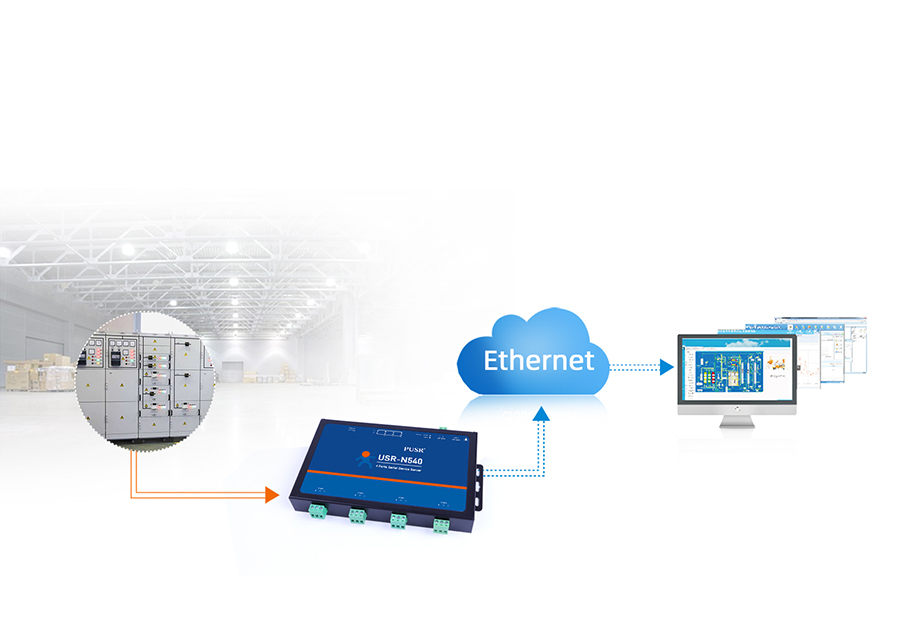
Industrial automation application case
The application of N540 in traditional industrial scenarios can effectively solve the problem that workers need to monitor equipment on-site, save labor costs, and increase production efficiency and safety factors. Data management makes the production process control more refined.
System Information
Processor
ST Cortex-M7
Basic Frequency
400MHz
Flash
128K+4M byte
Ethernet
Port Number
1
Interface Standard
8 pin RJ45
Rate
10/100 Mbps, MDI/MDIX, auto switch between cross and direct connection
In the current wave of digital and intelligent industrial transformation, the interconnection and efficient data transmission between devices have become crucial for enterprises to enhance production efficiency and achieve intelligent management. However, there are numerous legacy devices based on serial communication in industrial settings. These devices excel in stability and reliability but lack network communication capabilities, making it difficult for them to integrate into modern industrial network architectures. How to seamlessly connect these traditional devices with emerging network technologies to achieve real-time data collection, transmission, and remote monitoring has become an urgent issue in the industrial sector.
PUSR's 4-port serial to Ethernet converter N540 has emerged as a powerful solution for serial-to-Ethernet conversion, bringing a brand-new approach to industrial communication and providing robust support for the intelligent upgrading of traditional devices.
1. The Core Functions of the 4-Port Serial to Ethernet Converter
1.1 Breaking Communication Barriers and Enabling Device Interconnection
The 4-port serial to Ethernet converter N540 features four serial-to-Ethernet conversion functions, allowing four independent serial devices (such as PLCs, sensors, and instruments) to be connected to an Ethernet network. Through this conversion, devices that could only communicate locally via serial ports can now easily access local area networks (LANs) or even wide area networks (WANs), enabling remote communication and data sharing between devices. For example, in a large factory, various production devices distributed across different workshops previously required complex wiring and manual inspections to obtain data. Now, by connecting the serial ports of these devices to the Ethernet via the 4-port serial to Ethernet converter N540, management personnel can monitor the operational status of the devices in real-time from their office computers, promptly identify and resolve issues, significantly improving production efficiency and management levels.
1.2 Data Format Conversion and Transmission
In addition to facilitating physical layer connection conversion, the 4-port serial to Ethernet converter N540 is also capable of converting data formats. It transforms serial data sent by serial devices into TCP/IP packets for Ethernet transmission and vice versa. This data format conversion enables devices with different protocols and interfaces to communicate within a unified network environment, ensuring accurate data transmission and compatibility. For instance, a sensor using the Modbus RTU protocol is connected to the 4-port serial to Ethernet converter N540 via a serial port. The converter transforms the Modbus RTU data sent by the sensor into TCP/IP packets and transmits them to a host computer software via Ethernet. The host computer software then converts the received TCP/IP packets back into the Modbus RTU format for parsing and processing, achieving seamless data transmission and interaction.
1.3 Remote Monitoring and Management
Leveraging the extensive coverage and high-speed transmission characteristics of Ethernet, the 4-port serial to Ethernet converter N540 enables users to monitor and manage remote devices in real-time via the Internet. Regardless of where the devices are located within a factory or across different geographical locations, as long as there is a network connection, users can use terminal devices such as computers, smartphones, or tablets to view the operational status, parameter settings, historical data, and other information of the devices anytime, anywhere through dedicated monitoring software or web interfaces. They can also remotely configure, debug, and maintain the devices. This remote monitoring and management function not only enhances the reliability and availability of the devices but also reduces on-site maintenance workload and costs, saving significant human and material resources for enterprises.
2. Application Scenarios and Connectable Devices of the 4-Port Serial to Ethernet Converter N540
2.1 Industrial Automation Field
On industrial automation production lines, the 4-port serial to Ethernet converter N540 can connect various industrial control devices, such as PLCs, frequency converters, and servo drives. These devices typically communicate via serial ports. By connecting them to Ethernet via the N540, centralized monitoring and automated control of the production line can be achieved. For example, in an automobile manufacturing production line, multiple PLCs control different production processes. By connecting these PLCs to the factory's Ethernet via the 4-port serial to Ethernet converter N540, production management personnel can monitor the operational status of the entire production line in real-time from a central control room and adjust production parameters promptly, improving production efficiency and product quality.
2.2 Intelligent Building Field
In intelligent buildings, the 4-port serial to Ethernet converter N540 can connect various building devices, such as air conditioning systems, lighting systems, and access control systems. By connecting the serial ports of these devices to Ethernet, remote monitoring and intelligent management of building devices can be achieved. For example, in a large commercial building, by connecting the controller of the air conditioning system to the network via the 4-port serial to Ethernet converter N540, property management personnel can remotely adjust the operational mode and temperature settings of the air conditioning system based on different time periods, indoor and outdoor temperatures, and other factors, achieving energy conservation, emission reduction, and the creation of a comfortable environment.
2.3 Energy Management Field
In energy management systems, the 4-port serial to Ethernet converter N540 can connect various energy metering devices, such as electricity meters, water meters, and gas meters. By converting the serial data of these devices into Ethernet data, real-time monitoring and statistical analysis of energy consumption can be achieved. For example, in an industrial park, by connecting the electricity meters of various enterprises to an energy management platform via the 4-port serial to Ethernet converter N540, the energy management department can monitor the electricity consumption of each enterprise in real-time, promptly identify abnormal electricity consumption behaviors, and formulate reasonable energy allocation plans to improve energy utilization efficiency.
2.4 Types of Connectable Devices
The 4-port serial to Ethernet converter N540 can connect to various types of serial devices, including but not limited to the following:
Industrial Control Devices: Such as PLCs, DCSs, frequency converters, and servo drives, which play a core control role in industrial production. The 4-port serial to Ethernet converter N540 enables remote monitoring and programming debugging of these devices. Sensors and Instruments: Such as temperature sensors, pressure sensors, flow meters, and level gauges, which are used to collect data on various physical quantities. The 4-port serial to Ethernet converter N540 transmits this data to a host computer for display, analysis, and processing.
Intelligent Terminal Devices: Such as smart electricity meters, smart water meters, and smart access control systems, which have intelligent management functions. The 4-port serial to Ethernet converter N540 enables remote meter reading, remote control, and other operations on these devices.
3. Edge Computing and Automatic JSON Reporting Functions of the 4-Port Serial to Ethernet Converter N540: Value and Application Scenarios
3.1 The Role of Edge Computing Function
Edge computing is a computing model that brings computation and data storage closer to the data source. The edge computing function of the 4-port serial to Ethernet converter N540 can perform preliminary processing and analysis of collected data at the device end, reducing the amount of data transmitted to the cloud or host computer and improving data processing efficiency and real-time performance. For example, in an industrial sensor network, a large number of sensors collect data in real-time and transmit it to the 4-port serial to Ethernet converter N540. The converter processes the data through edge computing functions such as filtering, aggregation, and analysis, transmitting only valuable data to the host computer or cloud, avoiding the transmission of a large amount of useless data, reducing network burden, and improving system response speed.
3.2 The Role of Automatic JSON Reporting Function
JSON (JavaScript Object Notation) is a lightweight data exchange format that is easy to read and write. The automatic JSON reporting function of the 4-port serial to Ethernet converter N540 can automatically convert collected data into JSON format and report it to a specified server or platform according to preset rules. This function makes data transmission and parsing more convenient and fast, improving system compatibility and scalability. For example, in an IoT application, the device data collected by the 4-port serial to Ethernet converter N540 is transmitted to a cloud platform in JSON format via the automatic JSON reporting function. The cloud platform can easily parse and process this data, enabling remote monitoring and management of the devices.
3.3 Suitable Application Scenarios
Industrial IoT Scenarios: In industrial IoT, a large number of industrial devices require real-time data collection and transmission. The edge computing and automatic JSON reporting functions of the 4-port serial to Ethernet converter N540 can achieve rapid data processing and efficient transmission, meeting the real-time and reliability requirements of industrial IoT. For example, in a smart manufacturing factory, the operational data of various production devices is collected and processed by the 4-port serial to Ethernet converter N540 and then reported to the factory's IoT platform in JSON format, enabling real-time monitoring and optimization of the production process.
Smart City Scenarios: In smart city construction, a large amount of urban infrastructure and public service monitoring and management are involved, such as traffic flow monitoring, environmental monitoring, and energy management. The edge computing and automatic JSON reporting functions of the 4-port serial to Ethernet converter N540 can achieve rapid processing and analysis of these monitoring data and report the results to the city management platform in JSON format, providing decision support for city managers. For example, in a smart traffic system, the traffic flow data collected by traffic sensors is processed by the 4-port serial to Ethernet converter N540 and then reported to the traffic management platform in JSON format, enabling real-time monitoring and scheduling of traffic flow.
4. The Role and Application of MQTT Protocol Transmission Function of the 4-Port Serial to IP Converter N540
4.1 The Role of MQTT Protocol Transmission Function
MQTT (Message Queuing Telemetry Transport) is a lightweight publish/subscribe messaging transport protocol that is simple, open, and easy to implement. It is particularly suitable for communication between devices in IoT applications with low bandwidth, high latency, or unreliable networks. The MQTT protocol transmission function of the 4-port serial to IP converter N540 enables devices to communicate with cloud servers or other devices via the MQTT protocol, achieving real-time data publishing and subscription. For example, in a smart home system, smart sensors publish the collected data to a cloud server via the MQTT protocol through the 4-port serial to IP converter N540. Smart terminal devices (such as smartphones and tablets) can subscribe to this data, enabling remote control and monitoring of home devices.
4.2 Suitable User Groups
IoT Developers: For technicians engaged in IoT development, the MQTT protocol transmission function of the 4-port serial to IP converter N540 provides a simple and easy-to-use development platform. They can quickly achieve communication and data interaction between devices using the MQTT protocol, shortening the development cycle and reducing development costs. System Integrators: When building IoT systems, system integrators need to integrate various types of devices for interconnection. The MQTT protocol transmission function of the 4-port serial to IP converter N540 can serve as a universal communication interface, conveniently connecting various serial devices to the IoT system and achieving rapid system integration and deployment. Enterprise Users: For enterprise users, the MQTT protocol transmission function of the 4-port serial to IP converter N540 can help them achieve remote monitoring and management of production equipment, office equipment, etc., improving enterprise production efficiency and management levels while reducing operational costs.
Industrial loT Gateways Ranked First in China by Online Sales for Seven Consecutive Years **Data from China's Industrial IoT Gateways Market Research in 2023 by Frost & Sullivan
We use cookies to ensure that we give you the best
experience on our website. If you continue to use this site we will assume that you are happy with it.