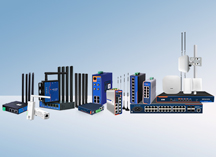
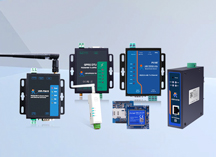
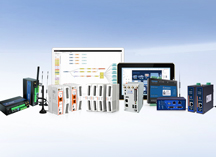
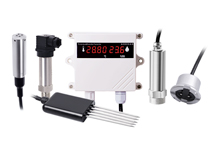
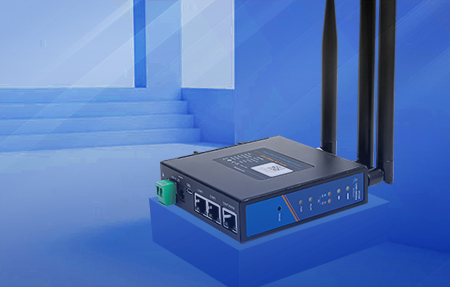
Engineers working in water utilities, power distribution, or factory automation have almost all encountered the same situation:flow meters and level sensors in pump stations communicate via Modbus RTU, PLCs in switchgear cabinets speak their own proprietary protocols, environmental monitoring requires HJ212, water flood-control platforms demand SL651, regional dispatch main stations need IEC-104 or DNP3.0, while the group cloud platform insists on MQTT/JSON… The devices themselves are all fine —the problem lies in getting these "systems speaking different languages" to coexist. This is precisely the problem the USR-N780/N716/N740 isolated multi-serial server is designed to solve.
In the field of industrial communications, there is a consensus:no protocol is inherently superior — the choice depends on system requirements. For stable, simple local monitoring, Modbus is often sufficient. For long-distance, weak-link SCADA dispatch scenarios where events must never be lost, protocols with built-in acknowledgment and timestamping like DNP3.0 or IEC-104 are more reliable. But a more common reality goes beyond "which protocol to pick":
① Multiple protocols coexist on-site.Some instruments use Modbus, a PLC speaks a vendor-specific protocol, and the upstream platform only accepts OPC UA or JSON;
② Serial port resources are exhausted.A site may have over a dozen RS485 devices, yet the acquisition host provides only 1–2 serial ports, requiring manual register mapping for each one;
③ The electrical environment is harsh.Variable-frequency drives and high-power motors sit right next to the bus, causing RS485 lines to suffer from frequent interference, garbled data, or lock-ups.
In other words,the bottleneck often lies not in the protocols themselves, but in the conversion layer between "field side" and "platform side."If this link is poorly designed, even the most carefully reasoned protocol selections become meaningless.
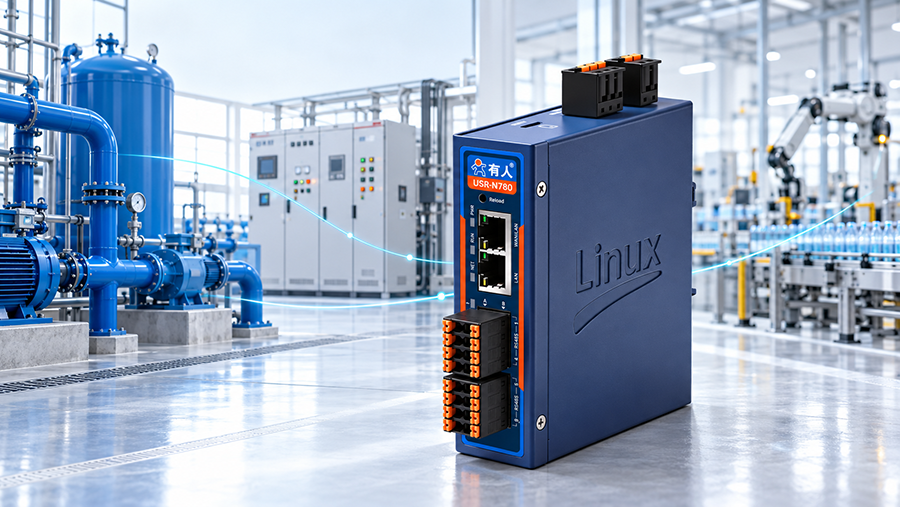
The USR-N780/N716/N740 are USR IoT's newly launchedhigh-performance, isolated multi-port RS485 edge serial servers running Linux. In a single sentence:they gather multiple serial devices from the field, translate protocols to match platform requirements, and connect directly to SCADA, HMI software, or cloud platforms.
Key hardware and interface specifications:
The device runs USR'sWukongEdge edge computing engine, with protocol capabilities organized in three layers, all running in parallel on independent threads without mutual interference:
| Layer | Supported Protocols |
|---|---|
| Southbound Acquisition | Modbus RTU/TCP; full-brand PLC protocols (Mitsubishi FX, Yonbon FATEK, Siemens, Omron, Delta, etc.) |
| Industry Protocols | IEC-104, IEC-61850, DNP3.0, DL645 (power); HJ212 (environmental); SL651 (water conservancy); BACnet (building automation) |
| Northbound Output | Modbus TCP, OPC UA, custom JSON; supports MQTT/TLS, TCP, UDP, HTTP for mainstream cloud platform integration |
This directly addresses the protocol coexistence challenge discussed earlier: regardless of the languages spoken on the field side, the N780 can uniformly "translate" them into the formats required by the platform— including DNP3.0 and IEC-104, commonly used in power dispatch.
① Multiple RS485 channels operate independently, with full baud-rate auto-adaptation (1200–230400bps, customizable);
② Slave devices / points support batch import and export, eliminating manual one-by-one entry;
③ Single-point / multi-point data supports arithmetic operations and formula calculations — acquire and compute simultaneously;
④ Maximum support for2000+ points with millisecond-level polling, meeting high-density data acquisition scenarios.
① Local offline caching; data resumes automatic transmission upon network recovery; optional TF card expands cache capacity;
② Uplink supports cycle / change-triggered / scheduled multi-condition events, withcustom JSON templatesfor flexible third-party platform adaptation;
③ Full-linkTLS encryptionsupported; WAN/LAN dual ports can also serve as network isolation.
① Full Chinese web-based visual configuration; configuration supports batch import and export;
② Bulk firmware OTA upgrades, status monitoring, and remote log troubleshooting;
③ Supportsremote web tunneling access without requiring a public IP— critical for widely distributed pump stations and well-house sites;
④ RTC clock, hardware watchdog, and Reload button for factory reset — designed from the start to minimize site visits.
| Dimension | USR-N740 | USR-N780 (Core Model) | USR-N716 |
|---|---|---|---|
| RS485 Serial Ports | 4 Channels | 8 Channels | 16 Channels |
| CANFD Port | 1 Channel (compatible with CAN2.0, electrically isolated) | ||
| Ethernet Ports | 2× 10/100Mbps (WAN/LAN swappable + LAN) | ||
| Serial Isolation | Fully isolated; each 4 RS485 channels independently isolated | ||
| Dimensions (with terminals / DIN-rail) | 133.1×33.0×128.8 mm | 133.1×33.0×128.8 mm | 149.4×39.0×128.8 mm |
| Typical Scenarios | Small sites, single-cabinet retrofits | Medium pump stations / workshops, ~10 devices | Large sites, centralized acquisition cabinets |
The selection logic is straightforward: match the number of RS485 devices on-site to the appropriate model.All three share identical software capabilities (protocols, edge computing, cloud integration); upgrading is simply a matter of adding serial channels.
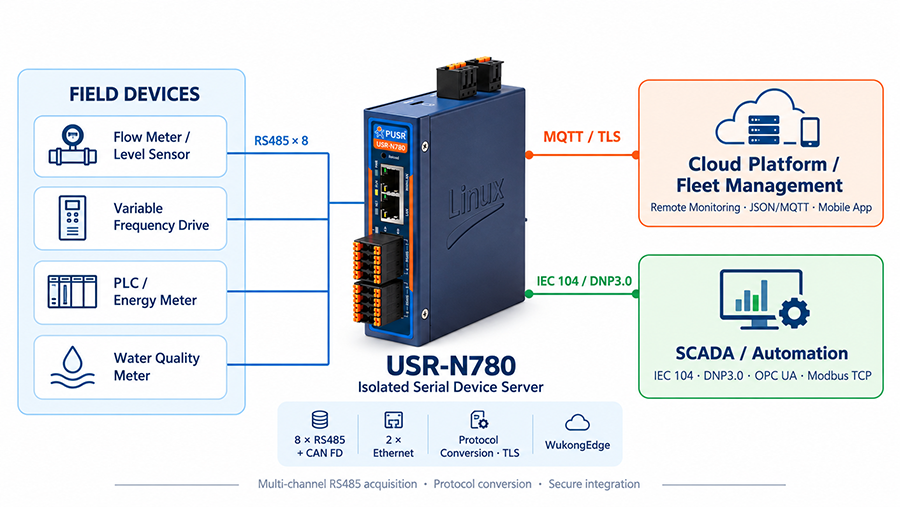
The diagram below shows a typical smart water utility site topology: field instruments (Modbus RTU), variable-frequency drives, and PLCs are connected across different RS485 buses, with N780接入 each bus with independent isolation; one upstream channel sends data via MQTT/TLS to the cloud platform for remote operations, while another channel communicates via IEC-104/DNP3.0 to the dispatch SCADA system, operating independently.
| Category | Specifications |
|---|---|
| Power Supply | DC 12–48V, built-in reverse-polarity protection |
| Main CPU | Industrial-grade RK3506J, triple-core Cortex-A7 @1.2GHz + Cortex-A0 |
| Operating System | Linux OS with WukongEdge engine |
| Memory | 512MB DDR3 + 8GB eMMC, supporting up to 32GB Micro SD card expansion |
| Ethernet Ports | 2× RJ45 (1× WAN/LAN swappable + 1× LAN, supports switch functionality), 10/100Mbps auto-negotiation, built-in 1.5KV network isolation transformer |
| Serial Ports | N740: 4 channels / N780: 8 channels / N716: 16 channels RS485; industrial spring-clamp terminals; fully isolated design (each 4 channels independently isolated) |
| Serial Parameters | Baud rate 1200–230400bps (customizable); data bits 7/8, stop bits 1/2, parity NONE/ODD/EVEN |
| CAN Port | 1× CANFD (compatible with CAN2.0), industrial spring-clamp terminals, electrically isolated |
| Enclosure & Mounting | Sheet-metal enclosure, IP30, DIN-rail mounting / ear-mount via positioning holes |
| EMC Rating | National Standard Class 3B |
| Operating Environment | Temperature -25℃ to 75℃; humidity 5%–95% RH (non-condensing) |
| Additional Features | RTC clock, Reload button, built-in watchdog, Micro SD card slot, PWR/RUN/NET/COMn indicator LEDs |
| Uplink Capabilities | USR Cloud / MQTT / TCP / UDP / HTTP, TLS encryption support; cycle / change-triggered / scheduled multi-condition events; custom JSON templates; offline local caching with auto-resume transmission |
| Edge Computing | Multi-channel RS485 independent configuration; full baud-rate auto-adaptation; batch point import/export; arithmetic formula calculations; maximum 2000+ points with millisecond-level polling |
| Operations & Security | Full Chinese Web UI, batch config import/export, firmware OTA upgrades, status monitoring, remote log troubleshooting, remote web tunneling (no public IP required) |
Returning to the opening discussion: whether Modbus, DNP3.0, or IEC-104, protocol selection is a design decision, whilemulti-protocol coexistence, multi-serial convergence, and reliable access under strong interferenceare the engineering challenges sites face every single day. The approach of the USR-N780/N716/N740 is to use a fully isolated Linux edge device to accomplish four tasks in one step —
● 8/16 Isolated RS485 Channels
● DNP3.0 / IEC-104 / SL651 / HJ212
● 2000+ Points at Millisecond-Level Polling
● Offline Buffer + TLS
● Remote O&M Without Public IP
● Industrial Grade -25℃~75℃
If you are evaluating a multi-protocol access solution for a site, or would like to inquire about pricing and lead times for the N740/N780/N716, visit the product page for complete documentation.