For example, in terms of network construction, LTE Lte cat 1 can be seamlessly connected to the existing LTE network without upgrading the hardware and software of the base station, and the network coverage cost is very low. In terms of chip cost, after system optimization, the integration level is higher, the hardware architecture of the module is simpler, and the cost of peripheral hardware is lower.
2. Compared with Lte cat 4, Lte cat 1 has the same advantages in terms of speed, delay and mobility. It has the same millisecond transmission delay as Lte cat 4 and supports a mobile speed of more than 100KM/H.
Since LTE cat 1 belongs to the 4G series, it can directly reuse the existing resources of 4G. Lte cat 4 migrated to Lte cat 1 with significant benefits. For example, in scenarios where 4G is used for voice interaction, such as walkie-talkies and toy robots, the previous use of Lte cat 4 can be completely transferred to Lte cat 1.Lte cat 1 will play a role in many scenarios of voice function and medium rate connection. These scenarios include sharing, financial payment, industrial control, vehicle payment, public network intercom, pos and so on.
Application scenarios of Lte cat 1: wearable devices, smart appliances, industrial sensors, detection of hydrology and water conservancy, and port logistics tracking. Shared payment class. It does not require high broadband speed, and at the same time, it is battery-powered. It requires high power consumption and data transmission stability.
Application scenarios of Lte cat 4: Internet of Vehicles, smart grid, 4G wireless routing, video security, business display equipment, and 4G law enforcement instrument. Live video equipment. And that like have very high requirement on the broadband speed. At the same time, it requires higher stability.
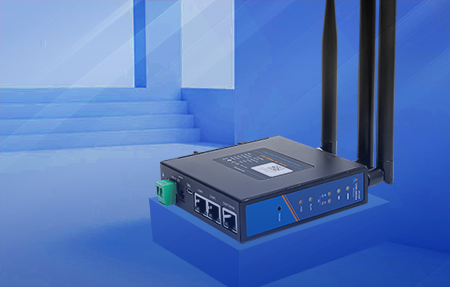
As a platform-based enterprise of the Internet of Things, it actively responds to the call of government departments, keeps up with the trend of market development, vigorously supports the digital transformation of the industry, and grandly launches wireless data transmission terminal products based on Lte cat 1, so as to meet the business needs of customers for medium and low speed Internet of Things applications.
Lte cat 1 wireless data transmission terminal will easily replace the traditional 2G/3G network with better coverage, faster speed and lower delay with the help of mature LTE network, providing high-quality wireless connection services for the medium and low speed Internet of Things industry. While ensuring the stability and reliability of low-speed network access, it provides a more cost-effective solution for the deployment of networking equipment for customers.
Lte cat 1 is the first category of LTE UE-Category. Its transmission rate can reach 10Mb/S, has the same millisecond transmission delay as Lte cat 4, and supports the mobile speed of more than 100KM/H. Lte cat 1 can meet the general voice and mobility needs, with its low cost, low power consumption and other advantages, successfully carry the banner of low and medium rate Internet of Things applications.Lte cat 1 is suitable for scenarios that do not require high broadband speed but have certain requirements for power consumption and data transmission stability. It has been applied in wearable devices, shared payment, smart security, smart home appliances, industrial sensors, toy robots, shared bicycles and other fields or products.
Lte cat 1 technology is applied to the overall solution of intelligent helmet, which meets the needs of independent transmission of voice calls and mobile data under the technical requirements of low power consumption, and realizes the direct dialing/answering of calls by helmet, GPS tracking positioning and real-time speed monitoring by helmet, as well as real-time Internet data transmission capability to support the data transmission requirements of different products or services.
With the introduction of Lte cat 1 technology, the smart helmet can break away from the complete dependence on smart phones and have better mobility and data capabilities under the requirement of low power consumption. As a result, the smart helmet technology solution can be extended from general daily use scenarios (such as commuting or leisure) to more sports scenarios and applications in different industries, such as rescue, construction, manufacturing and security.
Cost
1. In terms of network construction, Lte cat 1 can be seamlessly connected to the existing LTE network without upgrading the hardware and software of the base station, and the network coverage cost is low.
2. In terms of chip cost, after system optimization, the hardware architecture of the module is simpler, the integration is higher, and the cost of peripheral hardware is lower.
3. In terms of modules, the market has a large number of players and fierce competition, and the price of Lte cat 1 module has been constantly pulled down.
At present, the price of Lte cat 1 module on the market has dropped to 40-50 yuan, and the price may continue to decline in the future. The price of Lte cat 4 has been around 100 yuan.
Technical level
Lte cat 4 and LTE cat 1 are both standards for user terminal categories under the 4G communication LTE network.
The full name of Cat is LTE UE-Category. Cat. X this value is used to measure the wireless performance of user terminal equipment, and is mainly used to divide the terminal rate (level). The grades are as follows:
Lte cat 4 can meet the communication needs of mobile broadband, but in some small, battery-powered application products and application scenarios with poor network coverage, it can not meet the communication needs of some Internet of Things devices.
As a result, 3GPP has added several enhanced standards to LTE technology to connect IoT devices, among which:
1. The speed of LTE Lte cat 1 is 10Mbps, and the power consumption is lower than that of Lte cat 4. It has the same millisecond transmission delay as Lte cat 4 and supports the moving speed of more than 100KM/H.
2. The speed of LTE Cat. M2 (NB-IoT) is only several hundred Kbps, which has a strong advantage in power consumption, but it can not meet the needs of voice and mobility.
Lte cat 1 is suitable for scenarios that do not require high broadband speed but have certain requirements for power consumption and data transmission stability, such as wearable devices, shared payment, campus water control, charging piles, smart security, smart agriculture, smart home appliances, industrial sensors, port logistics tracking, etc.
Lte cat 4 is suitable for scenarios that require higher broadband speed and stability, but are relatively insensitive to cost and power consumption, such as live media, car networking, smart grid, video security, business display equipment, etc.Users of the original Lte cat 4 can switch to Lte cat 1 for scenarios that require voice support, good mobility, or have certain requirements for uplink and downlink speed/data processing instantaneity, such as public network intercom, toy robots, shared bicycles, mobile pos machines, and code-scanning payment, but do not have high demand for mobile broadband communication.